
By Chance, owner of Southern Gutters FL · Published · Last updated
Key takeaways
- Black olive leaves are small enough to slip through basic gutter screens and pack into a dense, wet mat.
- The tree sheds a little nearly year-round, so gutters under it fill steadily rather than once a season.
- Rusty black olive stains usually come from mite galls and caterpillar droppings rich in tannins, not from the leaves alone.
- Micro-mesh guards handle black olive debris far better than coarse screens or foam inserts.
- Most homes under a mature black olive need three or four gutter cleanings a year without guards.
Black olive trees clog gutters because they shed small leaves, twigs, mite galls and flower stalks almost year-round, and that fine debris packs into a wet mat that blocks outlets and stains the gutter. Most Broward homes under a mature black olive need three or four cleanings a year, or micro-mesh guards.
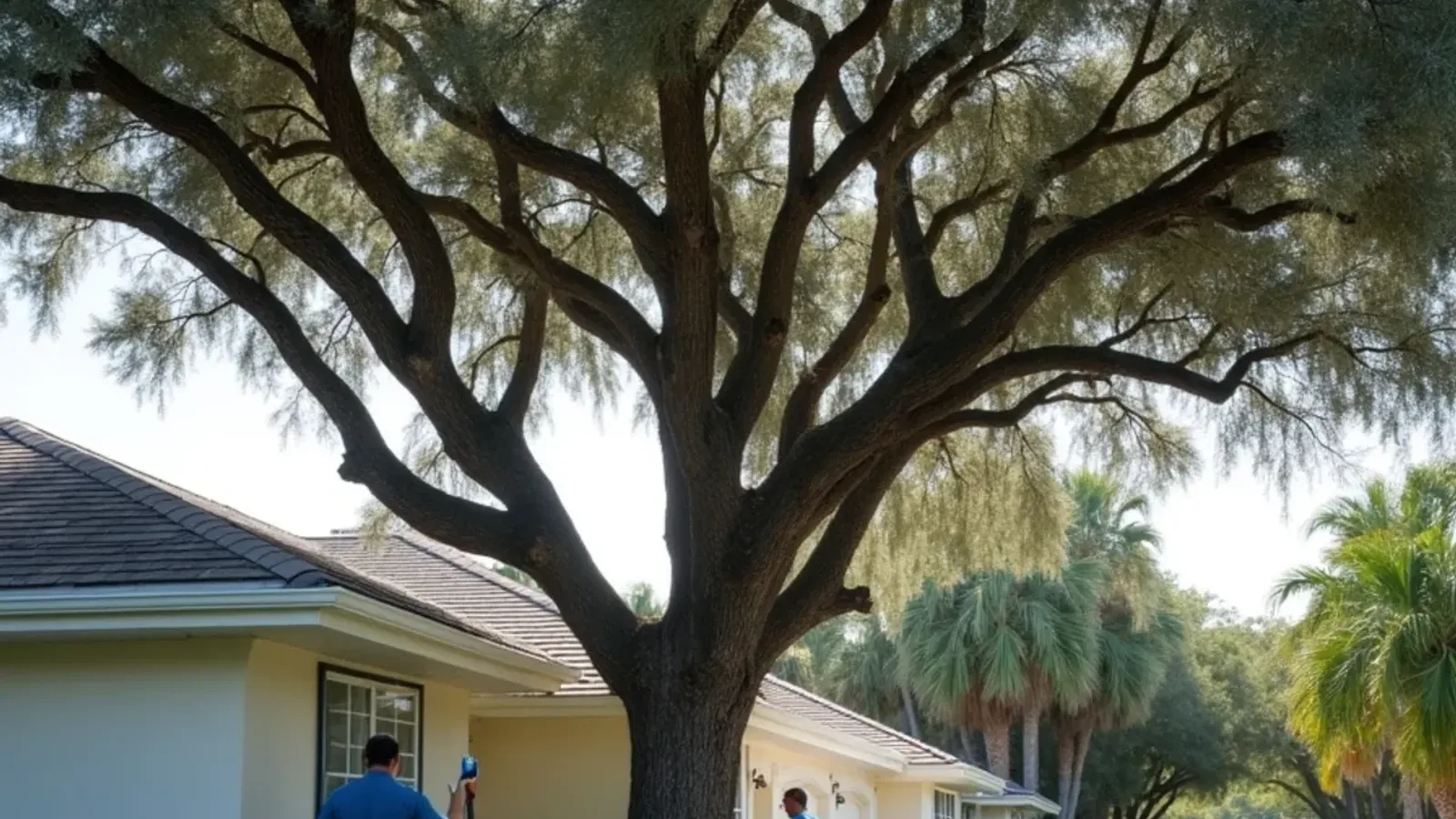
Ask any gutter crew in Broward which tree keeps them busiest and you will hear the same answer: the black olive. Bucida buceras, recently reclassified by some botanists as Terminalia buceras, is not an olive at all and never grows edible fruit. What it does grow is a dense, wide canopy that has made it a favorite shade and street tree across the county, from swale plantings to backyard specimens that now tower over the roof.
For black olive tree gutters, the problem is not volume so much as size and timing. The leaves are small, the debris is fine, and something is falling almost every month. Here is what that means for your gutters and what we recommend if you live under one.
What a black olive tree actually drops into your gutter
A royal palm frond is huge but easy: it lands on top of the gutter and a crew lifts it off. Black olive debris is the opposite. It is small, it comes in layers, and it sinks.
Leaves
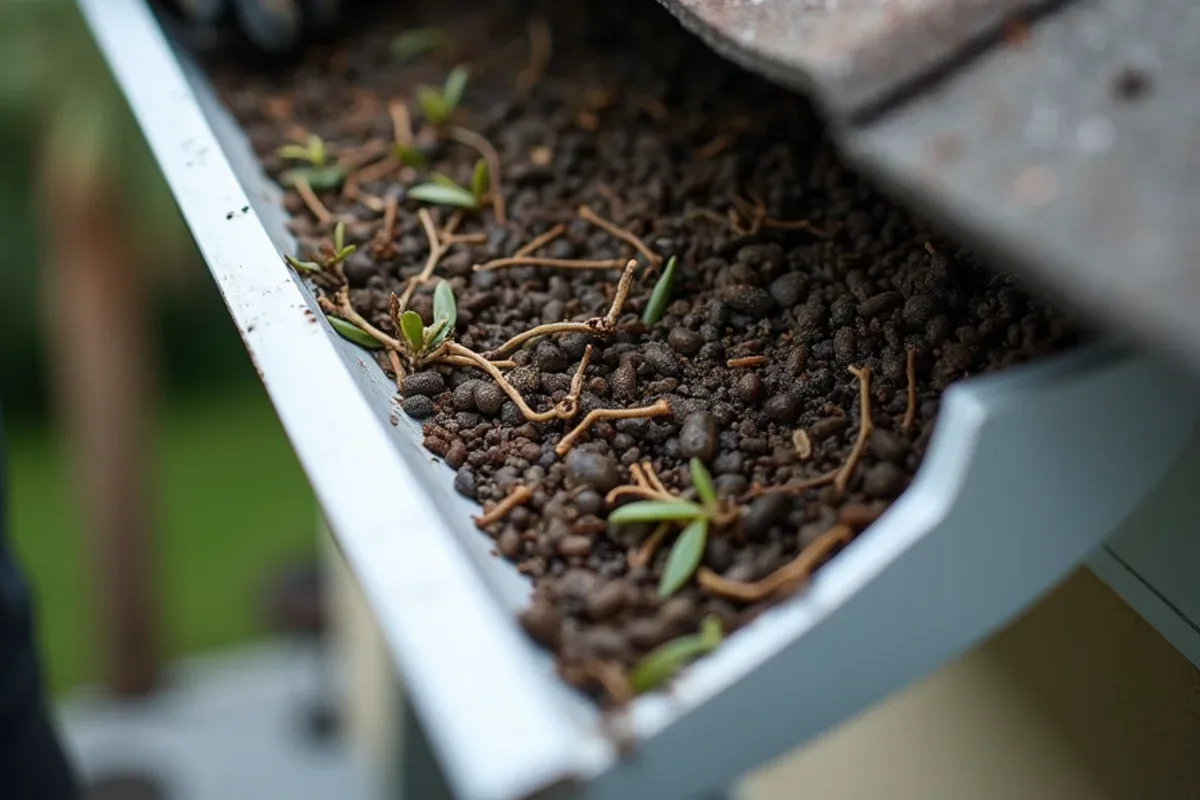
Black olive tree leaves are small and leathery, clustered at the twig tips. The tree is evergreen but replaces foliage continually, with heavier drops in late winter and spring. Individually the leaves are tiny; together they settle into the trough like wet confetti and compress into a mat that water cannot pass through.
Twigs and spines
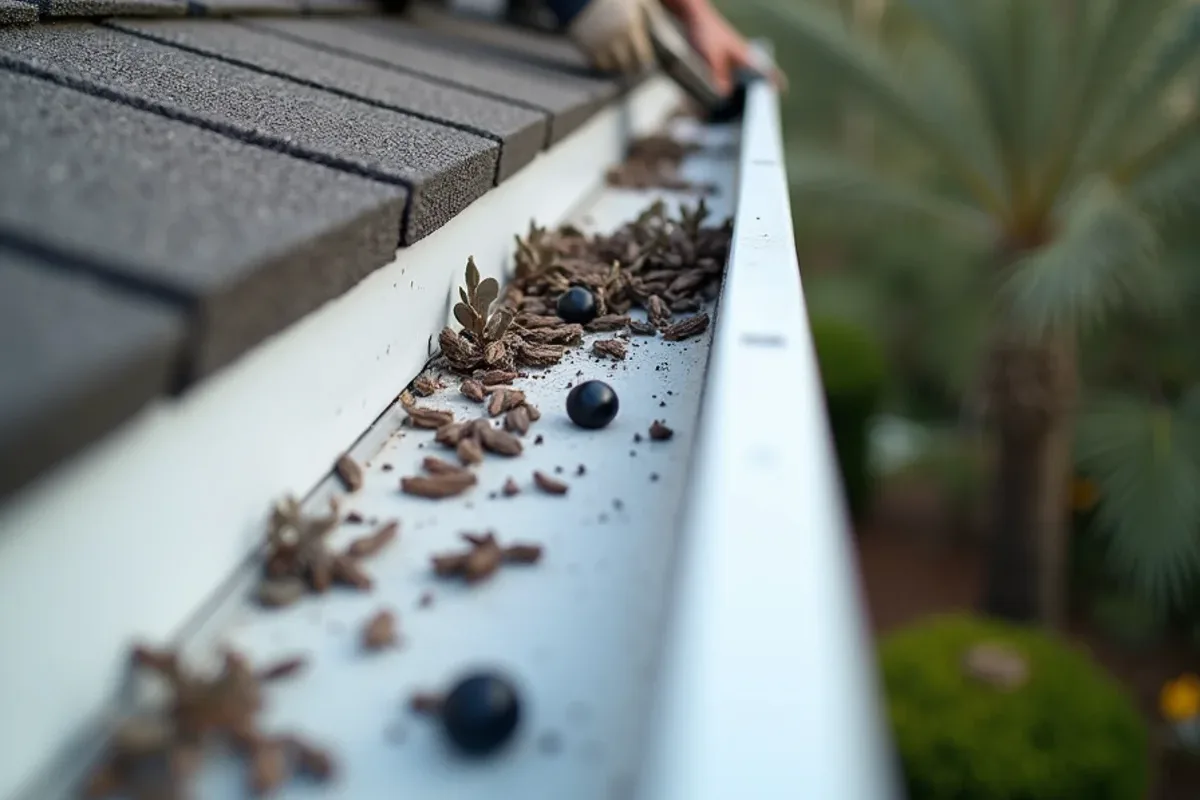
The zigzag twigs break off in wind and some trees carry short spines. Twigs lodge crosswise in downspout outlets and act as a net for everything that follows.
Galls, flowers and seed stalks
Many trees carry long, twisted, bean-like growths. These are galls caused by a tiny mite rather than true seed pods, and they drop along with flower stalks and small fruit. In a downspout elbow they behave like a cork.
Black olive vs. other Broward street trees: a debris comparison
Most Broward homes have more than one kind of tree nearby. This is how black olive stacks up against the other debris sources we clean out most often.
| Tree | Main debris | When it falls | Gutter impact |
|---|---|---|---|
| Black olive | Small leaves, twigs, mite galls, flower stalks | Nearly year-round, heavier late winter–spring | Dense mat; slips through screens; stains |
| Live oak | Small leaves, tassels, acorns | Mostly spring | Fast fill over a few weeks |
| Royal or queen palm | Fronds, flower stalks, seed clusters | Throughout the year, worse in storms | Bridges across gutter; blocks outlets |
| West Indies mahogany | Leaves, large woody pods, winged seeds | Spring leaf drop, pods later | Pods jam downspouts |
| Ficus | Small leaves, figs | Year-round | Sticky, decomposes quickly |
Palm debris has its own handling. If you have both palms and a black olive over the roof, our palm frond and roof debris removal visit clears fronds, seed stalks and the fine leaf layer underneath in one trip.
Where do black olive stains come from?
Anyone who parks under a black olive knows the rusty brown spots that appear on driveways, cars and pool decks. UF/IFAS extension research points mainly to two culprits: the mite-caused galls and the droppings of a small caterpillar that feeds on the tree. Both are rich in the tree’s tannins, which leave the stain. The leaves themselves contribute less than most people assume.
Gutters get stained the same way. When that debris sits wet in the trough, tannin-laden water seeps out and streaks the aluminum, the fascia and the stucco below every time the gutter overflows. Keeping the gutter clear limits the staining, and our pressure cleaning and gutter whitening service can lift existing marks. Extension agents also note the staining does not happen every year, so it is rarely a reason to remove a healthy tree.

Will gutter guards handle black olive leaves?
Some will, many will not. The tree’s small leaves defeat the products most people try first.
- Coarse screens: leaves and twig bits drop through the openings and collect underneath, where they are harder to clean out.
- Foam or brush inserts: fine debris lodges in the foam or bristles and starts to decompose in place.
- Reverse-curve hoods: small leaves ride the water around the curve and into the gutter.
- Stainless micro-mesh: openings too fine for black olive leaves to pass; debris dries on top and blows off or rinses away.
That is why we usually recommend micro-mesh gutter guards for homes under black olives. Guards do not make the gutters maintenance-free; the mesh still needs a light brushing and the downspouts still need flushing once or twice a year. They do turn a four-cleaning roof into a much easier one. For more on matching guards to local debris, see our guide to gutter guards for palm fronds and black olive leaves.
Broward street trees and your roof: practical steps
Black olives are everywhere in the subdivisions we serve near our North Lauderdale shop. In North Lauderdale itself, and in neighboring Tamarac and Sunrise, many single-story homes sit beneath black olives planted decades ago that now spread wider than the house. A few habits make life under them much easier:
- Keep branches trimmed several feet back from the roof edge so leaves blow past instead of dropping straight in.
- Check with your city before trimming a tree in the swale or right-of-way; many Broward cities regulate street tree work.
- Schedule gutter cleaning for black olive debris at least three times a year if you have no guards.
- Flush downspouts at every visit, since galls and twigs settle in the elbows first.
- Rinse stained surfaces promptly; fresh tannin marks come off more easily than old ones.
Your black olive is a good shade tree. With the right gutter plan, it can stay one without filling your gutters every few weeks.
Cleaning under a black olive: what we have learned on the ladder
A gutter under a black olive does not fill like one under an oak. The leaf layer dries on top and stays soaked underneath, so after a few weeks it forms a skin that sheds rain across the surface while the bottom stays wet. From the yard the trough can look half empty. Up close, the mat is often an inch or more deep and anchored by twigs that lie crosswise over the outlet.
The galls are the real downspout problem. UF/IFAS describes these mite galls as bean-shaped growths that can reach 4 to 12 inches long. They slide down the vertical pipe easily, then catch sideways at the first elbow, and everything behind them stacks up. That is why we clear the outlet by hand before rinsing the trough, and why we run a hand snake through elbows on black olive houses even when the hose seems to flow.
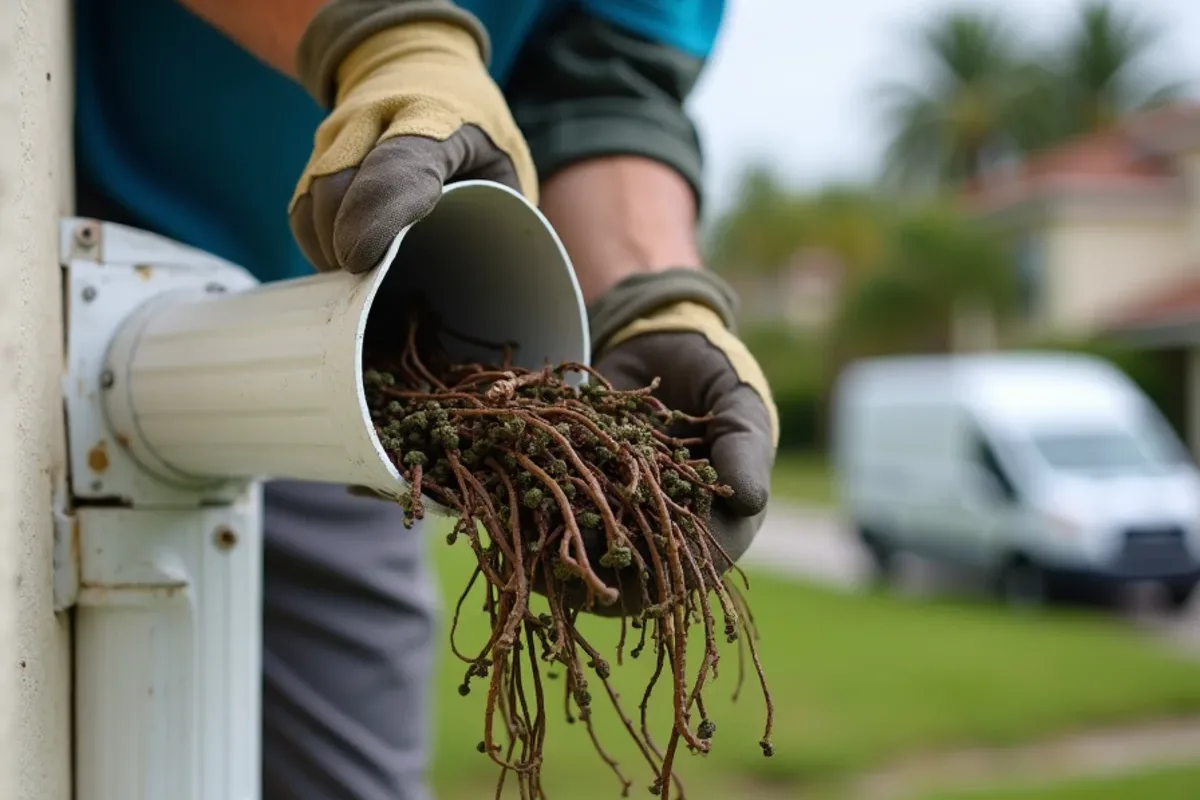
Fine debris also travels. Blowing a black olive gutter clean scatters leaves across pool cages, lanai screens and the neighbor’s driveway, so our crews scoop into buckets and bag the debris instead. We keep an eye out for the small caterpillars extension agents call the bungee caterpillar, since a heavy year for them usually means more dark staining on the gutter face below.
- More cleanings, no guards: the lowest up-front step, but you are booking three or four visits a year for as long as the tree stands.
- Micro-mesh guards: fewer full cleanings, but the mesh still needs brushing and the downspouts still need flushing once or twice a year.
- Trimming back from the roof: reduces the drop into the gutter, but the canopy grows back and swale trees may need city approval first.
Keep the shade, lose the clogs
A black olive is one of the best shade trees in Broward and one of the hardest on gutters. Its small leaves, twigs and galls fall in a steady trickle, slip past cheap screens and settle where water needs to leave the gutter. A schedule that matches that trickle, plus the right guard, keeps the system flowing without losing the tree.
Black olives line many of the streets around our North Lauderdale base, so Southern Gutters FL knows this debris well. Call for a free estimate and we will look at your canopy, your outlets and your downspouts and recommend a cleaning schedule, guards, or both, in writing.
Questions about black olive tree gutters
Should I cut down my black olive tree to protect my gutters?
Usually not. Regular trimming, a sensible cleaning schedule and micro-mesh guards solve the gutter problem while you keep the shade. Removal is a bigger decision involving tree health, root conflicts and city rules, and it is one to make with a certified arborist, not because of gutter debris alone.
Why do my gutters fill up again so quickly after cleaning?
Because a black olive never fully stops shedding. Unlike a tree with one big seasonal drop, it adds small amounts of leaves, twigs and galls almost every week. Gutters under a mature tree can be noticeably full again within two or three months, which is why we schedule them more often.
Do black olive stains damage aluminum gutters?
Mostly they are a cosmetic problem. The rusty marks come from tannins in mite galls and caterpillar droppings, according to UF/IFAS, and they discolor gutter faces, fascia and stucco. The bigger risk to the gutter is the wet debris itself, which holds water against seams and hangers. Keeping the trough clear limits both, and gutter whitening can lift older marks.
What is the bungee caterpillar on black olive trees?
It is the larva of a small moth, Characoma nilotica, that feeds on black olive leaves and flowers and tunnels into the mite galls. It earned the nickname because the larvae drop and hang from silk threads. UF/IFAS research links its droppings to much of the dark staining under these trees, which does not occur every year.
Services mentioned in this guide
Palm Frond & Roof Debris Removal
Fronds, seed stalks, black olive leaves and mahogany pods cleared from roofs, valleys and gutters, then hauled off.
Learn moreGutter Guards
Guards matched to the palm, black olive and oak debris over your roof, fitted to new or existing gutters.
Learn moreServing North Lauderdale, Tamarac and the rest of South Florida.