
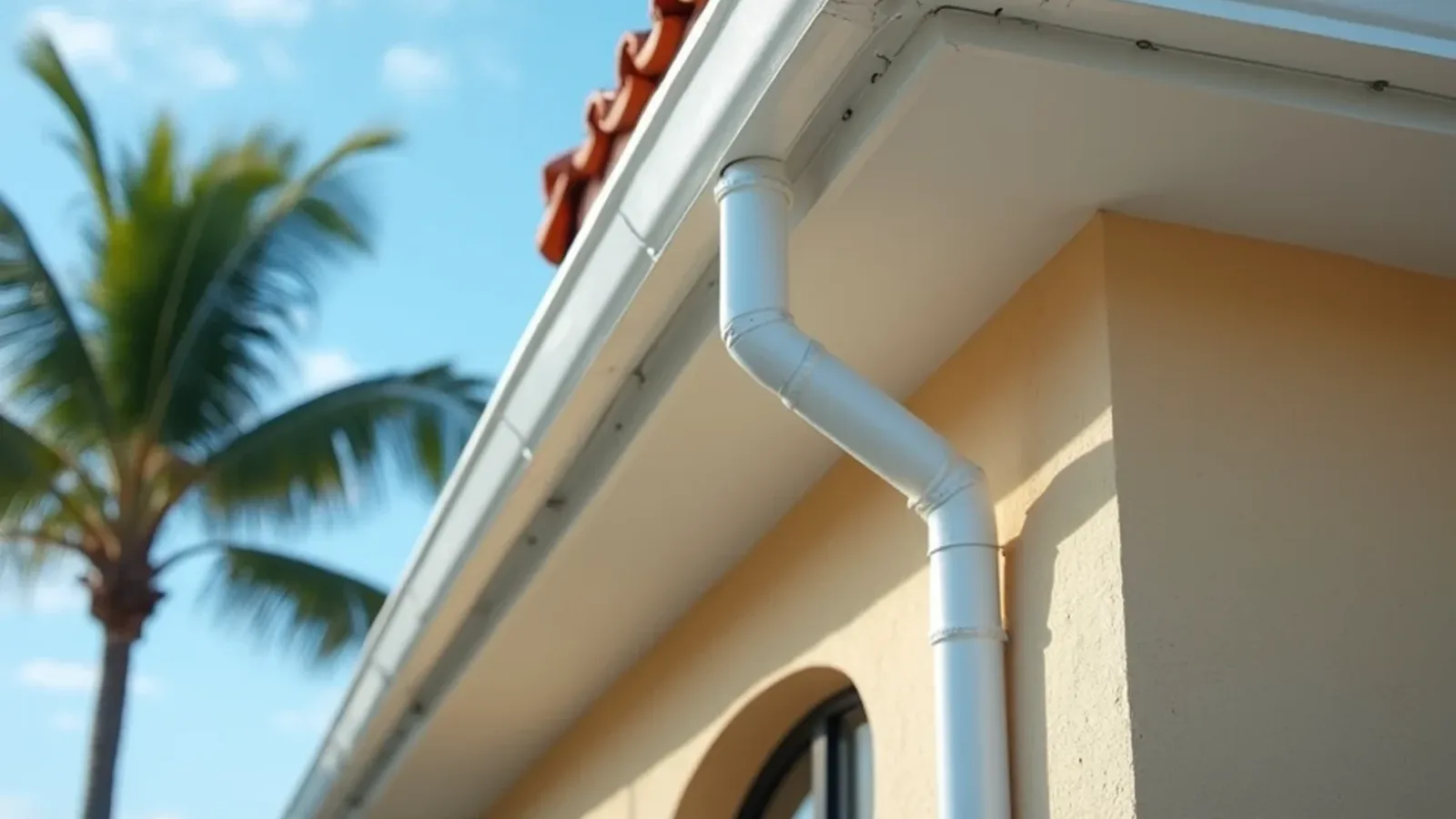
By Chance, owner of Southern Gutters FL · Published · Last updated
Key takeaways
- Only Broward and Miami-Dade counties are in the HVHZ; Palm Beach County is not, though it still has high wind design requirements.
- HVHZ rules focus heavily on the building envelope, including roof coverings and roof-edge metal.
- Products marketed for HVHZ use should show a Miami-Dade NOA or an approval evaluated to HVHZ standards.
- Whether a gutter job needs a permit depends on your city or county building department.
- Strong attachment into solid fascia matters more than any label on the gutter itself.
HVHZ gutters are not a special kind of gutter. Broward and Miami-Dade sit in Florida’s High-Velocity Hurricane Zone, where the building code sets stricter rules for roof coverings and edge metal. For gutters, what counts is secure attachment to solid fascia without disturbing the roof edge, plus any permit your building department requires.
If you live in Broward or Miami-Dade, your home sits in the High-Velocity Hurricane Zone, usually shortened to HVHZ. It is a special set of provisions in the Florida Building Code that applies stricter testing and installation standards to the parts of a building that keep wind and water out. Homeowners shopping for new gutters often hear the term and wonder what HVHZ gutters actually are.
This article explains what the zone is, which roof-edge parts it clearly affects, where gutters themselves fit, and how permits work. We will be careful here: code questions on a specific house belong with your city or county building department, and we would rather tell you who to ask than guess at a rule.
What is the high velocity hurricane zone?
After Hurricane Andrew in 1992, South Florida's building standards were reworked, and when Florida adopted a single statewide building code, it kept a separate, tougher set of provisions for Broward and Miami-Dade. Those provisions define the High-Velocity Hurricane Zone.
For roofs, the HVHZ requirements sit in their own block of the Florida Building Code’s roofing chapter, commonly cited as sections 1512 through 1525, and building officials in both counties use a shared HVHZ uniform roofing permit application. None of that turns a gutter into a roofing product, but it explains why inspectors here look so closely at anything that touches the roof edge.
In practical terms, the HVHZ means products that form the building envelope, such as roof coverings, windows, doors, shutters and roof-edge components, are expected to pass more demanding testing and to be installed exactly as their approval documents describe. Inspectors in these two counties check for that.
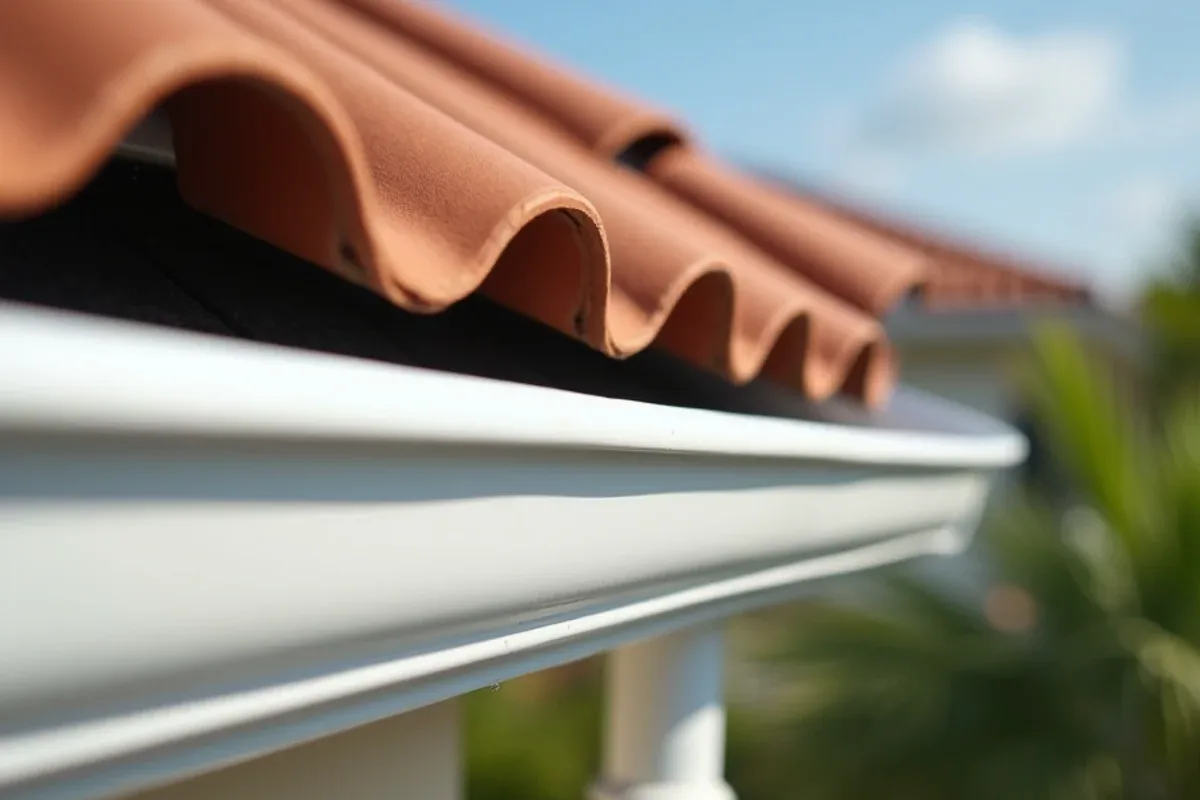
Palm Beach County sits just outside the zone. Homes there are still built to high wind-speed requirements under the statewide code, but not the HVHZ-specific provisions.
Florida Building Code and gutters: what the rules focus on
The code's attention at the roof edge is mostly on the roof system: the roof covering, its underlayment, and the edge metal or drip edge that secures the perimeter. Those parts carry wind uplift, and their attachment is specified in detail. That matters for gutter work because the gutter sits right against that edge.
A gutter is a drainage accessory hung from the fascia. It does not hold the roof down, but it can affect the roof edge if it is installed carelessly, for example by fastening straps through the finished roof covering or by bending edge metal to make room for the gutter. In the HVHZ, those are exactly the kinds of shortcuts that create problems at inspection or in the next storm.
| Item | What the HVHZ focus means | Who confirms it |
|---|---|---|
| Roof covering (tile, shingle, metal) | Approved product, installed per its approval documents | Roofer and building inspector |
| Drip edge and edge metal | Approved product and specified fastening at the perimeter | Roofer and building inspector |
| Gutter and hangers | Secure attachment to solid fascia without disturbing the roof edge | Gutter contractor; building department if a permit is required |
| Gutter guards | Check for HVHZ approval if marketed for it; attachment should not penetrate the roof | Manufacturer documents and your contractor |
| Downspouts and underground drains | Secured to the wall; discharge kept off neighboring property | Gutter contractor; local drainage rules |
Miami-Dade NOA and gutters: when product approval comes up
A Miami-Dade Notice of Acceptance, or NOA, is a product approval document issued by Miami-Dade County's product control office after a product passes testing to HVHZ standards. NOAs list exactly how the product must be installed, and they expire and get renewed.
You will see NOAs on roofing, windows and shutters all the time. For gutters, the picture is less uniform. Some gutter-related products, especially roof-edge pieces and certain guards, are sold with approvals, while a plain aluminum gutter hung from fascia is generally treated as an accessory. If a salesperson tells you a product is HVHZ approved, ask for the NOA or approval number and look it up yourself. If they cannot produce it, treat the claim as marketing.
Do you need a gutter permit in Broward or Miami-Dade?
There is no single answer, because permitting is handled by each city's building department, and by the county for unincorporated areas. Some jurisdictions require a permit for new gutter systems, some treat like-for-like replacement differently, and work tied to a re-roof falls under the roofing permit.
- Call or check the website of your city's building department and ask specifically about gutter installation and replacement.
- If you are in an HOA, get architectural approval for color and style before work starts.
- Ask any contractor for their county competency or license details and a certificate of insurance.
- If the gutters are going up during a re-roof, coordinate so the roofer's edge metal is finished and inspected first.
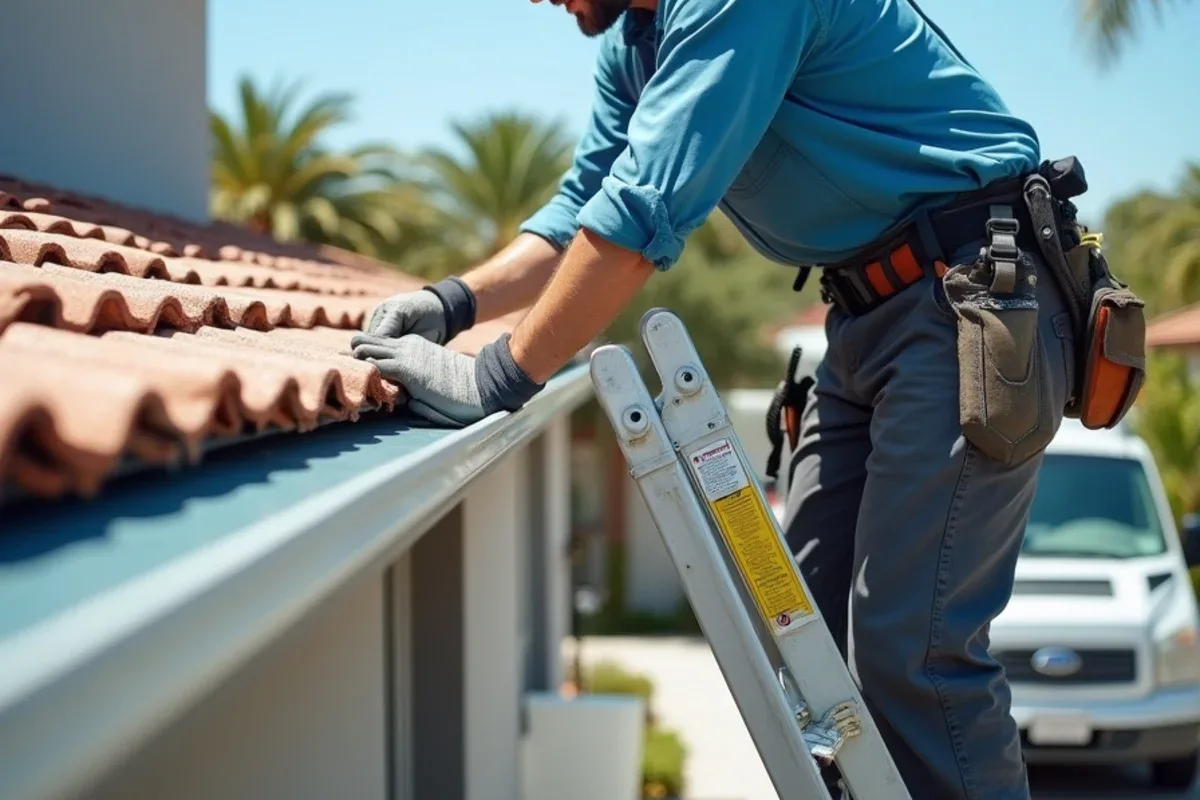
Hurricane gutter straps, hangers and fasteners
Regardless of permits, how a gutter is attached decides whether it stays on in a storm. For seamless gutter installation in the HVHZ, our approach starts at the fascia: sound wood, hidden hangers with stainless-steel screws, and tighter hanger spacing on the elevations that face the strongest winds.
Strap hangers that fasten up onto the roof deck are a different matter. On a finished roof, they mean penetrating the roof covering, which in the HVHZ is a roofing question. When straps make sense, such as some half-round or tile-roof installations, we plan them with the roofer during a re-roof rather than drilling into a finished roof.
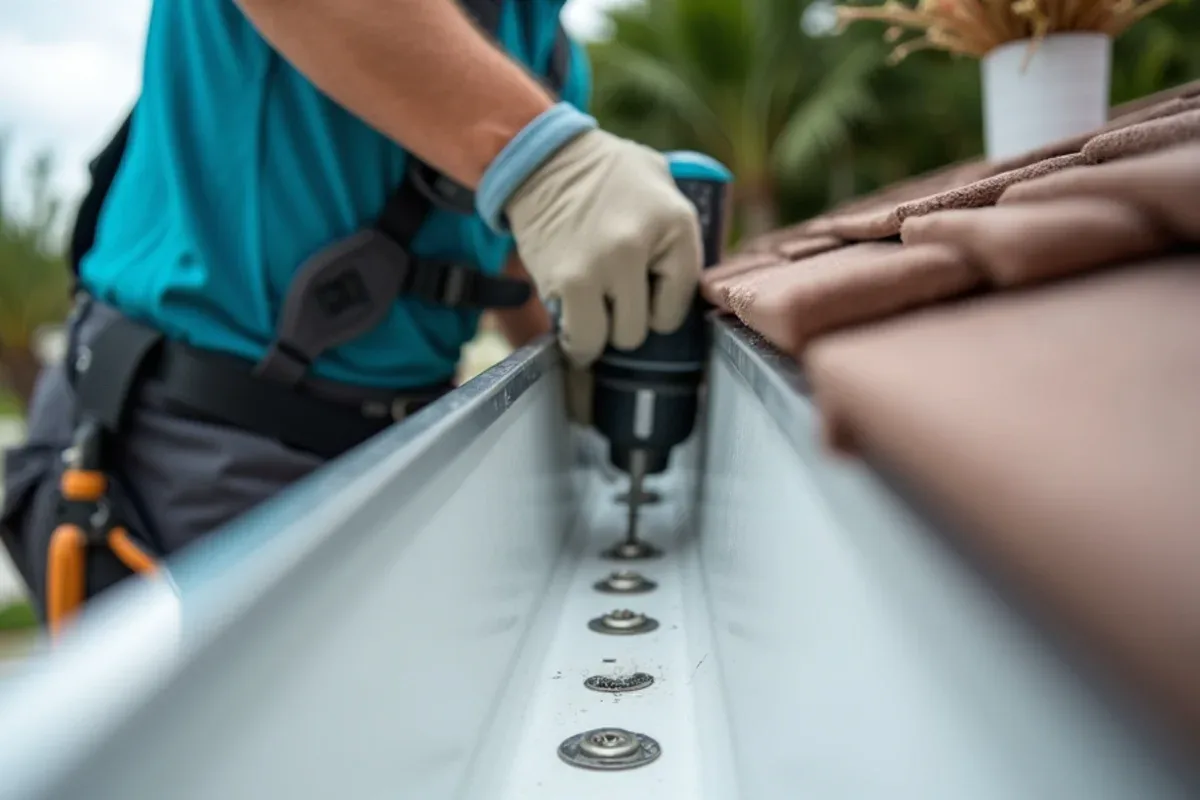
Before each season, a pre-hurricane gutter prep visit checks those hangers and screws, because even a well-installed system loosens over years of sun and storms.
HVHZ across Broward and Miami-Dade neighborhoods
The zone covers every city in both counties, from western Broward County suburbs to coastal Hollywood and all of Miami-Dade County. Coastal homes face the most direct wind, but inland homes are held to the same provisions, and the same attention to attachment applies to both.
How we hang gutters on an HVHZ roof edge
Most of what keeps a gutter on through a hurricane happens before the first hanger goes in. On installs across Broward and Miami-Dade, our crew works in the same order every time, because skipping a step at the roof edge is how problems start.
- Probe the fascia along every run. Soft or split wood is replaced first; a hanger is only as strong as what it is screwed into.
- Leave the roof edge alone. We check that the drip edge and tile or shingle edge are finished and intact, and if they are not, that conversation goes to the roofer before we hang anything.
- Roll-form seamless runs on site to the exact length of each wall, so the only joints are corners and outlets.
- Fasten hidden hangers with stainless-steel screws into solid fascia, closing up the spacing on the windward elevations and under valleys.
- Strap downspouts top, bottom and in between, so tall drops cannot swing in a gust and tear the outlet.
- Paint cut edges and flow-test each run before we leave, then photograph the finished install.
There are honest trade-offs. Half-round gutters on tile roofs sometimes call for strap hangers, which can mean fastening near or through the roof covering; on a finished HVHZ roof we would rather plan that with the roofer during a re-roof. Gutter guards that tuck under the first course of shingles or tile touch the roof system too, so we favor guards that fasten to the gutter itself unless the roofer signs off. And flat roofs with scuppers, common in parts of Miami-Dade, are a drainage design question as much as a gutter one.
We do not make license claims on this site. For any installation or structural repair, ask the contractor, us included, for their county competency or state license details and a certificate of insurance, and check state licenses yourself through the Florida Department of Business and Professional Regulation.
HVHZ rules in plain terms
The High-Velocity Hurricane Zone shapes how roofs are built in Broward and Miami-Dade, and that makes the roof edge a place for care, not shortcuts. For gutters, the rules come down to three things: hang them from sound fascia without disturbing the roof, ask for real documentation behind any approval claim, and check permit needs with your city before work starts.
If you are planning new seamless gutters or want an existing system checked before storm season, call Southern Gutters FL for a free written estimate. Our family-owned crew works across both HVHZ counties, and every new installation carries our 3-year workmanship and 20-year materials warranty.
Questions about hvhz gutters
Are HVHZ-approved gutters stronger than regular gutters?
The gutter profile itself is usually the same aluminum product. What makes a system hold in hurricane winds is attachment: solid fascia, hidden hangers, stainless screws and sensible spacing. Ask for documentation on any product that claims a specific HVHZ approval.
Does the HVHZ apply in Palm Beach County?
No. The HVHZ provisions apply to Broward and Miami-Dade. Palm Beach County still follows the statewide code's high wind design requirements, so solid gutter attachment matters there too.
Do gutter guards need a Miami-Dade NOA?
Not always. A guard that simply screws to the gutter is usually treated as part of the gutter system, while products that tuck under roof shingles or tile touch the roof covering and can raise approval questions. If a guard is sold as HVHZ approved, ask for the NOA or Florida product approval number and look it up. Your building department can say what it requires.
Who pulls the permit for a gutter job?
When a city or county requires one, the contractor doing the work normally applies for it, and the permit number should appear on paperwork you can check. Ask before work starts whether a permit is needed and who is responsible for it. If the gutters are part of a re-roof, the roofing permit and inspection usually come first, and the gutters go up afterward.
Services mentioned in this guide
Seamless Gutter Installation
Aluminum gutters roll-formed on site to each wall’s length, hung on stainless hardware, with a 3-year/20-year warranty.
Learn morePre-Hurricane Gutter Prep
Gutters cleared, hangers tightened, downspouts strapped and loose guards fastened before a named storm arrives.
Learn moreServing Broward County, Miami-Dade County and the rest of South Florida.