
By Chance, owner of Southern Gutters FL · Published · Last updated
Key takeaways
- Micro-mesh uses a fine stainless steel mesh over a rigid frame; screens use larger holes punched or woven into aluminum or plastic.
- Micro-mesh blocks far smaller debris, which matters under oaks, black olives and ficus.
- Screens are simpler and lower cost, and they can be enough on homes with mostly palms or few trees.
- Both need service; mesh needs brushing for pollen film, screens need clearing when small leaves wedge in.
Micro-mesh gutter guards beat screens under oaks, black olives and ficus because their fine stainless weave stops tassels, small leaves and roof grit that pass through or wedge into screen holes. Screens cost less and can be enough on palm-heavy or lightly treed lots. Either way, choose screw-fastened, lip-mounted versions for storm wind and tile.
The micro mesh vs screen gutter guards debate usually gets settled by whichever salesperson knocks first. That is a shame, because the two styles behave very differently on a South Florida roof, and the right pick depends on your trees, your roof covering and how much upkeep you are willing to do.
We install both and service both, including systems other companies put in. So rather than declare a winner up front, this guide puts them through the conditions our crews actually see: spring oak drop, palm litter, summer downpours, storm wind and barrel tile. Score the rounds that matter for your house.
How each guard is built
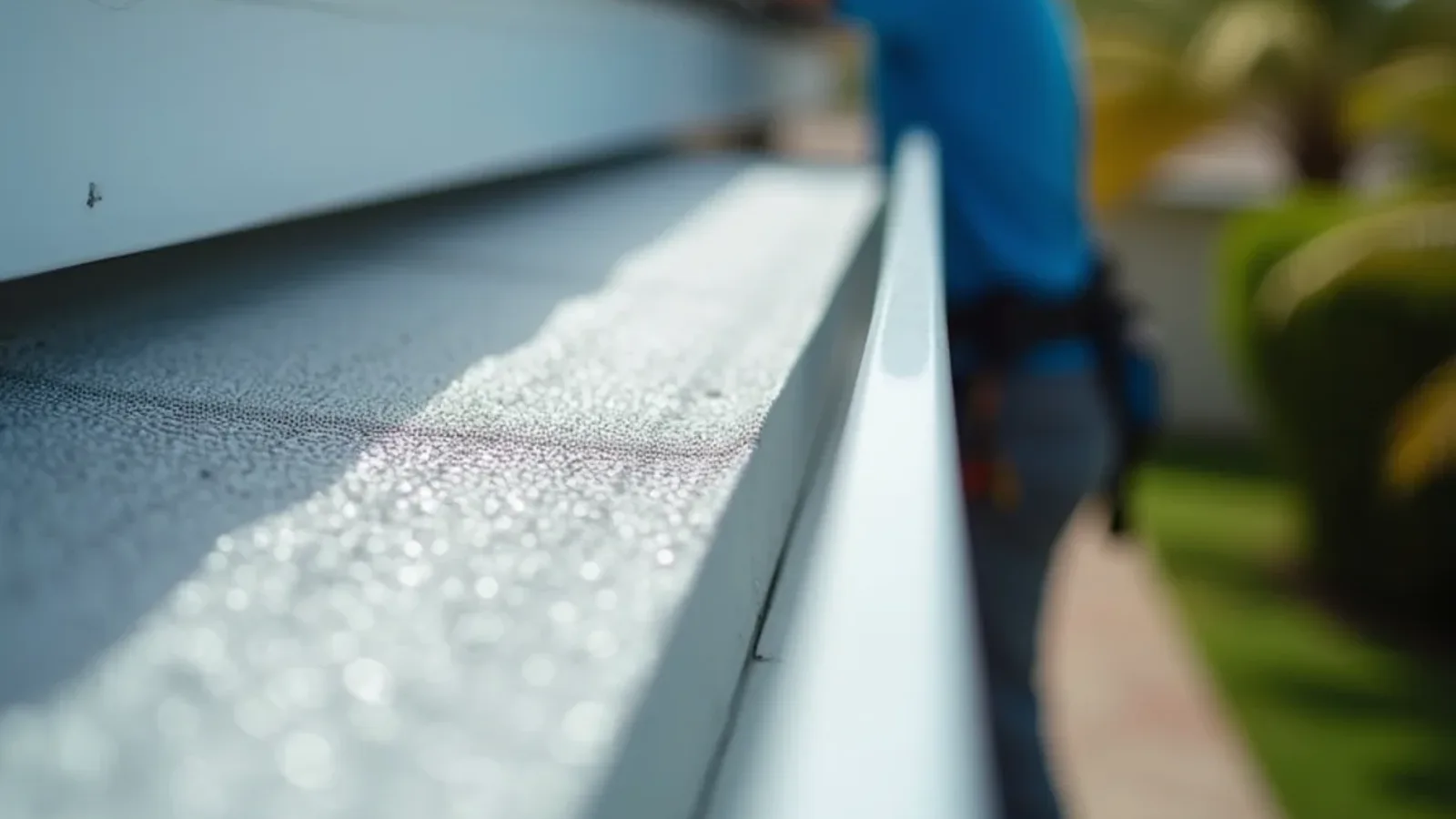
A micro-mesh gutter guard is a layer of very fine woven stainless steel stretched over a perforated aluminum frame. Water clings to the mesh and is pulled through by surface tension, while anything bigger than the weave stays on top.
A gutter screen is a panel of aluminum or plastic with openings you can easily see: punched holes, expanded diamond mesh or a grid. Water and anything smaller than the openings drop straight through. Screens range from flimsy snap-in plastic sold at home centers to stiff perforated aluminum that screws down.
Inside each category, quality varies a lot. Ask what the mesh or screen is made of, how thick the frame is, whether it screws to the gutter or just snaps in, and whether the front edge is supported so it does not sag between hangers. Those details shape performance more than the label on the box.

Gutter guard comparison at a glance
| Condition | Stainless micro-mesh | Aluminum or plastic screen | Edge |
|---|---|---|---|
| Oak tassels and pollen | Keeps tassels out; pollen film needs brushing | Tassels mat across holes; pollen passes into the trough | Micro-mesh |
| Black olive and ficus leaves | Blocks them | Small leaves wedge in or fall through | Micro-mesh |
| Palm fronds and fruit | Sit on top; easy to clear | Sit on top; sturdy screens fine, flimsy ones crush | Even with a sturdy screen |
| Roof grit and sand | Mostly held on top | Passes through into the trough | Micro-mesh |
| Heavy downpours | Strong intake when clean; slows if film builds | Large openings take water readily | Screen, if both are clean |
| Hurricane wind | Screw-fastened frames hold well | Snap-in plastic can lift; screwed aluminum holds | Depends on fastening |
| Barrel tile roofs | Lip-mounted versions fit well | Lip-mounted aluminum versions fit | Even |
| Upfront cost | Higher | Lower | Screen |
| Upkeep under heavy trees | Occasional brushing | More frequent clearing | Micro-mesh |
Round one: oak tassels, black olive leaves and fine litter
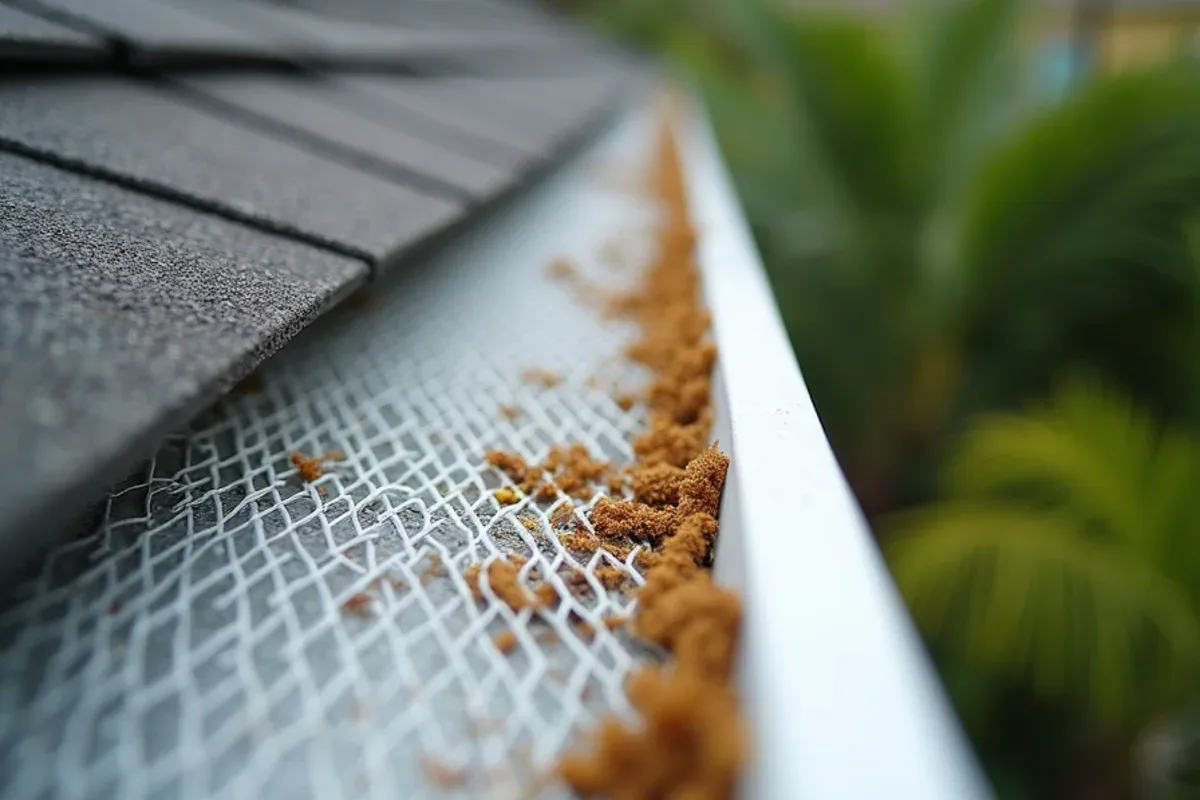
This is where the two styles separate. Every spring, live oaks drop a wave of tassels and pollen. On a screen, tassels lace across the holes until water can no longer get in, and the pollen that does get through settles as a paste in the trough. On fine stainless mesh, tassels stay on top, dry out and blow away or brush off.
Black olive and ficus leaves follow the same pattern. They are just small enough to work into screen openings, and once a few lodge, a mat forms. For yards with these trees, mesh is usually the better investment.
Round two: palm debris and a summer cloudburst
With palms alone, the gap narrows. Fronds, fruit and flower stalks are big enough that a sturdy aluminum screen keeps them out about as well as mesh. Where screens lose is in the flimsy plastic versions, which can buckle under a fallen frond and let everything in.
Heavy rain is the round screens can win. Their big openings take a sudden wall of water readily. Clean micro-mesh handles strong downpours well too, but if a pollen or algae film is left to build, water can start to sheet over the top during an afternoon storm. That is a maintenance issue rather than a design flaw, but it is real.
Steep roofs and valleys
Where a roof valley dumps a concentrated stream into one spot, water can overshoot any guard in a downpour. A larger gutter or a diverter at that spot is often the fix, not a different guard.
Round three: hurricane wind, tile roofs and stainless mesh guard upkeep
In storm wind, fastening matters more than material. Snap-in plastic screens held only by friction are the most likely to end up in the yard. Screw-down aluminum screens and screw-down mesh frames both hold well when the gutters beneath are solidly hung.
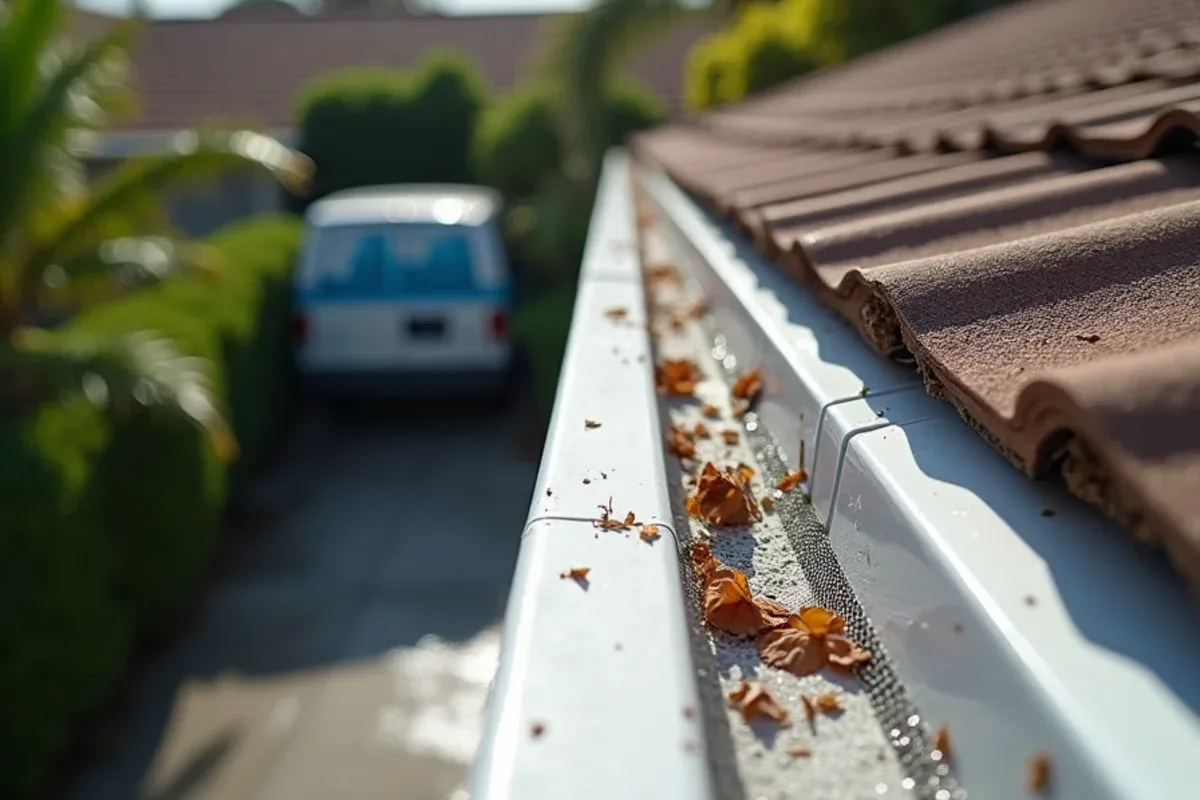
On barrel tile roofs, both styles are available in versions that attach to the gutter lip rather than tucking under the roof edge, which is the only approach we recommend on tile.
For long-term upkeep, stainless mesh resists corrosion well and mostly needs gentle brushing. Aluminum screens hold up, plastic screens fade and warp in our sun. Either way, plan on periodic service; our guard cleaning guide covers how often.
What installing and servicing both styles has taught our crew
Most of the guard failures we get called about trace back to the install, not to the mesh-versus-screen choice. A fine guard laid on a gutter with dead spots, loose hangers or poorly cut corners will disappoint whatever it is made of. This is the order we follow when fitting mesh to an existing gutter:
- Remove any old screen and clean the trough, outlets and downspouts down to bare metal.
- Run water to check pitch, then reset or add hidden hangers where the run holds puddles.
- Confirm the frame matches the gutter size and profile, since a 6-inch gutter needs 6-inch frames.
- Cut and fit each corner and end cap so no gap opens at the miter.
- Screw the frame to the front lip and back edge, never under barrel tile.
- Flow-test each run again and photograph the finished line.
Homeowner guides note that very fine mesh can occasionally be overwhelmed in an extreme downpour, while makers publish flow figures that claim otherwise. In our experience, intake depends on the specific product, the gutter pitch and how clean the surface is kept. Ask any installer for the flow rating of the exact product they quote.
Service differences you will notice
- Mesh needs a soft brush across the surface and a lift at the outlets. Screwed frames take a few minutes per section to open and reset.
- Screens need wedged leaves picked or knocked out of each opening, and a full trough check, because fine debris passes straight through.
- Snap-in plastic is easy to pull for cleaning, which is also why it ends up on the lawn after a squall.
Our gutter guard cleaning visits cover both styles, including systems installed by other companies, and our gutter guards overview lists every style we install.
Which guard we would pick in Coral Springs and across Palm Beach County
Our honest recommendations, by situation:
- Live oaks, black olives or ficus over the roof: micro-mesh, screw-fastened.
- Mostly palms, few other trees: a sturdy perforated aluminum screen can do the job at lower cost.
- Barrel tile roof: either style, lip-mounted only.
- Budget is tight and trees are heavy: stay on a cleaning schedule until mesh fits the budget, rather than buying a screen that will clog.
Around Coral Springs, we see a lot of mixed shade trees in established neighborhoods, which usually points toward mesh. In parts of Palm Beach County with newer, palm-heavy landscaping, a quality screen is sometimes all a home needs. We will look at the trees before we recommend either, and the estimate is free.
Picking mesh or screen for your roof
Mesh earns its higher price where small debris rules the yard; a sturdy aluminum screen is a reasonable, lower-cost answer where palms dominate and trees are sparse. Fastening, fit and a gutter with true pitch matter as much as the material you choose.
Want a second opinion before you buy? Call Southern Gutters FL at (855) 633-0442 for a free estimate. We will look at your trees, roof covering and gutters, then quote the guard style that fits, or tell you a cleaning plan makes more sense.
Questions about micro mesh vs screen gutter guards
Is a leaf filter the same as micro-mesh?
Many guards marketed as leaf filters are a form of fine mesh over a frame. Construction varies by maker, so compare the mesh material, how the frame fastens and what the warranty actually covers rather than relying on the name.
Can micro-mesh be installed on my existing gutters?
Usually, if the gutters are sound, properly pitched and firmly hung. We check hangers, seams and fascia first, because a guard on a loose or sagging gutter will not perform.
How can I tell whether my current guard is mesh or a screen?
Look closely from a ladder or with binoculars. If you can see distinct holes or diamond openings and light through them, it is a screen. If the surface looks like fine fabric that you cannot see through clearly, it is mesh. A photo sent with your estimate request helps us plan the visit.
Do micro-mesh gutter guards handle Florida downpours?
Clean, well-installed mesh handles most afternoon storms, but intake depends on the product, the gutter pitch and the surface condition. A pollen or algae film slows water entry, and valleys that dump concentrated flow can overshoot any guard. Ask for the product's flow rating, keep the mesh brushed, and make sure gutters and downspouts are sized for the roof area.
Services mentioned in this guide
Micro-Mesh Gutter Guards
Fine stainless mesh that keeps black olive leaves, oak tassels and pine needles out while letting heavy rain through.
Learn moreGutter Guards
Guards matched to the palm, black olive and oak debris over your roof, fitted to new or existing gutters.
Learn moreGutter Guard Cleaning & Service
Matted or overflowing guards brushed, lifted where needed and flushed so they shed rain again, whoever installed them.
Learn moreServing Coral Springs, Palm Beach County and the rest of South Florida.