
By Chance, owner of Southern Gutters FL · Published · Last updated
Key takeaways
- Many pool cages hang from a heavy extruded gutter on the house, often called a super gutter, which is part of the enclosure structure.
- Roof water landing on cage screens makes them sag, pop out of their splines and eventually tear.
- Lanai and screen room roofs need their own gutters, sized for the water the main roof sends onto them.
- Downspouts inside a cage should never end on the walking surface or point toward the pool.
- Clean enclosure gutters before rainy season and again after hurricane season, when debris loads peak.
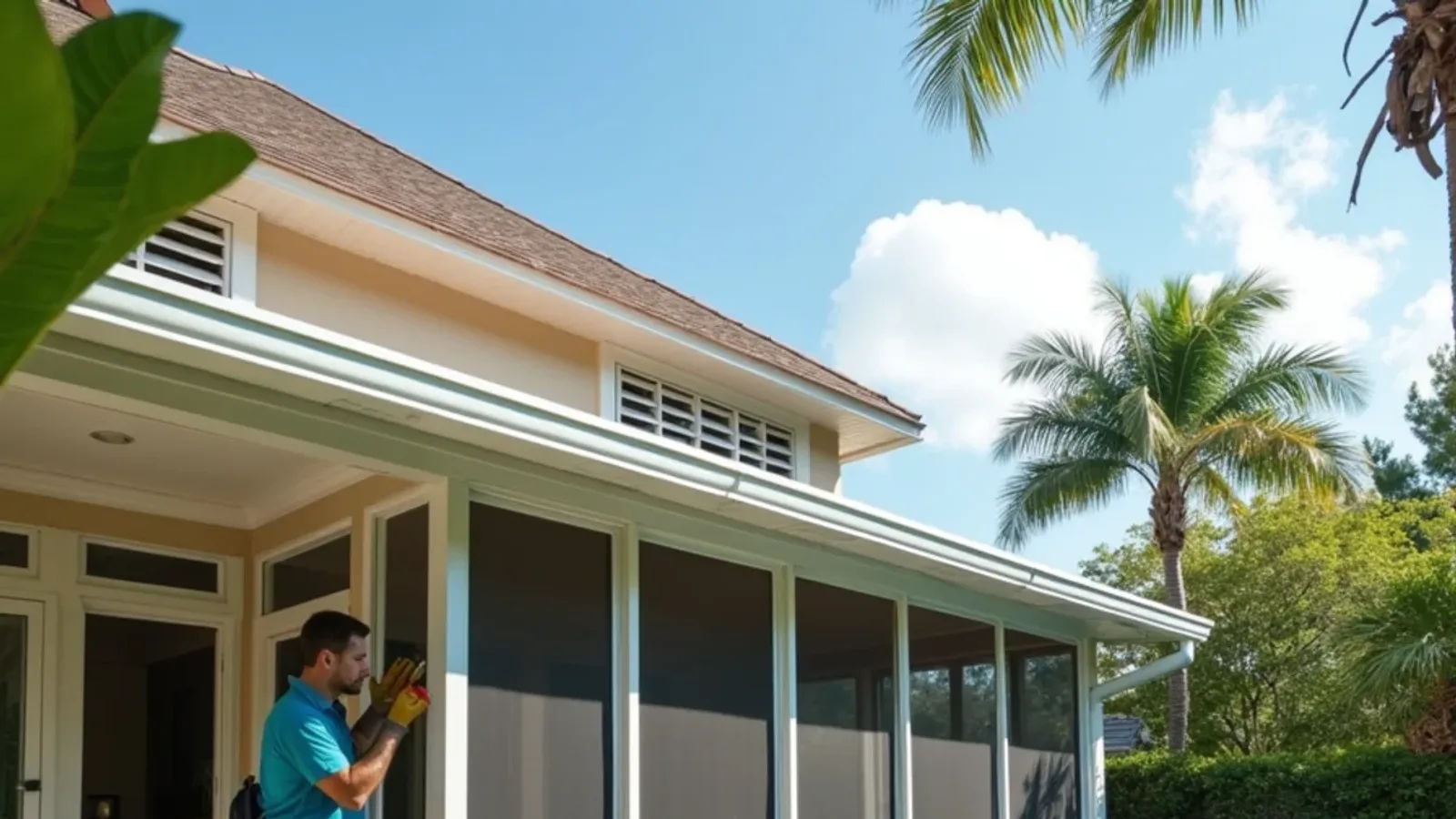
Screen enclosure gutters keep roof runoff off your pool cage screens, deck and pool. On many attached cages the house-side gutter is a heavy extruded super gutter that also holds up the enclosure, so changes to it go through an enclosure contractor. Lanai roofs need their own gutters, and downspouts belong outside the cage.
A pool cage looks simple from the yard: a frame of aluminum beams with screen stretched between them. Where it meets the house, though, it becomes part of the roof drainage system whether anyone planned it that way or not. Screen enclosure gutters decide whether a summer storm ends up in the yard or on top of your screens, your deck and your pool.
This explainer is for owners who want to understand what they are looking at before calling anyone. It covers how a typical enclosure attaches to a house, why roof runoff is so hard on screens, the difference between the structural gutter the cage hangs from and an ordinary gutter, and the best places to send the water once it reaches the ground.
How a pool cage connects to the house
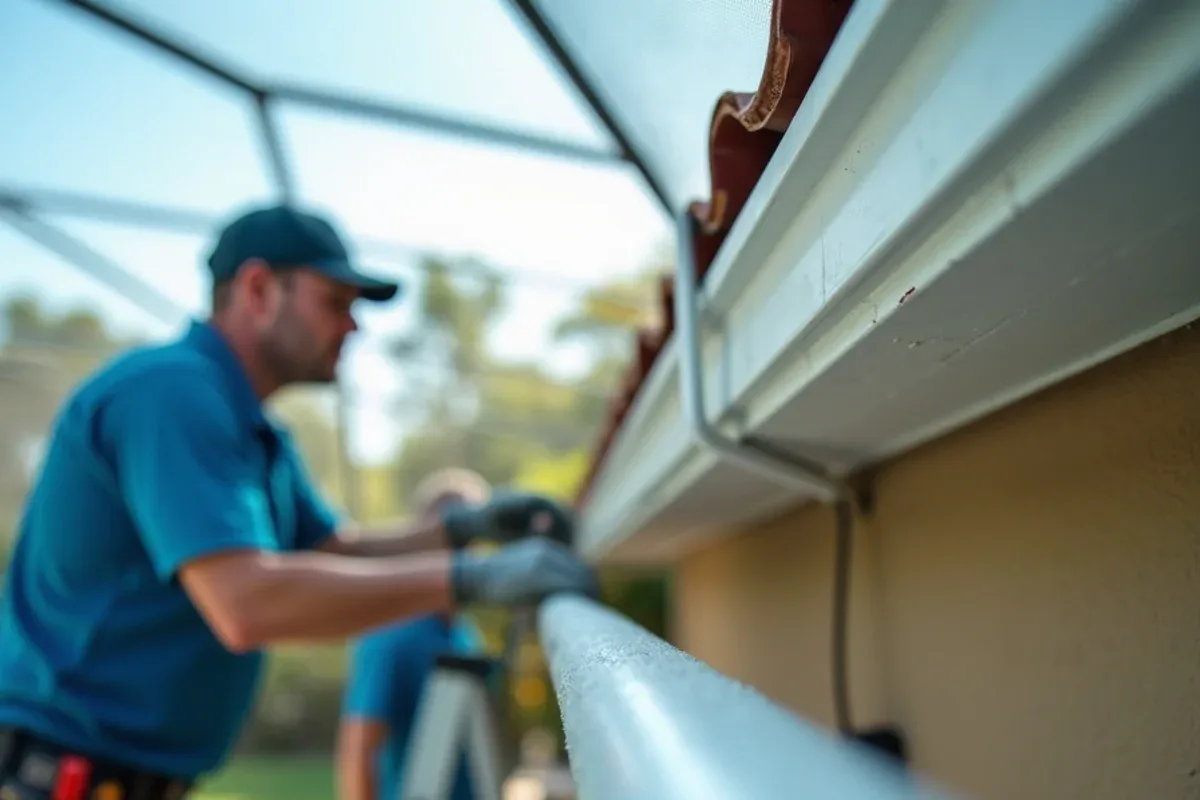
Most South Florida enclosures fall into one of two types. Some are attached directly to the house at the roof edge; others stand off the wall with their own posts and a separate header. On attached cages, the house side is usually carried by a large extruded aluminum channel fastened to the fascia, known in the trade as a super gutter. The cage roof beams rest on or bolt to it.
That channel does two jobs at once. It is a structural member holding up part of the enclosure, and it is the gutter that catches the main roof’s runoff on that side of the house. Because it is engineered as part of a permitted structure, changes to its size or attachment are a job for an enclosure contractor, not something to improvise.
What roof runoff does to a screen enclosure
Screen is made to let air through, not to carry water. When the gutter above overflows or is missing, a sheet of water lands on the cage roof panels. The screen bellies under the weight, the spline that holds it in the frame starts to pop out, and leaves collect in the sag. Wet debris holds more water, the sag gets deeper, and eventually the panel tears.
Below the cage, the same water splashes onto the deck in a line along the house, puddles at the slider, and carries roof grit into the pool. On two-story homes the problem is often worse, because an upper roof can drain onto the lower roof right above the enclosure, concentrating water into one spot.
Do not climb on the cage
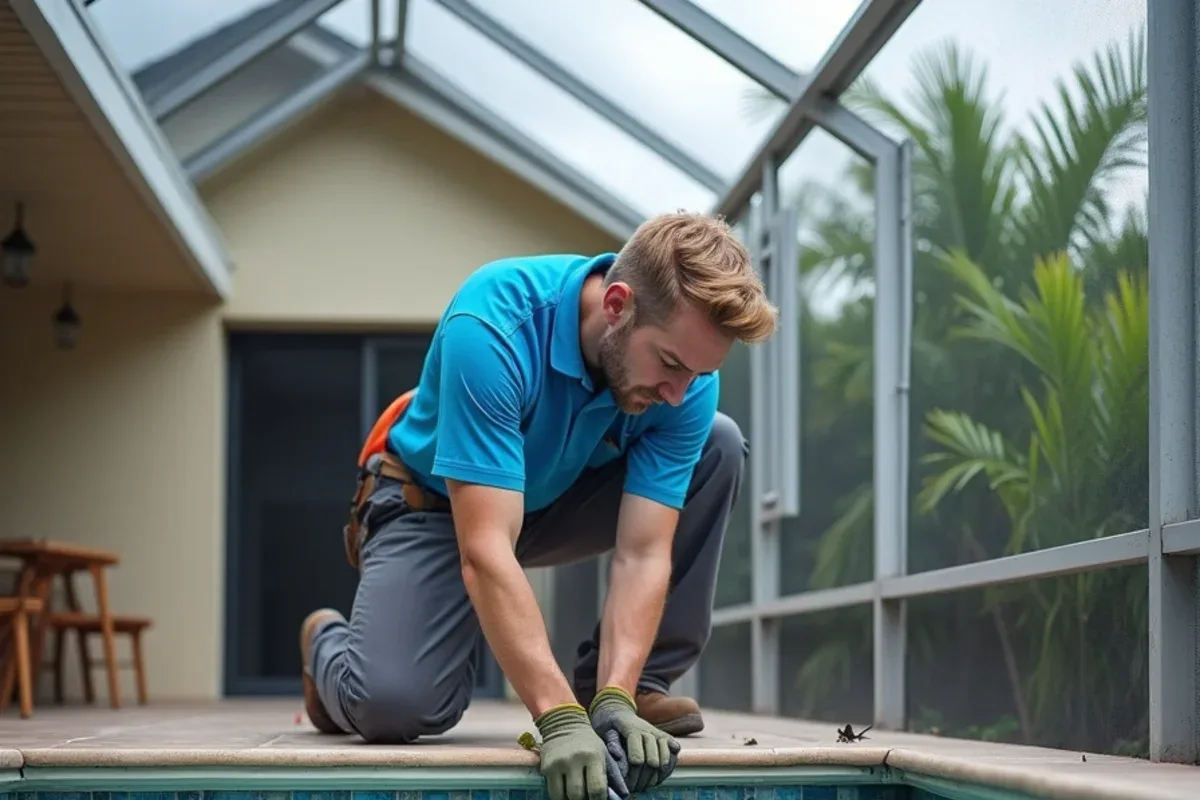
Cage roof beams are not built to support a person. If debris is piling up on the screens, clear what you can from the ground with a soft broom on a pole, or have it done by a crew working from ladders.
The gutter over a screen enclosure: super gutter vs. standard gutter
Owners often assume the gutter above their pool cage is just a regular gutter. Here is how the two compare.
| Feature | Super gutter (enclosure) | Standard seamless gutter |
|---|---|---|
| Main purpose | Supports the cage and catches roof water | Catches roof water only |
| Material | Heavy extruded aluminum | Roll-formed painted aluminum |
| Who changes its size or mounting | Enclosure contractor, usually under permit | Gutter contractor |
| What we can do to it | Clean, clear outlets, add guards, check downspouts | Install, replace, repair, resize |
| Common problems | Clogged outlets, too few downspouts, debris buildup | Clogs, sagging, joint leaks |
On many homes the fix does not involve the super gutter at all. Adding a gutter on the roof above it, splitting water so less reaches that side, or adding outlets and downspouts can take the pressure off. Our pool cage and screen enclosure gutter service starts with tracing where each roof face sends its water.
Lanai gutters and screen room gutters
A covered lanai or a screen room with a solid roof is its own small building as far as water is concerned. It catches rain on its own roof and, often, extra water spilling from the main roof above. Without a gutter along its low edge, that water drops straight onto the patio or into the cage.
Insulated aluminum panel roofs, common on screen rooms, usually have a low-slope surface and a defined drip edge. A seamless gutter along that edge, with a downspout at the corner, keeps the patio dry and stops the splash line along the screen wall. The gutter should be sized for the combined water it receives, not just the patio roof alone.
Pool deck drainage: where should the downspouts go?
Inside a cage, there are only a few good places to put water. In rough order of preference:
- Out of the enclosure entirely, through a downspout routed along a cage post to the lawn outside.
- Into a solid pipe run under the deck or pavers to a discharge point in the yard.
- Into an existing deck drain, but only if that drain is clear, sized for it and leads somewhere sensible.
- As a last resort, onto the deck at a spot that slopes away from the pool and walkways.
A downspout ending on the deck creates a slick, algae-prone spot and can push dirty water toward the pool. Where the yard allows it, an underground line out of the cage is the tidiest answer.
What we find on pool cage gutter calls
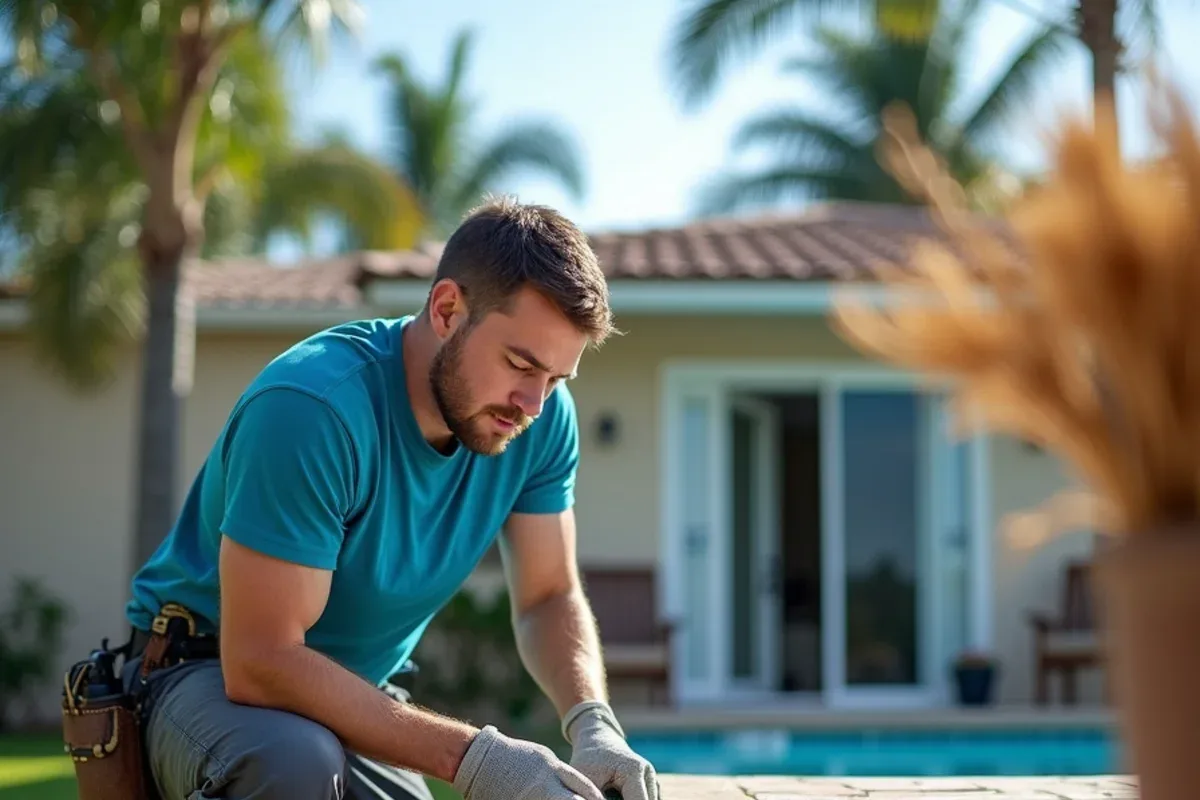
Most calls trace back to the outlets in the super gutter. A long extruded channel catching a big rear roof often drains through only one or two small openings, and oak tassels and palm seeds pack them tight. The channel fills, water tops the back edge and runs down the wall onto the deck, and the owner understandably assumes the cage itself is leaking.
Leaks around an enclosure are slippery to trace. Water can enter at one spot, travel along a beam or the channel, and drip several feet away. We run a hose on the roof above in short sections while someone watches from under the cage, and we check whether runoff is missing the gutter entirely because shingles or tile stop short of the channel or the drip edge is missing.
Working around a cage takes its own setup. Ladders go on padded feet on the deck or outside the screen, standoffs rest on the roof rather than the cage frame, and nobody leans on a beam. Tarps cover the deck, and debris goes into buckets so it never lands in the pool.
Trade-offs owners should weigh
- Guards reduce, not remove, cleaning. Gutter guards on the roof above the cage keep most debris off the screens, but the guard still needs an occasional rinse under heavy trees.
- An underground line is tidiest but more work. Running underground downspout drainage out of the cage means going under pavers or the deck; a downspout along a cage post is simpler and often enough.
- Rescreening alone resets the clock. New screen under the same overflowing roof edge will sag again, so fix the water first.
Keeping pool cage gutters working through the seasons
Enclosure gutters catch everything that blows across the pool: oak tassels, palm seeds, black olive leaves and the occasional frond. Clean them before rainy season starts in May and again after hurricane season ends in November. A guard on the gutter above the cage cuts down on what reaches the screens.
Pool homes built in the 1980s and 1990s in Cooper City and Pembroke Pines are prime examples: big rear roofs, mature trees and cages that cover most of the backyard. On homes like these, a few well-placed outlets and a downspout routed out of the cage often solve years of screen repairs. For the screens themselves, a rescreening company is the right call; our job is keeping the water off them.
Keeping the water off your screens
A pool cage works best when the roof above it is drained on purpose: a clear super gutter with enough outlets, a gutter on any lanai or screen room roof, and downspouts that carry water out of the enclosure instead of onto the deck. Structural changes to the super gutter stay with an enclosure contractor; the drainage around it is our side of the job.
If your screens are sagging or the deck floods along the house every storm, call Southern Gutters FL for a free estimate. We will trace each roof face to the cage, show you where the water is getting through and write up the outlets, gutters and downspouts that fix it.
Questions about screen enclosure gutters
Can you install a gutter on the house above my pool cage?
Often, yes. Where the cage attaches below the roof edge or stands off the wall, a seamless gutter can go on the fascia above it. Where the super gutter takes that spot, we work with it by clearing outlets, adding downspouts or guards, and catching water on the roof above.
Will roof runoff hurt my pool water?
Roof runoff carries grit, leaves, bird droppings and shingle granules. Small amounts are handled by the filter, but a steady sheet of runoff into the pool after every storm adds debris, raises the water level and makes chemistry harder to keep balanced.
How do you clean the gutter above a pool cage?
From ladders, never from the cage roof. We set ladders on padded feet on the deck or outside the screen, rest the standoffs on the roof edge, and hand-clear the gutter and super gutter into buckets so debris stays out of the pool. Then we flush each outlet and downspout with a hose and watch where the water exits. Twice a year, before and after the rainy season, suits most pool homes.
Who repairs a leaking super gutter?
It depends on the problem. Clogged outlets, missing downspouts, sealing at end caps and debris on the roof above are gutter work we handle. If the extruded channel itself is cracked, pulling away from the fascia or sagging under the cage beams, that is structural and belongs with a licensed screen enclosure contractor, since the channel carries part of the enclosure.
Services mentioned in this guide
Pool Cage & Screen Enclosure Gutters
Gutters and downspout routing over pool cages, lanais and screen rooms so roof water stops ripping screens and soaking decks.
Learn moreGutter Guards
Guards matched to the palm, black olive and oak debris over your roof, fitted to new or existing gutters.
Learn moreUnderground Downspout Drainage
Downspouts piped underground to pop-up emitters or the swale, pitched to work with a high water table.
Learn moreServing Cooper City, Pembroke Pines and the rest of South Florida.