
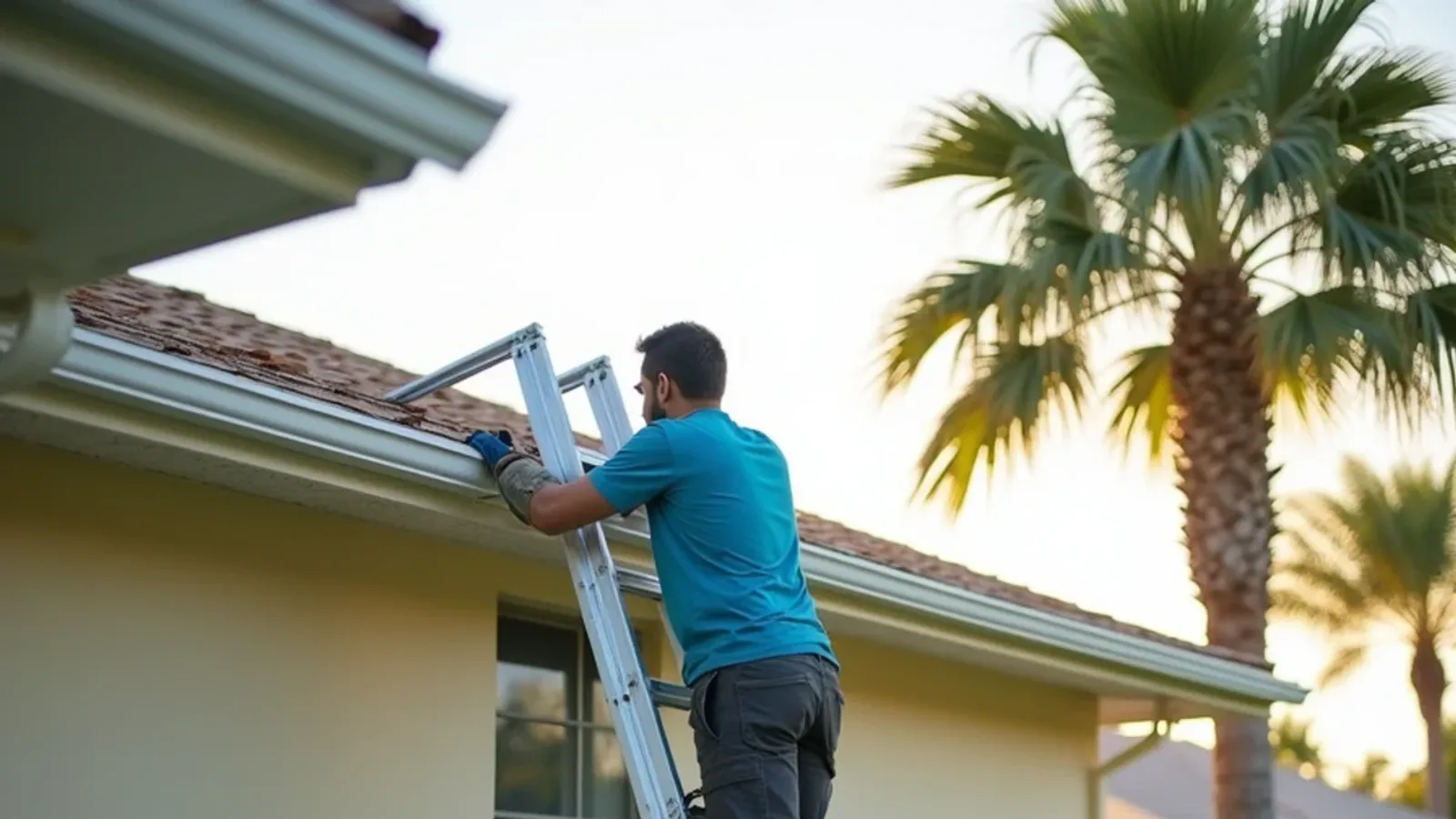
By Chance, owner of Southern Gutters FL · Published · Last updated
Key takeaways
- Single-story, shingle roof, firm level ground and a helper: DIY is reasonable.
- Two-story homes, tile roofs, metal roofs and slopes toward a pool cage are jobs for a pro.
- Set extension ladders at roughly a 4-to-1 angle and extend them about 3 feet above the gutter line.
- Check for wasp nests and power lines before you climb, and stop work when thunder starts.
- Never lean a ladder on the gutter itself or stand on the top rungs.
DIY gutter cleaning is reasonable on a single-story home with a shingle roof, firm level ground, a stabilized extension ladder and a helper at the base. Call a pro for two-story homes, tile or metal roofs, gutters above a pool cage, nearby power lines, wasp nests, or any day you feel unsteady on a ladder.
Cleaning your own gutters looks like a Saturday-morning chore: a ladder, a bucket, an hour of scooping. On a single-story house with a shingle roof and a level yard, it often is. But DIY gutter cleaning is also how a lot of people end up in the emergency room, and South Florida adds a few hazards that guides written for Ohio never mention.
We clean gutters for a living, so we have an obvious bias. We also know plenty of homeowners can do this safely. This guide covers how to set up a ladder properly, what gear to have, which local hazards to watch for, and the situations where calling a crew is simply the smarter choice.
Should you clean gutters yourself? A quick self-test
Run through this table honestly before you buy or borrow a ladder. If you land in the right-hand column for any row, think hard about hiring out that part of the job.
| Situation | DIY reasonable? | Why |
|---|---|---|
| Single-story, shingle roof, level lawn | Usually yes | Short climb, stable footing, no roof walking |
| Two-story home | Call a pro | Fall height and long extension ladders change the risk |
| Barrel or flat tile roof | Call a pro | Tiles crack under foot and ladder pressure |
| Metal roof | Call a pro | Slick even when dry, extremely slick when wet |
| Gutter above a pool cage or screen enclosure | Call a pro | No safe ladder footing; screen panels tear |
| Power line running near the roof edge | Call a pro | Aluminum ladders conduct electricity |
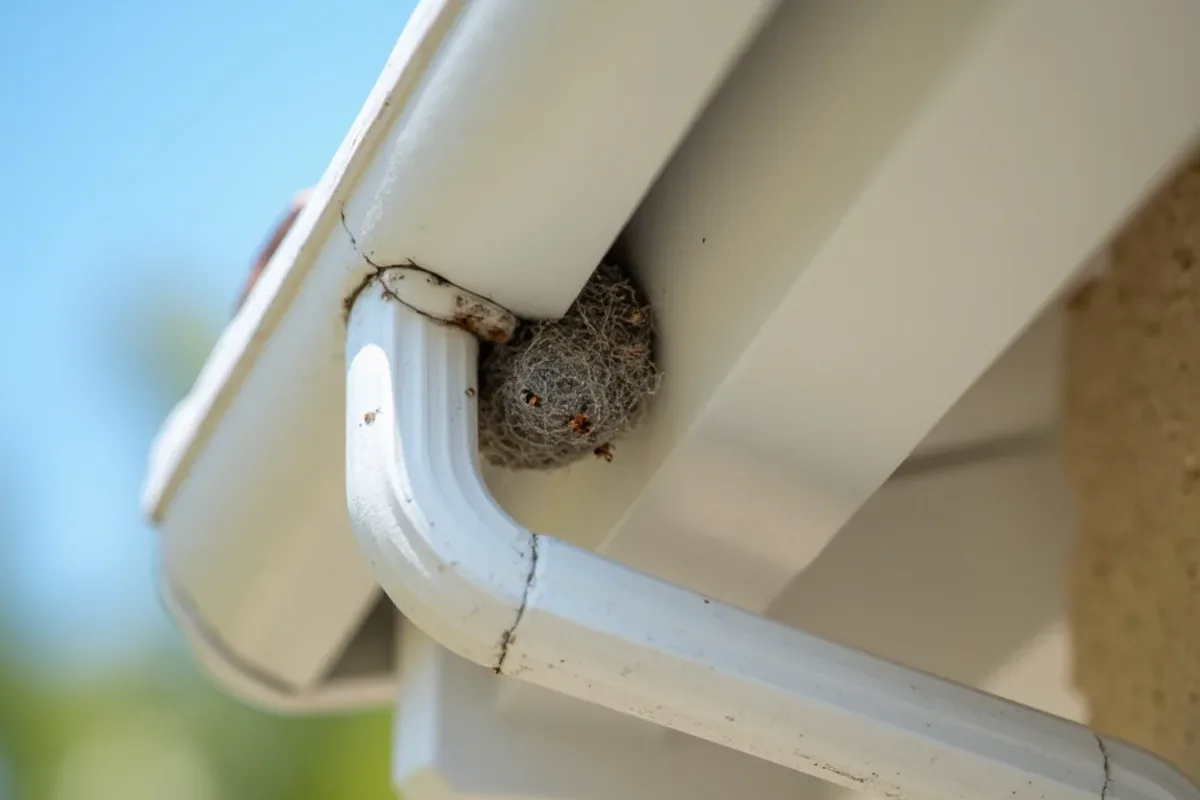
| Wasp nest under the eave | Call a pro | A sting on a ladder often causes the fall |
| You have balance issues or take medications that cause dizziness | Call a pro | Even a short fall can cause serious injury |

Ladder safety for gutters: setting up the right way
The federal ladder standard for construction workers, OSHA 1926.1053, was written for job sites, not backyards. Its basic rules are still the best homeowner checklist we know.
- Angle. Place the foot of an extension ladder about one foot out from the wall for every four feet of height to where it rests.
- Height. If you will step off at the roof, the rails should extend about three feet above the edge. For gutter cleaning, you should not need to step onto the roof at all.
- Footing. Set both feet on firm, level ground. Soft lawn after rain sinks unevenly; a wide board under the feet helps.
- Contact. Keep three points of contact while climbing: two hands and a foot, or two feet and a hand.
- Stabilizer. Use a standoff stabilizer so the ladder rests on the roof or wall, not on the gutter. Leaning on the gutter dents it and loosens hangers.
- Reach. Keep your belt buckle between the rails. Move the ladder instead of stretching.
- Top rungs. Stay off the top step of a stepladder and the top few rungs of an extension ladder.
Check the ladder’s rating
Ladders carry a duty rating label. Your weight plus tools and a full bucket should fall well within it. A light-duty household stepladder is not meant for this work.
Gutter cleaning safety hazards specific to South Florida
Wasps and other residents
Paper wasps love the underside of eaves and the inside of downspout tops. Look before you reach. Frogs, lizards and the occasional iguana also use gutters, and their droppings can carry bacteria, so wear gloves and keep your hands away from your face.
Heat
Aluminum gutters and roof edges get hot enough to burn by midday in summer. Work early in the morning, drink water and stop if you feel lightheaded.
Afternoon lightning
Rainy-season storms build fast. An aluminum ladder against the house is the worst place to be when thunder starts. Get down at the first rumble.
Power lines
Find the service drop where the power line meets your house before you set up. Keep the ladder and yourself well away from it; a standard safe distance for non-electrical workers is at least ten feet.
Gutter cleaning tools and a safe method for single-story homes
If your house passed the self-test, here is the kit we would bring:
- Extension ladder with a standoff stabilizer, plus a helper to foot it.
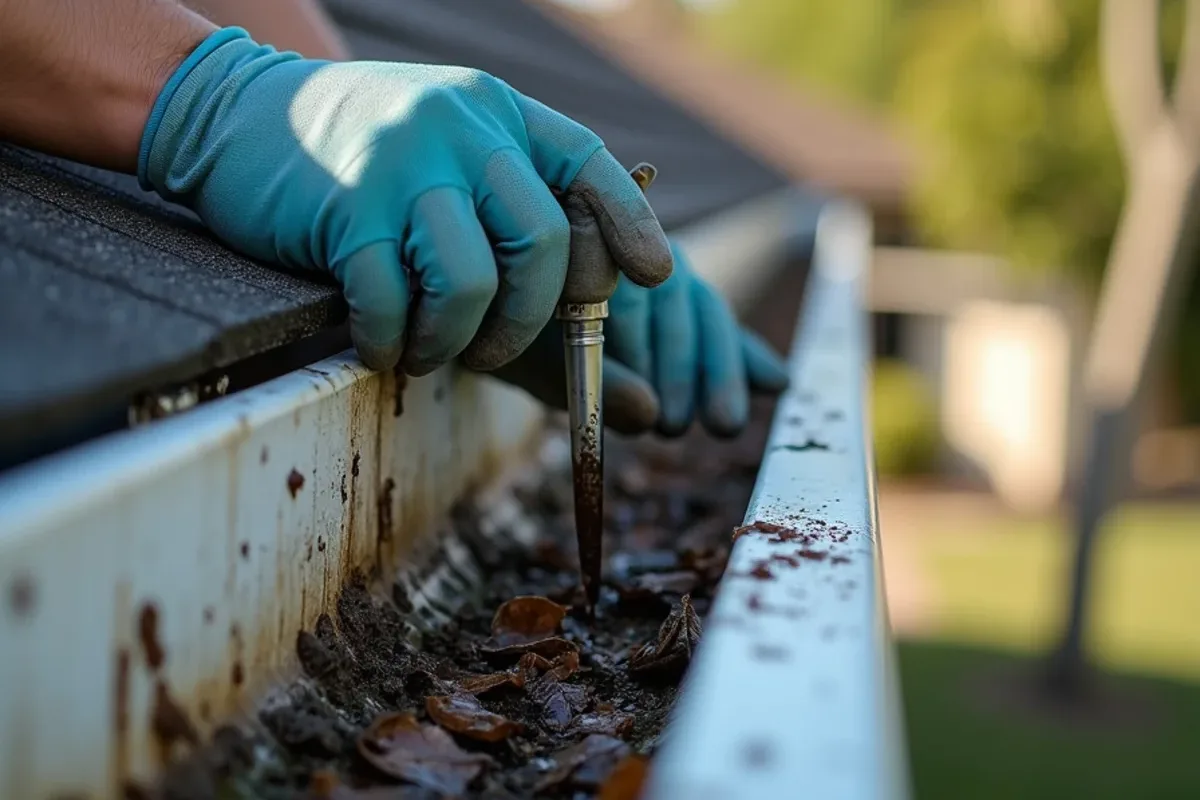
- Heavy work gloves; gutter edges and old screws cut skin.
- A plastic gutter scoop and a bucket with a hook, so you are not climbing with one hand full.
- A garden hose with a shutoff nozzle to flush outlets once the trough is clear.
- Safety glasses for debris and anything that flies out of a downspout.
Work from the downspout end outward, scooping debris into the bucket rather than dropping it into beds. Flush each outlet last and watch the bottom of the downspout. If water backs up, you have a clog in the pipe; leave a stubborn one for a pro rather than climbing higher with a plumbing snake.
What we find after a do-it-yourself cleaning
Plenty of homeowners do a fine job. When we are called after a DIY cleaning, though, the same few side effects show up, and almost none of them are visible from the lawn.
- Debris pushed down the outlet. Scooping toward the downspout instead of away from it packs leaves into the top elbow, and the next storm overflows right above it.
- A hose blast into a packed downspout. High pressure drives the plug further down, sometimes into an underground line where it is much harder to reach.
- Dents where the ladder rested. A ladder leaned on the gutter lip, without a standoff, leaves a low spot that holds water from then on.
- Cracked tiles at the eave from a single step onto a barrel tile roof to reach a corner.
- Downspout sections put back upside down. The upper piece should slide inside the lower one; reversed, every joint leaks down the wall.
The honest trade-off: twice a year on a low ranch house, doing it yourself saves money and works well if you take your time. What you give up is the second set of eyes. A crew cleaning the same gutters also checks hangers, joints and fascia while the ladder is already up, which is how small repairs get caught before the rainy season.
Finish-line checks before you put the ladder away
- Run the hose into the far end of each run and watch the water reach the outlet without pooling.
- Stand at the bottom of every downspout and confirm a full, steady flow.
- Look along the gutter lip for any dent where the ladder rested.
- Bag the debris instead of leaving it in the beds, where the next storm washes it back toward the drains.
- Photograph anything loose, cracked or soft so you can show it to a contractor.
Two-story gutter safety and other times to call a crew
A second story roughly doubles the height you can fall from and makes ladders heavier and harder to set. Tile roofs mean the gutters often sit tight beneath a fragile overhang. Our two-story gutter cleaning service uses longer ladders with stabilizers, works from below the tile edge and flushes every downspout before leaving.
Many homeowners who cleaned their own gutters for decades eventually decide they are done climbing, and that is a sensible call. In Tamarac, large 55+ villa communities often handle gutters through the association, and an insured crew is a better fit than residents on ladders. In Lauderhill, condo buildings around landscaped courtyards add the challenge of protecting plantings and walkways. For everyone else, a routine gutter cleaning visit is a reasonable trade for an afternoon off the ladder.
Know when the ladder is the wrong tool
Cleaning your own gutters can be safe on the right house: one story, a shingle roof, solid ground, a stabilized ladder and a helper. Change any of those, or add tile, a pool cage, power lines, wasps or July heat, and the math shifts quickly toward hiring the job out.
If your house falls on the call-a-pro side, or you are simply done climbing, call Southern Gutters FL for a free estimate. Our insured crews bring the ladders, standoffs and spotters, and we flush every downspout before we leave.
Questions about diy gutter cleaning
Can I clean gutters from the ground with an extension wand?
For light leaf debris on a single-story home, telescoping wands and hose attachments can work. They do not handle packed, wet debris well, and they cannot show you a loose hanger or failed seam. Expect to flush water over the edge and onto your walls if the outlets are clogged.
Is it safe to walk on the roof to clean gutters?
On tile or metal roofs, no. Tiles crack and metal is slippery. On a low-slope shingle roof in dry weather, an experienced person can do it, but working from a properly set ladder is safer for most homeowners.
What if I find damage while I am up there cleaning?
Take a photo, note where it is, and finish only the cleaning. Loose hangers, split corners and soft fascia are worth a professional look, but trying to fix them from the top of a ladder is when people overreach. A clear picture also helps a contractor give you a more accurate written estimate.
Should I use a pressure washer or leaf blower to clean gutters?
Use both with caution. A leaf blower can clear dry, loose leaves from a single-story gutter when you work from a stable ladder, but it struggles with wet, packed debris. A pressure washer is riskier: the kickback can push you off balance, and the spray forces water under roof edges and drives clogs deeper into downspouts. A scoop, a bucket and a gentle hose flush remain the safest approach.
Services mentioned in this guide
Two-Story Gutter Cleaning
Second-story and townhome gutters cleaned by insured crews, with ladder standoffs that protect your stucco.
Learn moreGutter Cleaning Service
Hand-cleaned gutters, every downspout flushed and tested, roof-edge debris bagged and hauled away.
Learn moreServing Tamarac, Lauderhill and the rest of South Florida.