
By Chance, owner of Southern Gutters FL · Published · Last updated
Key takeaways
- Peeling paint, dark staining and gaps between gutter and board are the early fascia rot signs.
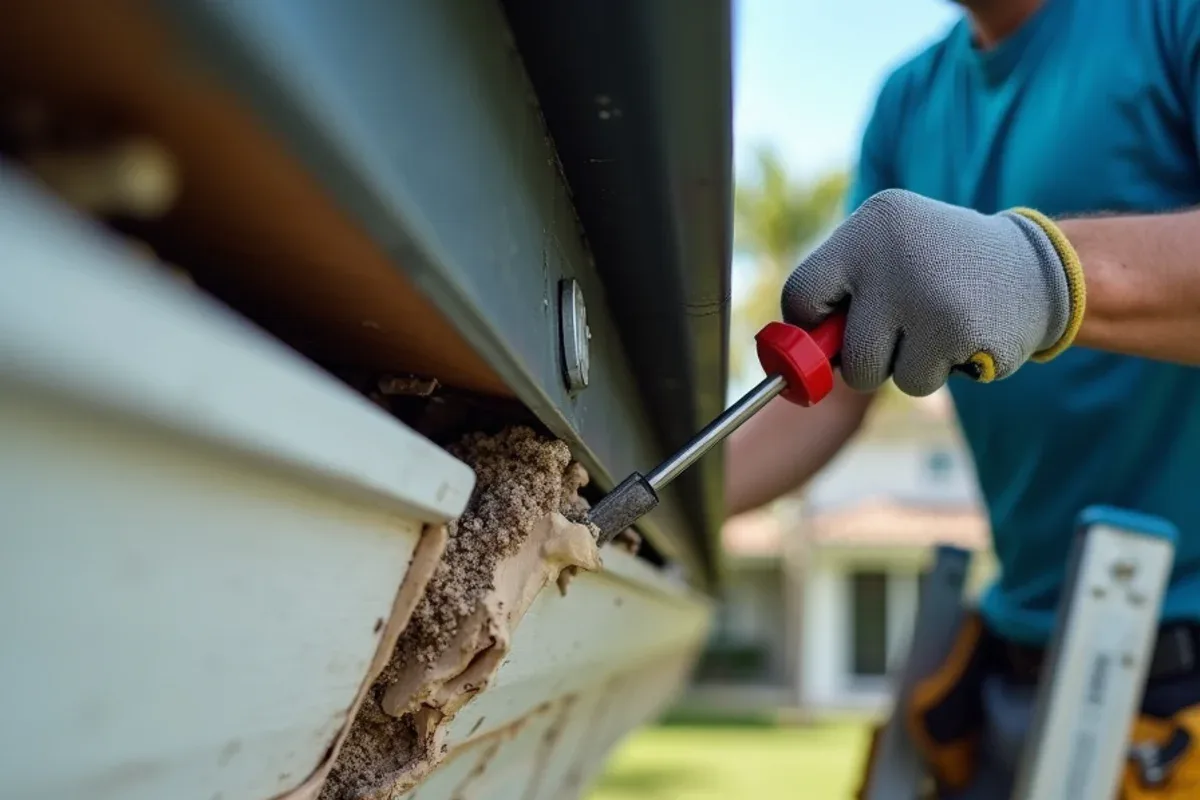
- A screwdriver that sinks easily into the wood near a hanger confirms soft, rotted fascia.
- Overflowing gutters, missing drip edge and water running behind the gutter are the usual causes.
- New gutters fastened to rotted wood will pull loose; the board has to be repaired or replaced first.
- Aluminum fascia wrap can hide rot that is already underneath, so check before wrapping.
You spot rotted fascia behind gutters by its clues: peeling or blistered paint below the gutter line, dark stains under seams and corners, a gap opening between gutter and board, and hangers that wiggle. A screwdriver that sinks into the wood near a hanger confirms it, and the board must be fixed before any gutter is rehung.
The fascia is the board your gutters hang on. On many South Florida homes built before aluminum trim became common, it is wood, and once a gutter is fastened across its face, the back side of that board is out of sight for years. Water that gets behind the gutter can work on it the whole time.
By the time most owners notice rotted fascia behind gutters, the first sign is usually the gutter itself: a sag, a hanger that pulls loose, or a section that tips forward in a storm. This guide covers the earlier clues, how to check the board yourself, and why the order of repairs matters.
Why wood fascia in Florida rots behind the gutter
Three conditions do most of the damage, and they often show up together.
Water getting behind the gutter
If the roof edge has no drip edge flashing, or the shingles or tiles stop short, rain runs off the roof and down the back of the gutter instead of into it. That stream soaks the fascia every storm. We wrote more about this in our guide to water running behind your gutters.
Gutters that overflow
A gutter packed with black olive leaves or palm debris overflows toward the house as often as away from it. Standing water in a clogged trough also keeps the fastener holes wet.
Heat, humidity and old paint
Florida sun cracks paint on the exposed face, and humidity keeps the wood from ever drying fully once water gets in. Fastener holes from old spikes or replaced hangers give moisture a direct path into the board.
Fascia rot signs you can see from the ground
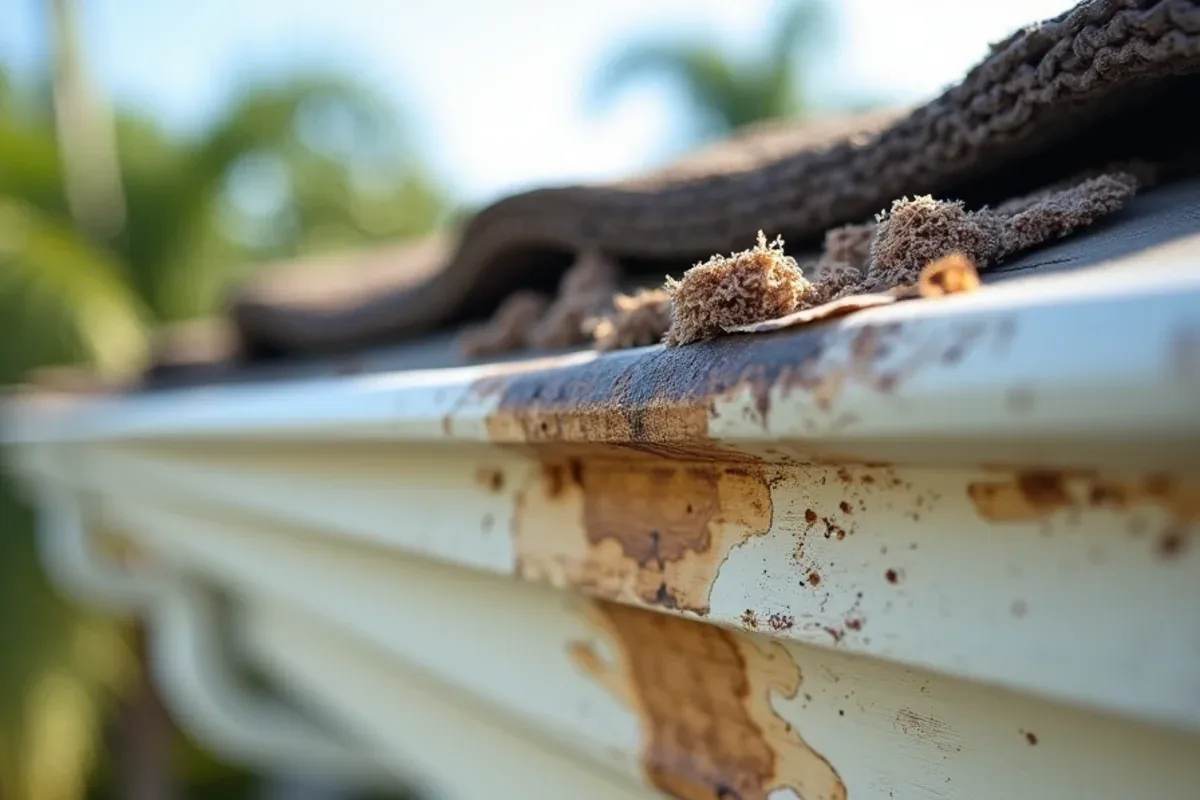
- Paint peeling or blistering along the fascia, especially just below the gutter line.
- Dark streaks or staining on the face of the board below gutter seams or corners.
- A visible gap between the back of the gutter and the board.
- Gutter sections that sag between hangers or tip outward.
- Soffit panels near the edge that are stained, bowed or dropping.
- Wasp nests or insect activity at the board’s corners, where soft wood is easy to get into.
Any one of these is a reason to take a closer look. Several together, on the same run, almost always mean soft wood.
How to check for gutter fascia damage up close
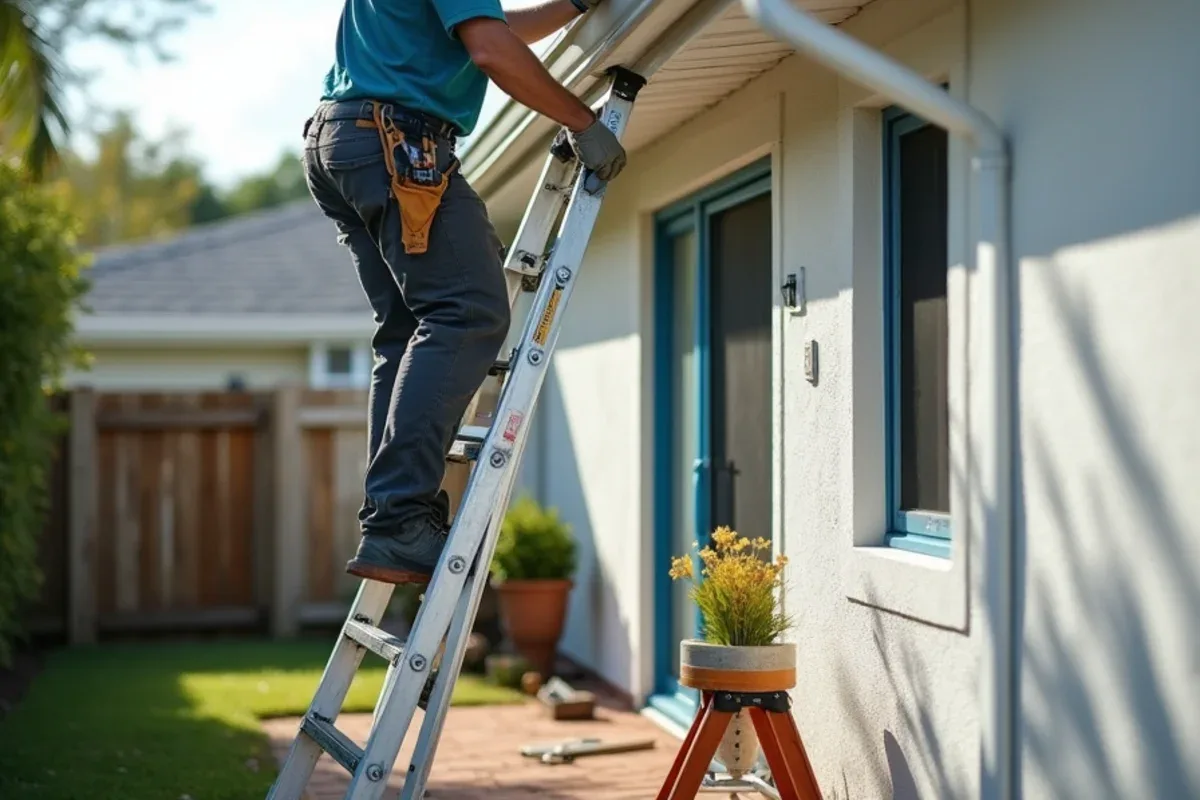
If you are comfortable on a ladder and the run is single story, you can do a basic check. Set the ladder on firm, level ground with a stabilizer so it does not rest on the gutter itself.
- Look along the top of the gutter where it meets the board. Gaps, staining or wood crumbling at the edge are bad signs.
- Press a flat screwdriver into the fascia face a few inches from a hanger. Sound wood resists; rotted wood lets the tip sink with light pressure.
- Check at each corner, below each seam and near each downspout outlet. Those are where water concentrates.
- Gently push up on the gutter near a hanger. If the hanger moves or the screw turns freely, it has lost its bite in the wood.
- Look up at the soffit just behind the fascia for staining or soft spots.
Two-story homes
Leave second-story fascia checks to a crew with proper ladders and stabilizers. A rotted board can give way under a ladder that leans on the gutter.
Fascia repair or fascia board replacement?
How far the rot runs decides the fix. Here is how we sort what we find:
| What we find | What it means | Usual fix | Urgency |
|---|---|---|---|
| Peeling paint, wood still firm | Surface weathering | Scrape, prime and paint; fix the water source | Low |
| Soft spot a few inches long near a seam | Local rot from a single leak | Cut out and patch the section | Moderate |
| Soft wood along most of a run | Long-term water behind the gutter | Replace that length of fascia | High |
| Rafter tails or sub-fascia soft too | Rot has spread into framing | Carpentry repair before any fascia goes back | High |
| Gutter pulling away in sections | Fasteners have nothing to hold | Replace board, then rehang gutter | Immediate |
Our fascia board repair work covers patches and full-length replacement, usually with the gutter taken down, the soft wood cut out, new primed lumber fitted, and drip edge corrected so the water source is gone.
Why the fascia gets fixed before new gutters go up
A new seamless gutter is only as strong as the wood it is fastened to. Hidden hangers screw into the fascia every couple of feet; in soft wood those screws strip or pull through, and the new gutter sags in the first heavy rain. It is the same reason we will not simply re-spike an old gutter onto a board that is already crumbling.
The right order is: take the gutter down, repair or replace the fascia, correct the drip edge, paint or wrap the board, then hang the gutter. When we quote a gutter replacement, we check the fascia first and list any board repair separately so you can see what it is for.
Timing matters too. A board that is merely soft at one corner in spring can be crumbling by the end of a wet summer, and hurricane season is the worst time to discover it, because a gutter full of rain and debris weighs far more than an empty one. If you find soft wood in the off-season, schedule the repair before June rather than waiting for a gutter to tell you.
Where we find it most
Rot behind gutters turns up most on homes with original wood trim: mid-century houses in Wilton Manors and older east Broward neighborhoods, and older homes across Palm Beach County where gutters were added years after the house was built. Aluminum fascia wrap is common on these houses now, and it protects sound wood well. The catch is that wrap installed over existing rot hides it. If your wrap is dented, bowed or rippling near the gutter, the board under it deserves a look.
What we find when the gutter comes off
Taking a gutter down is the only way to see the whole back face of the fascia, and the pattern there is usually predictable. The worst wood sits at the corners, where two boards meet at a mitered joint sealed with caulk. South Florida heat makes the wood swell and shrink every day, the caulk turns brittle, and water finds the open seam long before it finds the middle of a run.
The next spot is around old fastener holes. Spike-and-ferrule gutters leave a hole every couple of feet, and each rehang adds more. We often pull a gutter to find a board that looks like a cribbage peg board, with rot fanning out from each hole.
Ventilation plays a part too. Where soffit vents are painted over or blocked, moist attic air has nowhere to go and the inside face of the fascia stays damp. A homeowner sees peeling paint on the outside and assumes the gutter is the whole story.
Our order of work on a rotted run
- Photograph the run, then take the gutter down in sections and set it on sawhorses.
- Probe the fascia, the sub-fascia and the rafter tails behind it to find where solid wood starts.
- Cut back to sound wood and fit new primed lumber, sealing the cut ends.
- Correct or add drip edge so roof water lands in the gutter, not behind it.
- Paint or wrap the board, then rehang the gutter on hidden hangers with stainless screws into fresh wood.
The trade-off we explain on every estimate: patching a short soft section is reasonable when the rest of the board is firm, but patching a run that is soft in three places just schedules the next repair. If a gutter has started to droop, a sagging gutter repair visit may reveal rot that turns a quick re-pitch into a fascia job, and we will show you the wood before changing the scope.
Catch fascia rot while it is still a small repair
Fascia rot behind gutters starts small and hidden: a failed caulk joint, an overflowing corner, a missing strip of drip edge. Peeling paint, stains, gaps and loose hangers are the early warnings, and a screwdriver test tells you how far it has gone. Fix the board and the water source first, then hang the gutter.
If you have spotted any of these signs, call Southern Gutters FL for a free estimate. We will check the fascia along every run and quote board repair and gutter work as separate lines.
Questions about rotted fascia behind gutters
Can I just put new gutters on old fascia?
Only if the fascia is solid. Fastening new hangers into soft wood means the gutter will pull loose, often in the first big storm. We probe the board along every run before installing and repair any rotted sections first.
Does aluminum fascia wrap stop rot?
It protects sound wood from sun and rain, but it does not stop water that gets behind the gutter if drip edge is missing, and it can hide rot already present. Wrap should go over repaired, dry wood with the water source corrected.
Is fascia rot covered by homeowners insurance?
Usually not when it comes from slow, long-term water exposure, which most policies treat as maintenance. Sudden damage from a named storm can be different. We cannot tell you what your policy covers, but we can photograph the board, note what we found and keep repair items separate so you have clear records for your agent.
How long does a fascia repair take?
A short patch near a corner is often done in part of a day, including taking down and rehanging the gutter. Replacing fascia along a whole side takes longer, and soft rafter tails add carpentry time. We plan the wood repair and the gutter rehang as one job, so the eave is not left open longer than it has to be in the rainy season.
Services mentioned in this guide
Fascia Board Repair & Replacement
Rotted fascia cut back to sound wood, new boards primed and finished, and gutters re-hung tight in one visit.
Learn moreGutter Replacement
Rusted, leaking or undersized gutters swapped for seamless aluminum, with old runs hauled off and fascia checked first.
Learn moreSagging Gutter Repair & Re-Pitching
Drooping or pulling-away runs re-hung on screwed hidden hangers and re-pitched so rain drains to the downspout.
Learn moreServing Wilton Manors, Palm Beach County and the rest of South Florida.