

By Chance, owner of Southern Gutters FL · Published · Last updated
Key takeaways
- Old spike-and-ferrule hangers and rotted fascia are behind most sagging gutters we see.
- Standing water in a gutter for more than a day after rain means the pitch is off somewhere.
- The fix is usually new hidden hangers screwed into sound wood and the run re-pitched toward its outlets.
- Rotted fascia has to be replaced first, or new hangers will pull out the same way.
- Never lean a ladder on the gutter; it is one of the fastest ways to start a sag.
Sagging gutters usually come from loose spike-and-ferrule hangers, rotted fascia, hangers spaced too far apart, packed wet debris or a run hung with the wrong pitch. The fix is to clean the run, replace any soft fascia, re-pitch it toward the outlets and hang it on screw-in hidden hangers set into sound wood.
Stand at the end of your driveway and look along the roofline. If a gutter dips like a hammock between two points, or the front lip leans out further than the back, you are looking at sagging gutters. It rarely happens overnight. A hanger loosens, the run tips a little, water starts to pool, and the extra weight pulls it lower every storm.
Caught early, a sag is one of the most straightforward gutter repairs there is. Left alone, it can tear the gutter off the fascia and take a piece of the house with it. Here is what causes it, how to measure it, and what a proper fix involves.
How to tell if your gutter is pulling away or just looks crooked
Some gutters look uneven because the fascia itself is wavy, which is common on older homes. Others are actually dropping. A few checks from the ground separate the two.
- Gap at the fascia. Look for daylight between the back of the gutter and the board. Any gap that was not there last year is a warning.
- Front lip tilting out. The front edge should sit slightly lower than the back but not lean away from the house.
- Puddles after rain. If water is still sitting in a section a day or two after a storm, that section is low.
- Overflow in the middle of a run. Water spilling out halfway along, rather than at the ends, points to a dip.
- Hardware on the ground. A spike or hanger in the flower bed has come from somewhere above it.
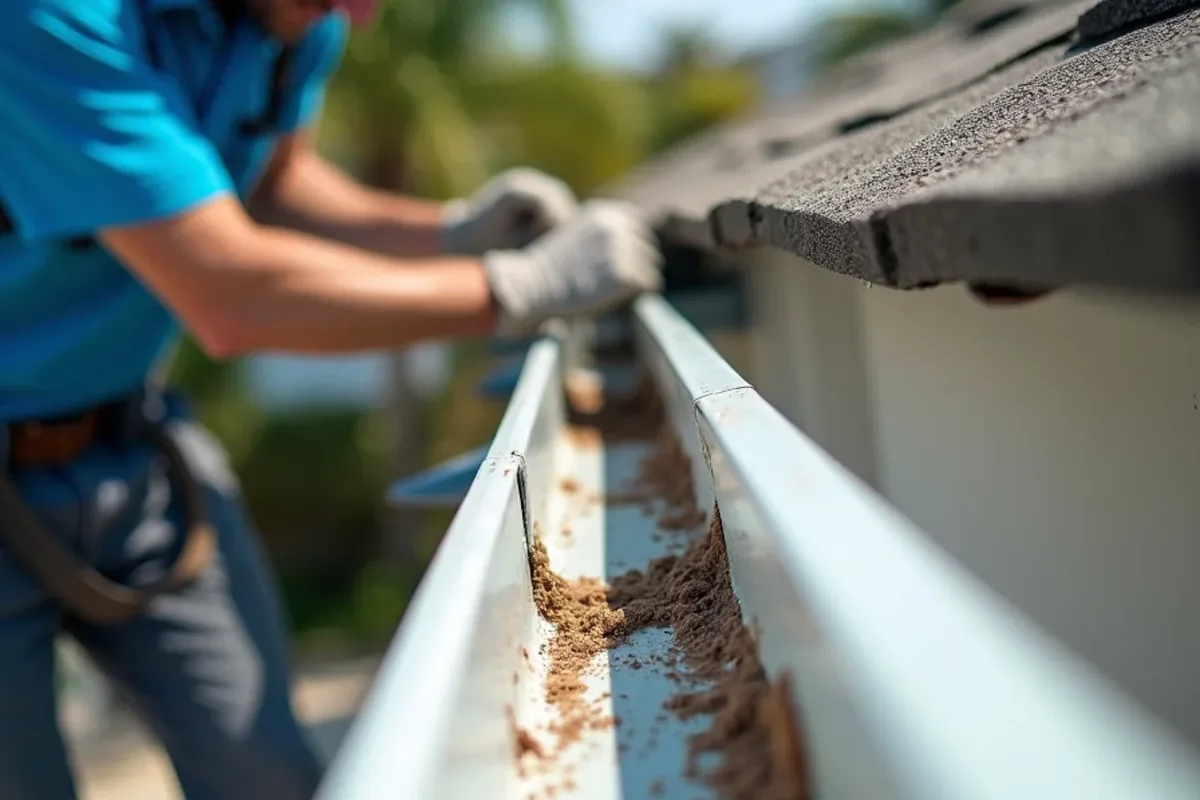
What makes gutters sag: the six usual causes
Spike and ferrule gutters
Older systems were hung with long nails driven through the gutter face, through a metal tube (the ferrule), and into the fascia. Every hot day and every storm works the nail a little looser. Eventually the hole in the wood is larger than the spike, and it slides out.
Rotted fascia
Water running behind a gutter for years softens the wood. Even good screws cannot hold in punky fascia.
Too few gutter hangers
Builder-grade installs sometimes spaced hangers far apart. That might be fine in light rain, but a gutter full of water and wet leaves is heavy, and the run bows between supports.
Debris weight
A season of black olive leaves or palm seed stalks packs into a dense, wet mat. That mat stays heavy even in the dry season.
Ladders and impact
Leaning a ladder against the gutter lip bends it and loosens hangers. A falling royal palm frond in a storm can do the same in one hit.
Wrong pitch from day one
Some runs were simply hung level or tipped the wrong way. Water never drains fully, and the standing weight gradually pulls the low spot lower.
Matching each sagging gutter cause to its fix
| Cause | How to spot it | Usual fix |
|---|---|---|
| Loose spikes | Spike heads backed out of the gutter face | Replace with screw-in hidden hangers |
| Rotted fascia | Soft wood, peeling paint, gaps behind hangers | Replace fascia, then re-hang |
| Hangers too far apart | Bowing between supports | Add hangers to tighten spacing |
| Debris weight | Packed leaves, plants in the trough | Clean out, then check pitch |
| Ladder or storm damage | Bent lip, kinked section | Straighten or replace the damaged section |
| Wrong pitch | Water standing at one end or the middle | Re-pitch toward outlets; add an outlet on long runs |
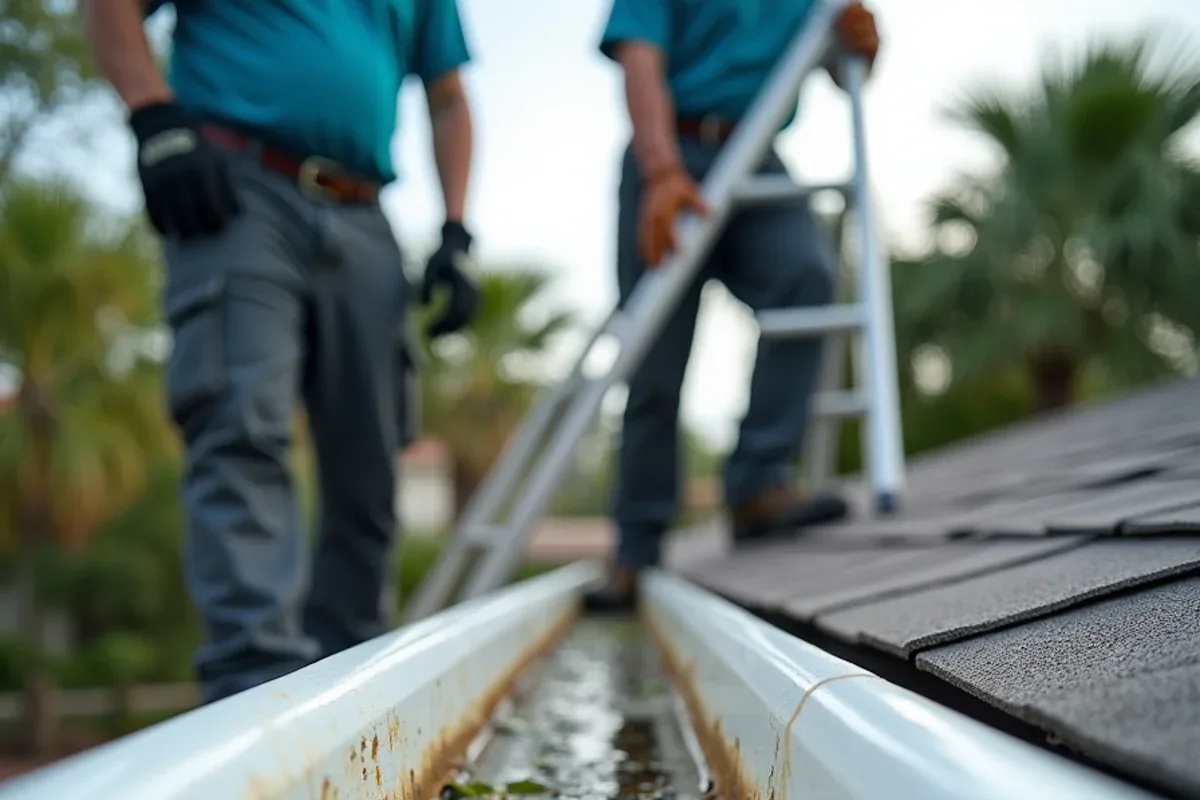
How we re-pitch a gutter and re-hang a sagging run
A good sag repair starts with cleaning the run so we can see what is actually going on. Then we probe the fascia behind every hanger. If the wood is sound, we can work with the gutter as it is. If it is soft, that section of fascia gets replaced before anything is re-hung.
Next, we snap a string line from the high end to the outlet. Gutters need a slight, steady fall toward each downspout, usually a fraction of an inch over ten feet, enough to drain without looking crooked from the street. Long runs often work better split in the middle with an outlet at each end.
Finally, the old spikes come out and screw-in hidden hangers go in, set to the string line and spaced closely enough to carry a full gutter in a summer storm. We fill the old spike holes, flush the run with a hose and watch it drain. Our sagging gutter repair and re-pitching service covers this whole process, including fascia work when it is needed.
When re-hanging is not enough
If a section is kinked, creased or torn at the hangers, straightening it rarely looks right. Replacing that one length is usually cleaner than fighting the bend.
Quick fixes to skip
Hammering a loose spike back in buys a few weeks at most, because the hole is already too big. Wiring a gutter up to the roof or propping it with wood blocks hides the dip but leaves the pitch wrong. Longer spikes driven into rotten fascia simply split the board further. If the fix does not involve sound wood and a proper hanger, expect to see the sag again.
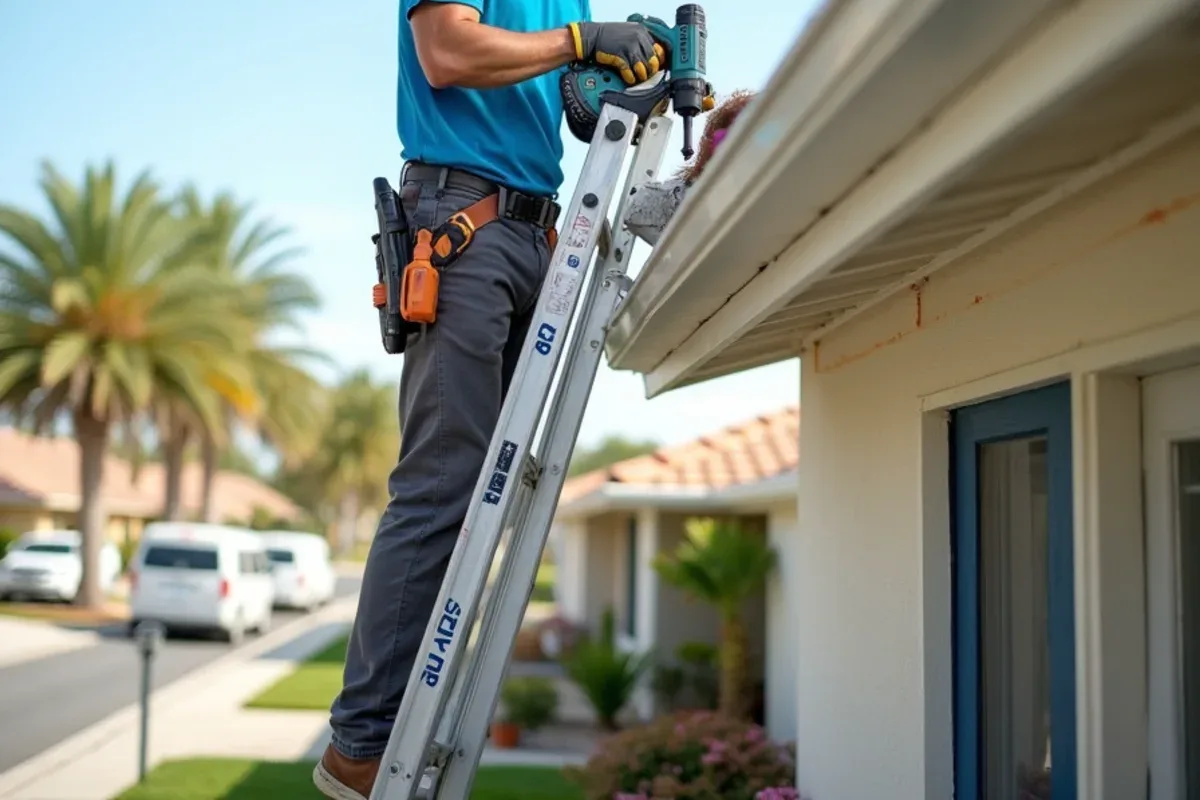
Where the dip is tells us why it is there
Before we climb, we look at the shape of the sag from the yard. The pattern narrows the cause down faster than any tool.
| What the sag looks like | What it usually means |
|---|---|
| A gentle bow between two hangers | Hangers spaced too far apart, or a heavy load of wet leaves |
| One sharp drop with a gap at the board | A single spike or hanger has let go, often in soft wood |
| A whole side sitting low under a big tree | Debris weight, sometimes with plants rooted in the trough |
| A run that slopes away from its downspout | Hung with the wrong pitch from the start |
| A kink near where a ladder usually leans | Impact damage to the lip and the hangers beside it |
On the ladder, we back out one hanger in the worst spot. If the screw spins without biting, the wood is finished there and fascia board repair comes before any re-hang. If the wood is firm, the job is mostly hardware and pitch.
The trade-off we talk through: re-hanging an existing seamless run keeps good metal on the house and costs less, but a run that has been bent, re-spiked and patched for years may never sit straight again. In that case a new length is the cleaner answer. And under black olives or oaks, regular gutter cleaning is what keeps a fresh re-hang from sagging under wet debris a few seasons later.
Standing water in a gutter is more than a cosmetic problem
In South Florida, any gutter that holds water for a few days becomes a mosquito nursery during the rainy season. It also keeps the fascia damp, rusts any steel fasteners and adds weight that worsens the sag. If you see standing water, treat it as the early warning it is.
Sags are especially common in Margate, where many 1960s–70s CBS ranch homes still carry their original sectional gutters after decades of storms, and in Coral Springs, where mature canopy along streets like University Drive drops heavy debris into builder-installed systems. In both cases, a re-hang with new hangers usually puts the gutter back in service for years.
Fix the sag before the next big storm
A sagging gutter is a small problem that grows with every downpour. Find the cause first, whether loose spikes, soft fascia, wide hanger spacing, debris weight or bad pitch, then fix that cause with sound wood, proper hangers and a steady fall to each outlet. Patches that skip those steps tend to sag again.
If you see a dip, a gap or water sitting in a run, call Southern Gutters FL for a free estimate. We will check the hangers and the board behind them and tell you plainly whether it needs a re-hang or more.
Questions about sagging gutters
Can I fix a sagging gutter myself?
On a single-story home with sound fascia, swapping a few loose spikes for hidden hangers is a manageable job for a careful DIYer. Setting the pitch across a whole run, replacing fascia or working two stories up is better left to a crew with the right ladders and tools.
Will gutter guards make a sagging gutter worse?
Not if the gutter is hung properly. Guards add very little weight compared to a gutter full of wet leaves. Re-hang the run on good hangers first, then add guards if your trees warrant them.
How often should gutter hangers be checked?
Look along each run once a year and after any strong tropical storm or hurricane. Loose hangers are easiest to spot from a ladder during a cleaning, so ask whoever cleans your gutters to note any that have backed out or lost their grip.
What slope keeps a gutter from holding standing water?
A common rule of thumb is about a quarter inch of fall for every 10 feet of gutter, running toward the downspout. That is enough to drain completely without looking crooked from the street. Very long runs are often pitched from the middle down to an outlet at each end, so neither half has to drop too far. A string line and a hose test confirm the pitch after a re-hang.
Services mentioned in this guide
Sagging Gutter Repair & Re-Pitching
Drooping or pulling-away runs re-hung on screwed hidden hangers and re-pitched so rain drains to the downspout.
Learn moreFascia Board Repair & Replacement
Rotted fascia cut back to sound wood, new boards primed and finished, and gutters re-hung tight in one visit.
Learn moreGutter Cleaning Service
Hand-cleaned gutters, every downspout flushed and tested, roof-edge debris bagged and hauled away.
Learn moreServing Margate, Coral Springs and the rest of South Florida.