

By Chance, owner of Southern Gutters FL · Published · Last updated
Key takeaways
- Water spilling over the corners or the front lip in ordinary rain is the most reliable clue.
- A dry downspout during a storm usually means the blockage is at the outlet or inside the pipe itself.
- Plants growing in gutters signal months of packed, damp debris, not a few loose leaves.
- Stucco stains, eroded beds and mosquitoes near the eaves are slower, quieter symptoms of the same problem.
- Check during or right after a heavy shower; most clogs reveal themselves only while water is moving.
The clearest signs of clogged gutters are water spilling over the front lip or corners in ordinary rain, a downspout that stays dry during a storm, plants sprouting from the trough, sagging runs, and tea-colored streaks on the stucco below. Most of them can be checked from the ground without climbing a ladder.
From the driveway, a gutter is just a strip of aluminum along the roof. You cannot see the mat of wet leaves or the seed pods wedged in the outlet, and on a two-story house you probably should not climb up to check. The good news is that clogged gutters leave a trail of evidence on the ground, on the walls and inside the house.
We put this list together from what our crews find on service calls across Broward and Palm Beach counties. If you spot two or more of these signs of clogged gutters, the system is almost certainly blocked somewhere, and the longer it stays that way, the more likely the problem moves from cleaning to repair.
Clogged gutter symptoms you can spot from the yard
Walk the perimeter of the house slowly, looking up and then down. Most of these take thirty seconds per side.
1. Gutter overflowing at the corners
Inside and outside miters are where water changes direction and slows down, so debris settles there first. A sheet of water pouring off a corner during a routine shower is the textbook sign. Be aware that a corner can also leak because the seam has failed, which looks similar from below; a clog spills over the top, while a failed seam drips from underneath.

2. Plants growing in gutters
A tuft of grass, a tiny ficus seedling or a fern poking above the lip means there is enough rotting debris up there to act as potting soil. That takes months to build, and the roots can work into seams and lift the gutter off its hangers.

3. Sagging sections between hangers
Wet debris is heavy. When a gutter dips in the middle of a run or pulls away from the fascia, the weight of trapped water and muck is often the cause. Clearing the load sometimes lets a section spring back; often it needs re-hanging.
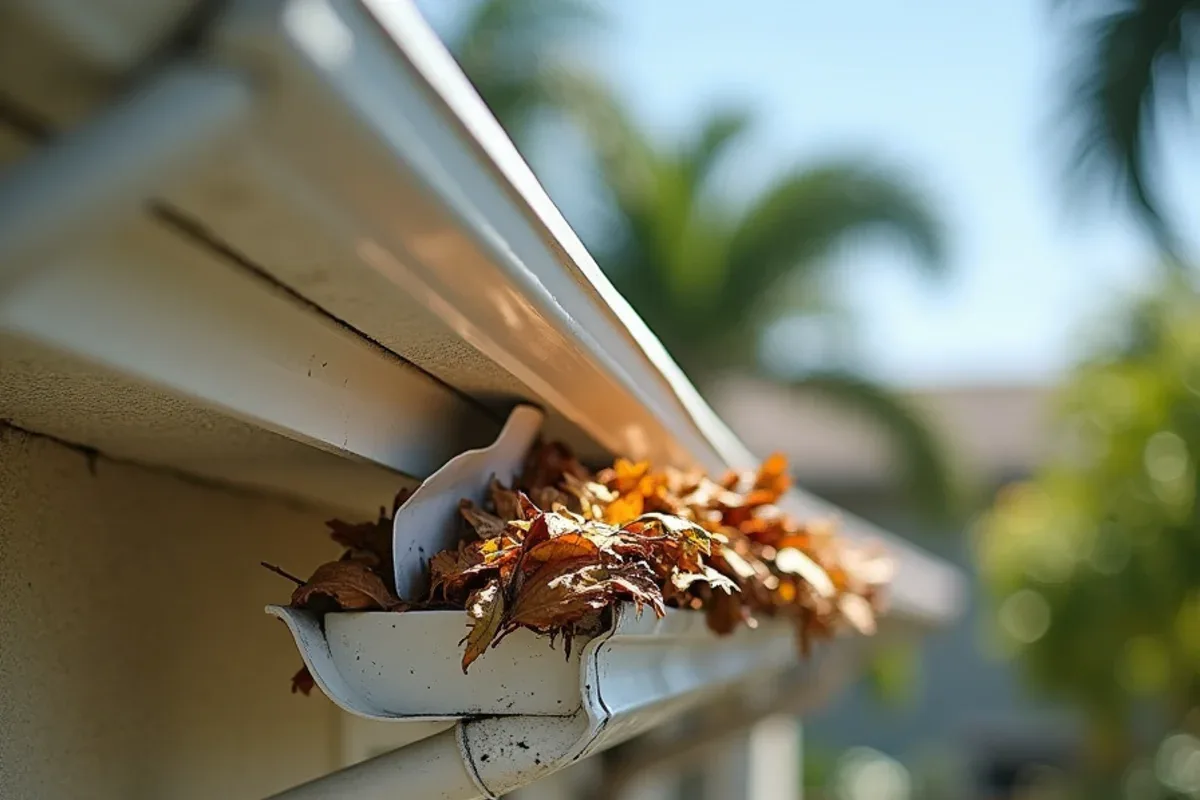
4. Stained stucco and dark drip lines
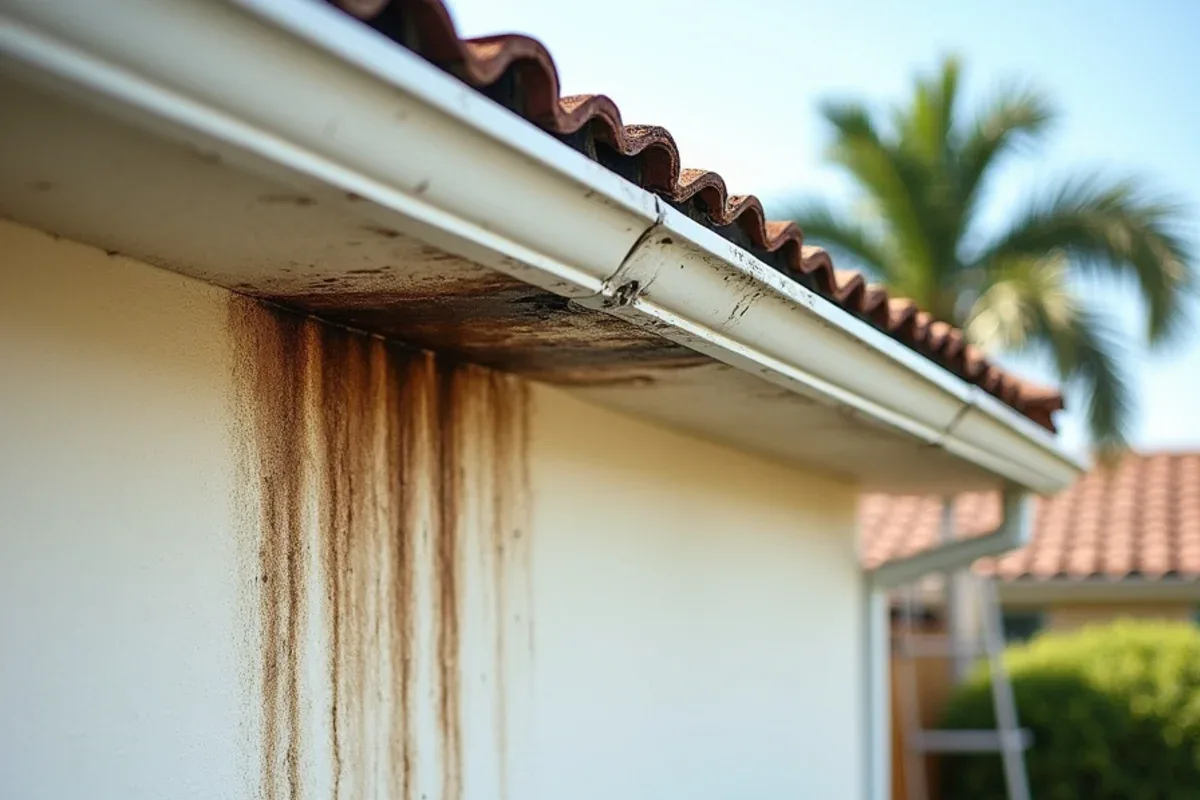
Tea-colored streaks running down the wall under the gutter, or black lines on the face of the gutter itself, show water has been going over the edge instead of into the downspout. On light stucco, these stains can appear after one wet season.
Gutters need cleaning? Signs that show up inside and under the house
5. Water stains on soffits or interior ceilings near exterior walls
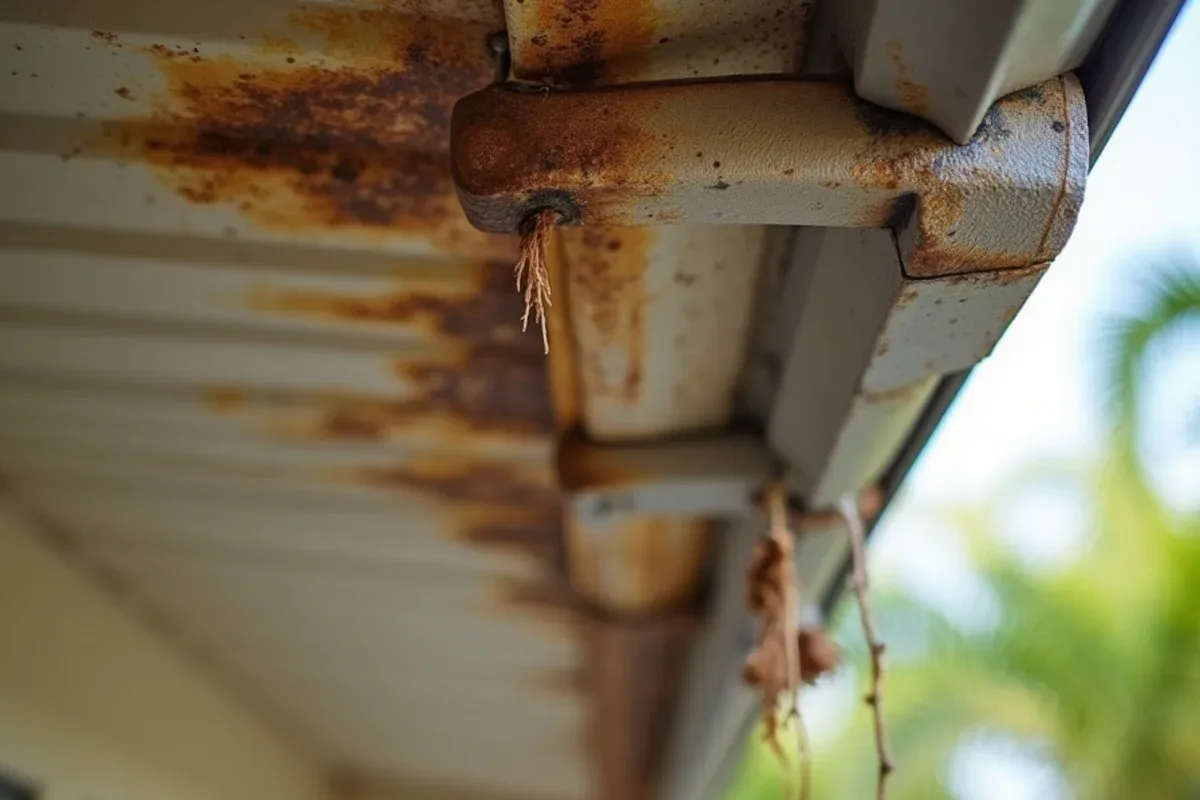
When a gutter backs up, water can run behind it, soak the fascia and wick into the soffit. Brown rings on the soffit or on a ceiling a foot or two inside an exterior wall are worth investigating quickly.
6. Damp walls or musty smells in a garage or utility room
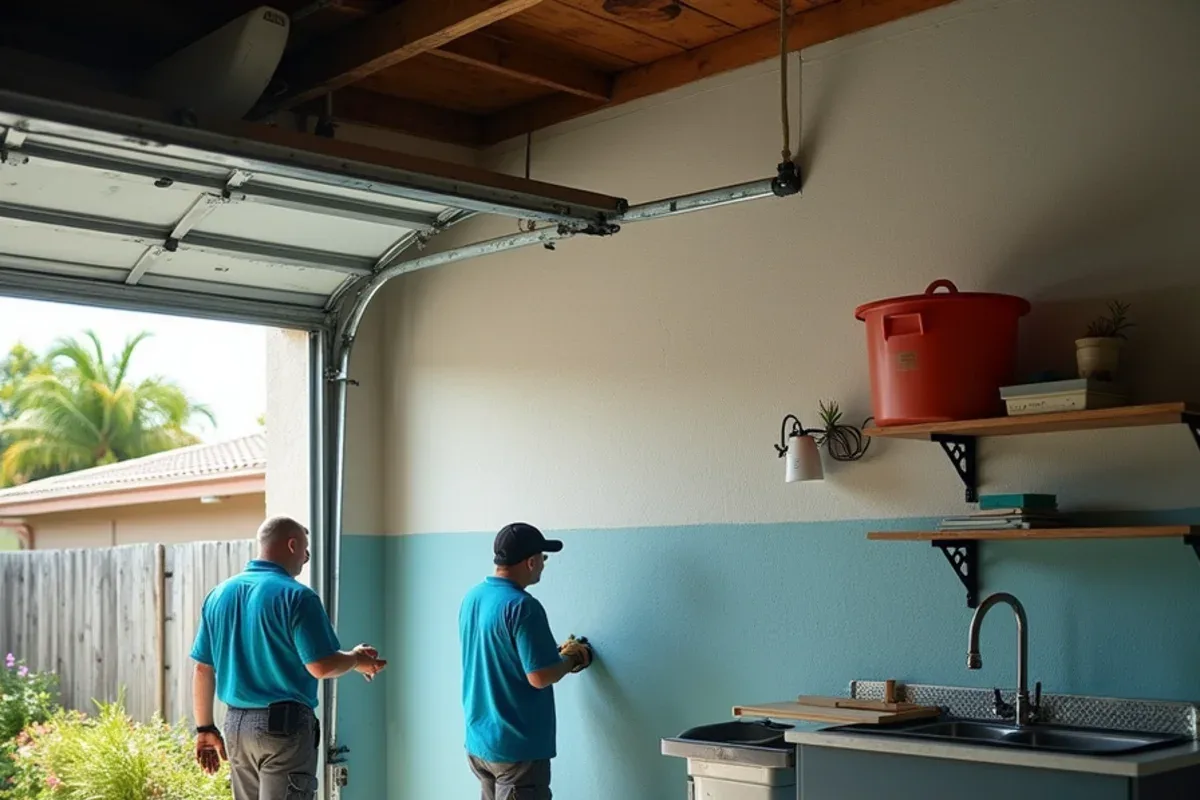
Overflow that lands against the foundation keeps the base of block walls wet. In garages and laundry rooms with no air conditioning, that often shows up as a musty smell or peeling paint near the floor.
7. Eroded mulch beds and splashed walls
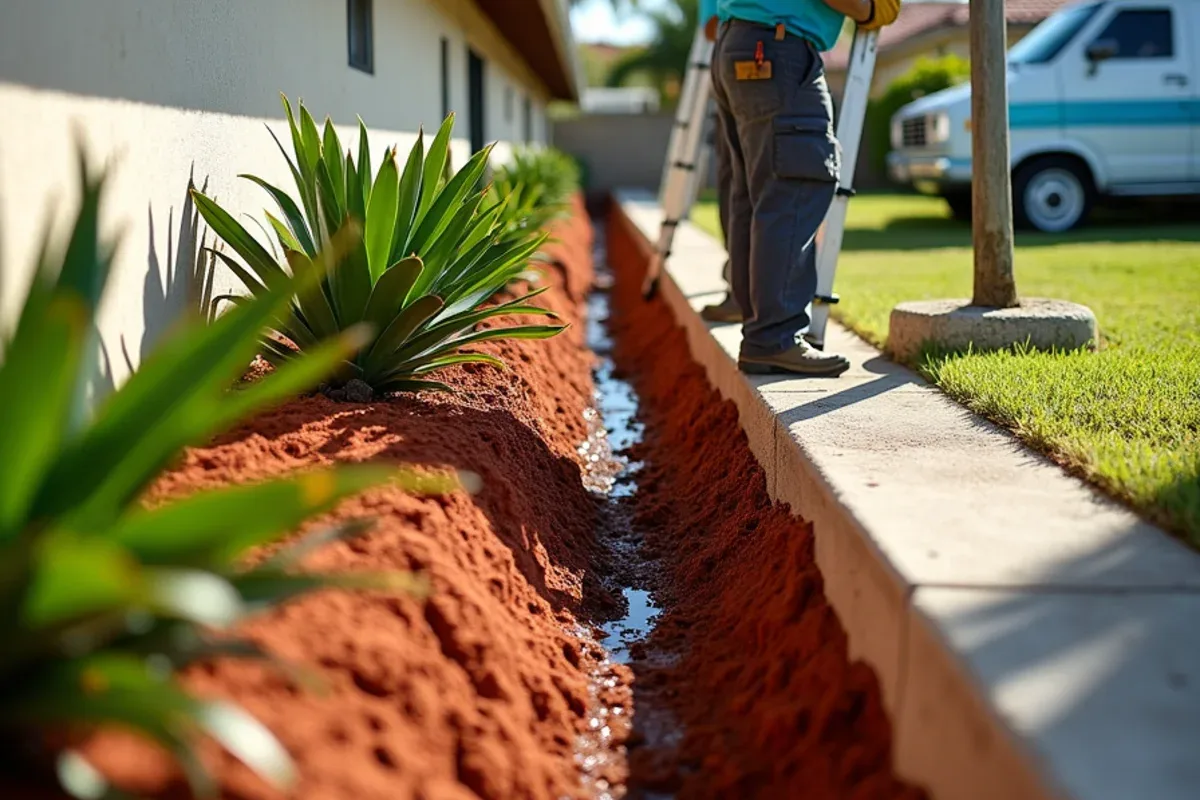
A shallow trench in the bed below the roof edge, or soil splashed several feet up the wall, marks exactly where water is falling instead of draining. Line it up with the gutter above to find the blocked section.
Sign, cause and urgency at a glance
| What you notice | Most likely cause | How soon to act |
|---|---|---|
| Water spilling over a corner | Debris piled at the miter or a nearby outlet | Before the next heavy rain |
| Dry or trickling downspout in a storm | Plug at the outlet or an elbow | Within days |
| Plants sprouting from the gutter | Months of packed organic debris | Soon; roots can damage seams |
| Section sagging or pulling away | Weight of wet debris on hangers | Promptly, before it detaches |
| Brown streaks on stucco | Repeated overflow at that spot | At next cleaning |
| Stains on soffit or ceiling | Water getting behind the gutter | Right away; check for fascia rot |
| Mosquitoes clustering near eaves | Standing water in the trough | Within a week of rain |
The storm test: confirming a clog during South Florida rain
The fastest way to find a clog is to watch the system work. During the next afternoon storm, stand under a covered patio or garage door and look along each run. You are checking three things: every downspout is flowing, no water is coming over the front lip, and nothing is dripping behind the gutter onto the wall.
8. Mosquitoes, 9. birds and 10. a constant drip after rain
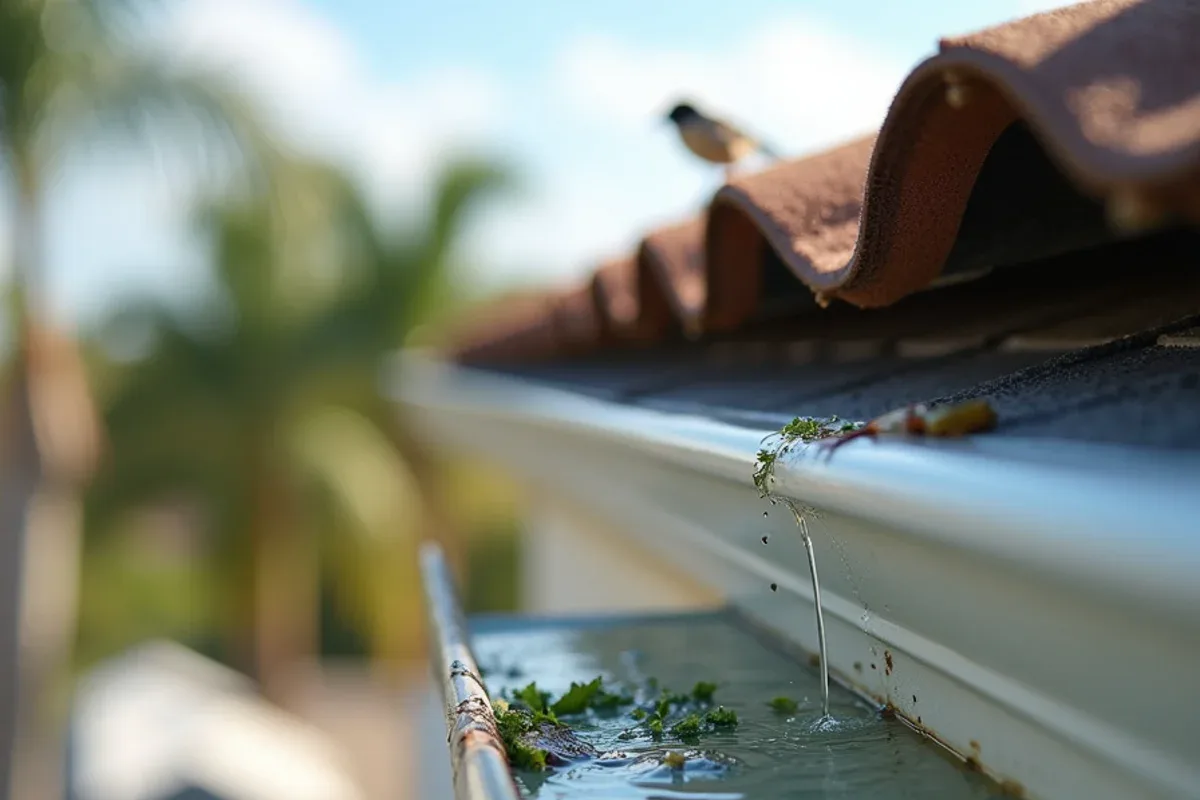
A few last clues. Mosquitoes hovering around the eaves days after rain mean water is sitting in the trough. Birds or frogs regularly perched on the gutter lip are often feeding on insects in the debris. And a gutter that keeps dripping for hours after the sky clears is draining slowly through a partial plug.
Some neighborhoods show these signs sooner than others. In Sunrise, single-story homes under mature shade trees tend to clog at the same few outlets every year, while the condo and townhouse rows common in Lauderhill often share long gutter runs where one blocked downspout floods several units’ entries at once.
Found the signs of clogged gutters? What to do next
If the house is single-story and you are comfortable on a ladder with someone holding it, you can scoop loose debris and run a hose into each outlet. Stay off wet roofs, and do not lean a ladder on the gutter itself; aluminum dents easily and hangers can pull loose.
For two-story homes, tile roofs, or any clog you cannot clear from the top, book a professional gutter cleaning. Our crews clear the troughs, flush and test every downspout, and point out any sagging, rot or seam damage the clog may have caused, so you know whether there is anything beyond cleaning to deal with.
Where the clog really is: what our crew finds once we climb
The spot where you see the symptom is rarely the spot where the blockage sits. Water pouring off a corner is often backed up from an outlet eight or ten feet down the run, because the plug at the outlet turns the whole section into a shallow pond and the corner is simply its lowest edge. So we never clear only where the water spilled. We work the full run toward each outlet and then check below it.
Below is the order we follow on every clogged-gutter call, and it is worth copying if you clean a single-story house yourself:
- Clear the outlet hole first, by hand, before scooping the rest of the trough, so loosened debris does not wash straight into the pipe.
- Run a hose into the outlet and watch the bottom elbow; a slow trickle means a second plug lower down.
- Feed a hand snake through any elbow that will not clear with water alone.
- If the downspout feeds buried pipe, check the pop-up emitter or the swale outlet while the hose is still running.
- Finish by looking at the fascia and hangers along the run that held the water.
That last step catches the sign most people overlook: paint peeling or bubbling along the bottom edge of the fascia board. It usually means water has been running behind the gutter for a season or more. A clog that has gone on long enough to cause peeling paint, a sag or soft wood has moved past cleaning, and we write the repair up separately in the estimate so you can decide on it without pressure.
Trust the clues, then get the whole system cleared
One sign on its own can be a fluke. Two or more, especially a spilling corner paired with a quiet downspout, almost always mean a blockage somewhere between the trough and the discharge point. The sooner it comes out, the less likely you are to be pricing fascia or hanger repairs on top of a cleaning.
Southern Gutters FL clears the gutters, flushes every downspout, tests the flow and sends you photos of what we found. Call for a free estimate and we will tell you plainly whether you need a cleaning, a repair or both.
Questions about signs of clogged gutters
Can gutters be clogged if they look empty from the ground?
Yes. Many blockages sit inside the downspout or at the elbow, where you cannot see them. The gutter can look clear on a dry day and then overflow in the first heavy rain because water cannot exit. A dry downspout during a storm is the giveaway.
How fast can gutters clog in South Florida?
Under heavy-drop trees like black olive or live oak, gutters can go from clean to blocked in a couple of months. Windy storms can do it in a single afternoon by dropping fronds and seed stalks across the outlet. Homes with little tree cover often go six months or more.
Can clogged gutters cause a roof leak?
Yes, though usually at the roof edge rather than through the middle of the roof. When a clogged gutter backs up, water can rise over the back of the trough, soak the fascia and run into the soffit or the top of the wall. That shows up as brown rings on the soffit or a ceiling stain just inside an exterior wall.
Is peeling paint on the fascia a sign of clogged gutters?
Often, yes. Paint that bubbles or flakes along the lower edge of the fascia board, right behind the gutter, means water has been getting behind the gutter instead of draining through it. A clog is the most common cause; a gutter pitched back toward the house or missing drip edge can do the same, so we check both.
Services mentioned in this guide
Gutter Cleaning Service
Hand-cleaned gutters, every downspout flushed and tested, roof-edge debris bagged and hauled away.
Learn moreDownspout Cleaning & Flushing
Clogged downspouts flushed, snaked and flow-tested, including buried lines and frog-packed elbows.
Learn moreServing Sunrise, Lauderhill and the rest of South Florida.