
By Chance, owner of Southern Gutters FL · Published · Last updated
Key takeaways
- Plan around four windows: dry season, pre-rain prep, the wet months and the late-season storm stretch.
- The most important task of the year is a full cleaning and downspout flush before the rains settle in around mid-May.
- During the wet months, watch the system work in real rain at least once a month.
- Hurricane season runs June 1 to November 30; secure loose sections and clear debris before any named storm.
- Keep a simple log of dates, problems found and repairs made.
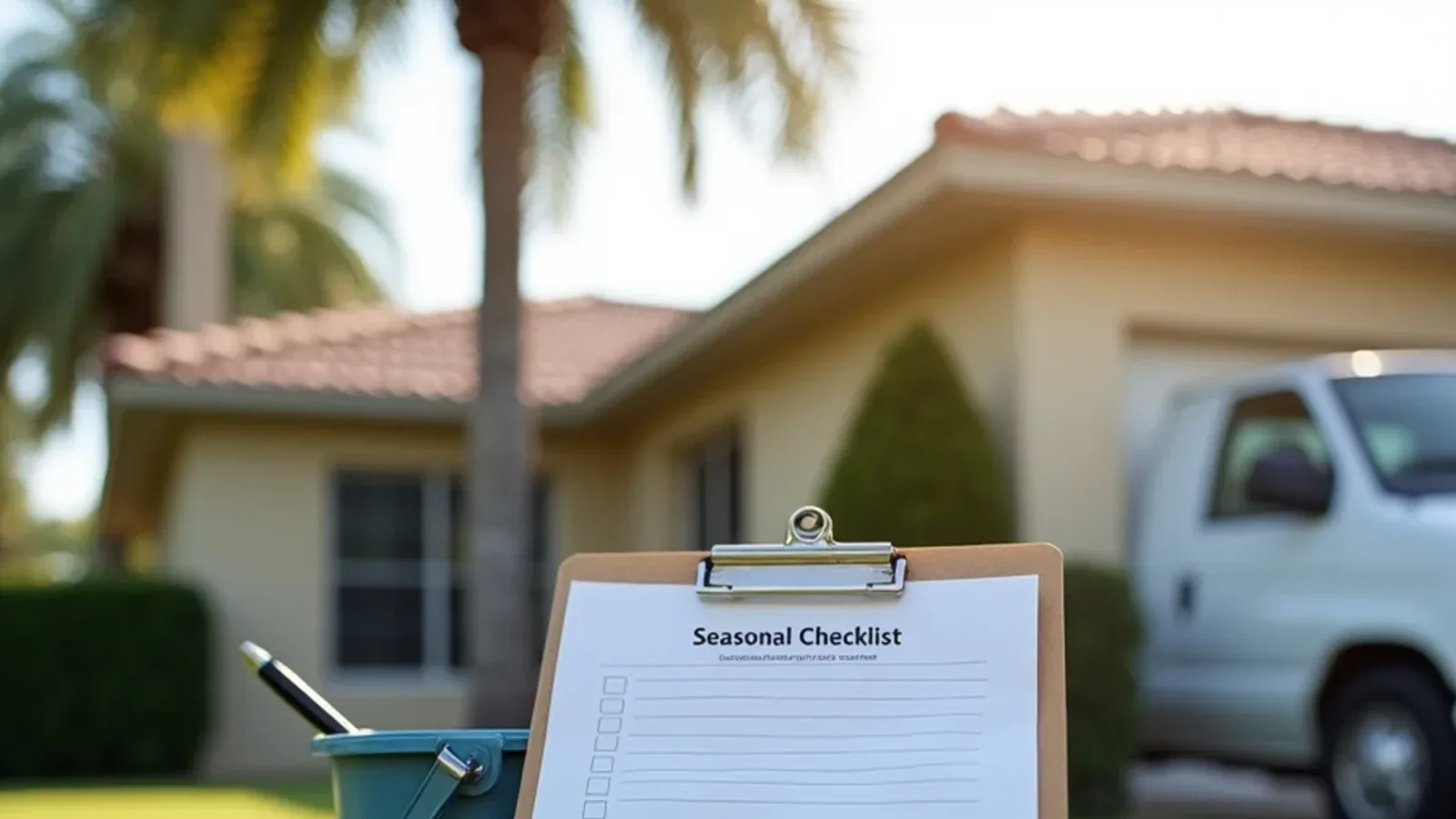
A South Florida gutter maintenance checklist follows the rain, not the leaves: inspect and repair in the dry season, do a full cleaning and downspout flush in late April or early May, watch the flow during summer storms, secure everything before hurricanes, and clean again as the rains taper off in fall.
Northern gutter checklists are built around fall leaves and winter ice. Neither matters here. South Florida has two real seasons, a dry one and a wet one, with hurricane season laid over the second half of the wet months. A useful gutter maintenance checklist has to follow that calendar.
Below is the checklist we use as a starting point with homeowners, broken into four windows. Some items you can handle from the yard in ten minutes; others belong to a crew with ladders. Pin it to the fridge, put reminders in your phone, or hand the whole list to us.
Dry season gutter care (November to April)
The dry months are the easiest time to work on gutters and the time when many trees shed. Use this window for inspection and repairs, since nothing is urgent yet and the weather cooperates.
- Walk the house and look for gutter sections pulling away from the fascia or dipping between hangers.
- Check seams and corners for drips or rust streaks left over from last summer.
- Look at the fascia boards behind the gutter for soft spots, peeling paint or dark stains.
- Note trees that are dropping heavily, such as live oaks pushing out spring leaves or black olives shedding.
- Trim branches back from the roofline before the new growth fills in.
- Book any repair or replacement work now, before the spring rush.

Pre-rainy-season checklist (late April to mid-May)
This is the one window you should never skip. The rainy season typically arrives somewhere around mid-May, and with it comes roughly 70 percent of the region’s yearly rainfall.
- Clear every gutter run of leaves, seed pods and roof grit down to bare metal.
- Flush each downspout with a hose and confirm a strong flow at the bottom.
- Test underground drain lines by watching their outlets while you run water.
- Clean the tops of gutter guards and check they are seated correctly.
- Re-secure loose hangers, reseal leaking seams and replace missing end caps.
- Set splash blocks or extensions so water lands at least a few feet from the foundation.
Book early
Late April and early May are the busiest weeks for gutter crews across the region. Scheduling in March or early April makes it far more likely the job is done before the first big storm.
Wet-season gutter care tips (June to September)
In the rainy months, the job is watching. Almost every afternoon storm is a free test of your drainage, so use a few of them.
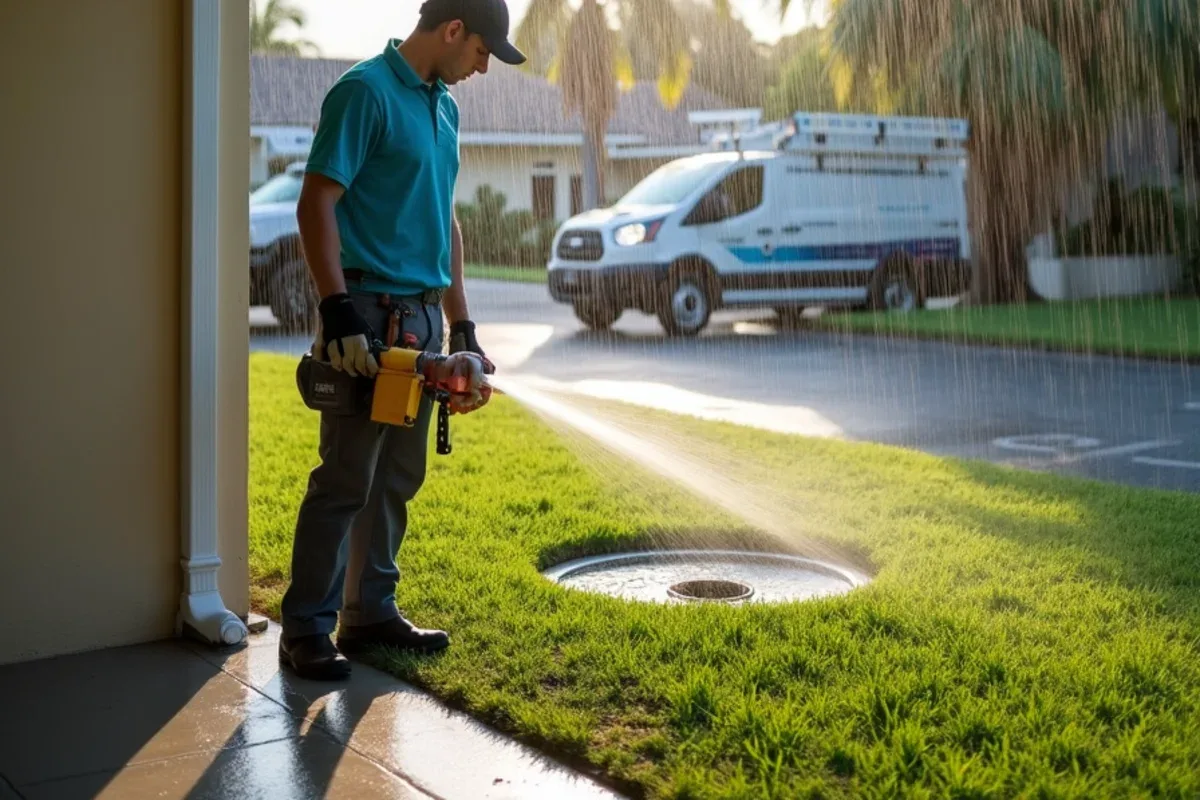
- Once a month during a real downpour, check that every downspout is running and nothing spills over the front edge.
- Look for water running behind the gutter onto the wall or soffit.
- A day after heavy rain, scan for water still standing in the trough or in ponding spots on flat roofs.
- After windy storms, look for fronds, branches or seed stalks lying across the gutter.
- Under heavy tree cover, schedule a midsummer cleaning rather than waiting for fall.
- Empty or check rain barrels and make sure their screens are intact.
Hurricane-season gutter checklist for the peak months
Hurricane season officially runs June 1 to November 30, with the most active stretch typically from August into October. When a storm is forecast, gutters become one of the items on your prep list.
- Before a named storm, clear debris so the gutters can carry heavy rain instead of overflowing against the walls.
- Check for loose or sagging sections that wind could catch and tear off.
- Remove or secure downspout extensions and rain barrels that could become projectiles.
- After the storm, inspect from the ground for bent, detached or hanging sections; do not climb a ladder in high wind or near downed lines.
- Clear storm debris promptly, since a second round of rain often follows.
For a full storm-prep list, see our pre-hurricane gutter checklist.
Seasonal gutter maintenance at a glance
| Task | Dry season | Pre-rain | Wet months | Late storm season |
|---|---|---|---|---|
| Full cleaning | If heavy tree drop | Yes | If under heavy trees | Yes, as rains taper |
| Downspout flush | Optional | Yes | After major storms | Yes |
| Watch flow in real rain | No | No | Monthly | After storms |
| Hangers, seams, end caps | Inspect and repair | Final fixes | Spot-check | Inspect for wind damage |
| Fascia and soffit check | Yes | Quick look | Look for water stains | Yes |
| Tree trimming | Best time | Finish up | Only for safety | After storm damage |
| Guard cleaning | If needed | Yes | Check after storms | Yes |
Homes under heavy canopy, like many of the mature neighborhoods in Coral Springs, often need a cleaning in three of these four windows. Coastal and tile-roofed homes in Boca Raton put extra weight on the seam and fastener checks, since salt air and slow-draining tile debris shorten the life of neglected parts.
Making annual gutter maintenance automatic
A checklist only works if someone follows it. Many owners start strong and lose track by July. If that sounds familiar, a gutter maintenance plan builds the cleanings and inspections into a fixed schedule, so the pre-rain visit and the late-season visit happen on time without anyone having to remember.
Each plan visit covers cleaning, flushing and a written note of anything that needs attention, which also gives you the maintenance record that insurers and buyers sometimes ask about. Whether you do it yourself or hand it off, keep a simple log: dates, what was found and what was fixed.

The checklist items homeowners skip, and what we find when they do
Most people remember the cleaning. The items that slide are the quiet ones, and they are the ones we end up repairing. Three show up again and again on South Florida houses.
Sealant at corners and end caps
A seamless gutter has no joints along the run, but it still has miters at the corners, end caps and outlets, and each one relies on sealant. Years of strong sun dry that sealant out until it cracks and lets water weep through. A yearly look at every corner and cap during the dry months catches it while a reseal is still enough, before rust streaks and fascia rot turn it into a bigger repair.
Fasteners near the coast
Salt air works on hardware first. On older installations we still find plain steel screws and spikes rusting inside the gutter while the aluminum around them looks fine. That is why our installs use stainless-steel hardware, and why coastal homes should add a fastener check to the dry-season walk-around even when the gutters look clean.
The downspout below grade
A downspout can run perfectly at the elbow and still be blocked in the buried line beyond it. Run a hose into the outlet and watch the pop-up emitter or swale outlet, not just the elbow. If the water backs up, our downspout cleaning and flushing clears the line before the wet season puts it to work.
Take “before” photos in May
Once the pre-rain cleaning is done, photograph every side of the gutter line from the ground. If a storm damages the system later, you have a dated record of its condition. A photo documents condition; it does not settle what a policy covers.
Four windows, one simple habit
You do not need a long list taped to the fridge, just four dates on the calendar: a dry-season inspection, a pre-rain cleaning, monthly storm watching in summer and a late-season cleanup. Add a pre-hurricane gutter prep visit whenever a named storm is on the way, and keep your log up to date.
If you would rather hand the list to someone else, Southern Gutters FL will build it into a maintenance plan around your trees and roof. Call for a free estimate and we will put the schedule and the scope in writing.
Questions about gutter maintenance checklist
Which items on this checklist can I safely do myself?
Anything done from the ground: walking the perimeter, watching downspouts in the rain, checking splash blocks and extensions, spotting stains and sagging sections, and keeping a log. Cleaning a single-story gutter from a stable ladder is reasonable for many owners. Two-story work, tile roofs and anything near power lines are best left to a crew.
What if I missed the pre-rain cleaning?
Do it as soon as you can rather than waiting for fall. A cleaning in June or July still prevents a summer of overflow, fascia soaking and standing water. Pick a dry morning, since afternoon storms build quickly during the wet months, and flush the downspouts at the same time.
Does this checklist change for condos and townhomes?
The tasks are the same, but who does them changes. In many associations the gutters belong to the common elements, so owners report problems to the board or manager instead of hiring their own crew. It is still worth watching your section in heavy rain and passing along what you see.
How often should gutter seams and corners be resealed?
There is no fixed interval. Check every corner, end cap and outlet once a year, ideally in the dry months, and reseal any joint where the sealant has cracked, pulled away or shows rust streaks below it. Under South Florida sun, sealant on older sectional gutters fails sooner because there are many more joints to watch.
Should I photograph my gutters before hurricane season?
Yes. A set of dated ground-level photos taken after your pre-rain cleaning shows the condition of the gutters, downspouts and fascia before any storm. If wind damages the system later, those photos help you and your insurer see what changed. Take them again after the storm, before anyone removes debris or makes repairs.
Services mentioned in this guide
Gutter Maintenance Plans
Spring, pre-hurricane and fall cleanings booked for you, with a yearly inspection and storm-season priority.
Learn moreDownspout Cleaning & Flushing
Clogged downspouts flushed, snaked and flow-tested, including buried lines and frog-packed elbows.
Learn morePre-Hurricane Gutter Prep
Gutters cleared, hangers tightened, downspouts strapped and loose guards fastened before a named storm arrives.
Learn moreServing Coral Springs, Boca Raton and the rest of South Florida.