
By Chance, owner of Southern Gutters FL · Published · Last updated
Key takeaways
- Green iguanas and Cuban tree frogs are invasive in South Florida, and both use roofs and gutters regularly.
- Frogs in downspouts can block water flow and are often a sign the pipe is already holding debris and moisture.
- Paper wasps nest under eaves and gutter lips; leave large or active nests to a pest professional.
- Roof rats travel along gutters and overhanging branches to reach gaps in soffits and roof edges.
- Clean gutters, intact guards and trimmed branches remove most of what draws pests in.
To keep pests out of gutters in South Florida, keep the troughs and downspouts clean and dry, fit guards and outlet strainers, trim branches that bridge onto the roof, and seal soffit gaps. Iguanas, Cuban tree frogs, paper wasps and roof rats come for shelter, water or food, and a clean gutter offers little.
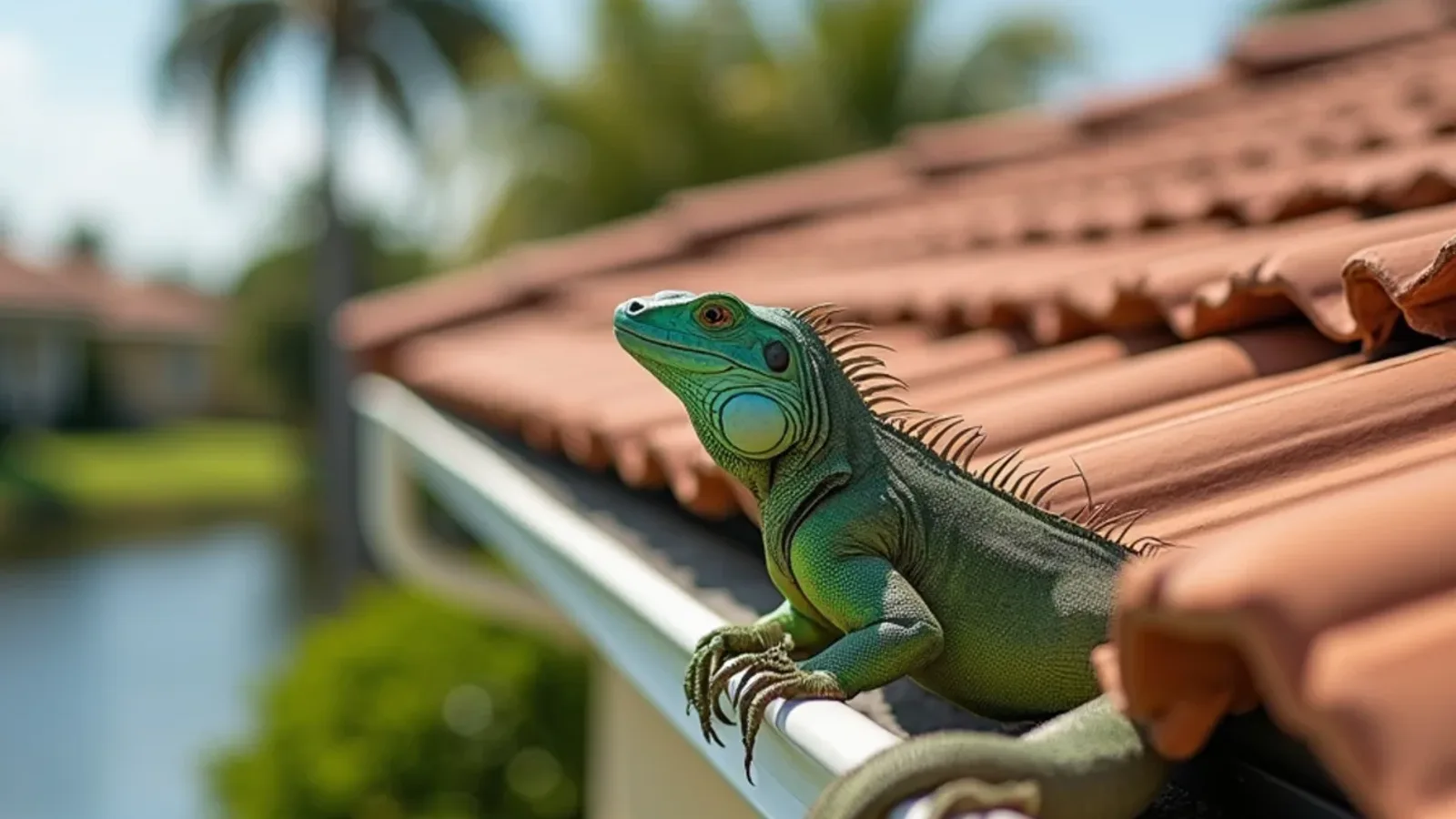
Up north, the worst thing living in a gutter is usually a bird’s nest. Down here the list is longer and stranger. Our crews regularly find green iguanas sunning on gutter lips, Cuban tree frogs packed into downspouts, paper wasp nests tucked under the eaves and roof rats using the gutter line as a highway.
Pests in gutters are more than a nuisance. They add debris, block outlets, damage screens and sometimes chew their way into the soffit and attic. Most of them are drawn by the same three things: shelter, water and food. A clean, well-sealed gutter offers less of all three.
Iguanas on the roof and in the gutters
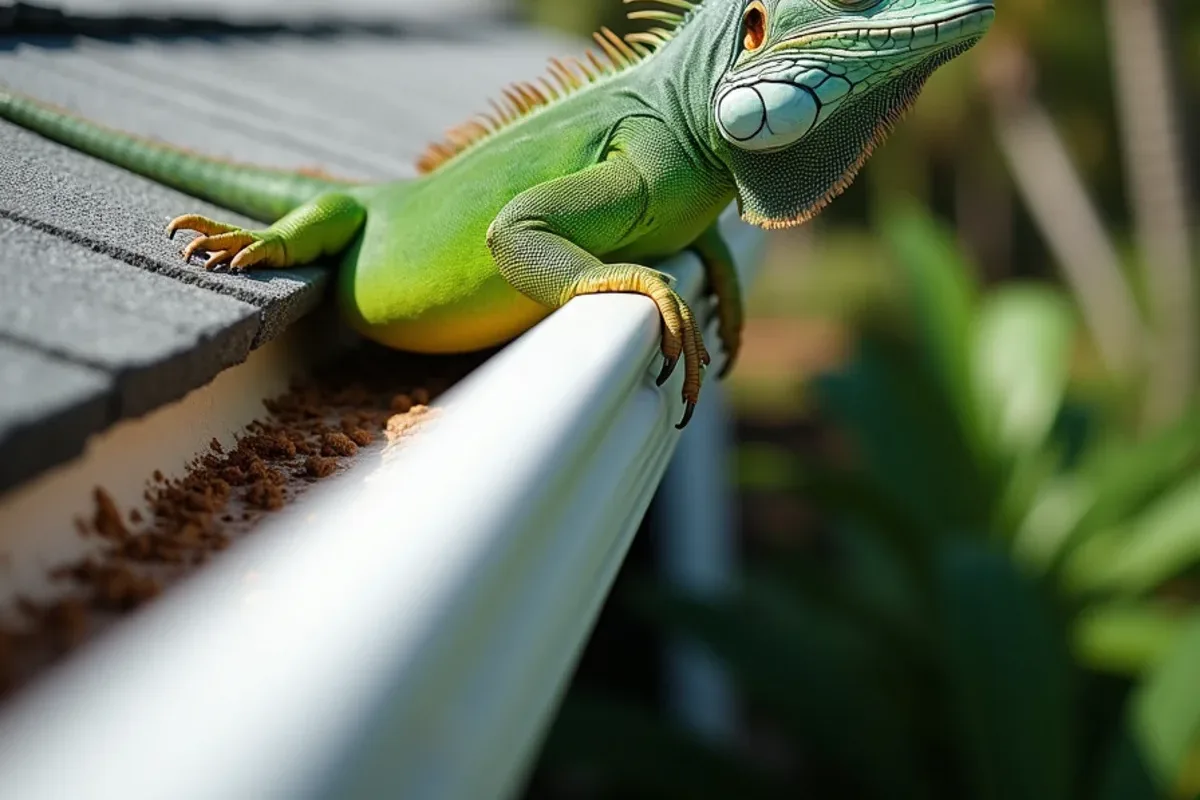
Green iguanas are not native to Florida, but they are well established across the southern part of the state, especially near canals, lakes and lush landscaping. They like to bask on warm surfaces in the morning, and a sunny roof edge is ideal. A large iguana resting on a gutter lip puts real weight on the hangers, and they will happily walk the length of a run.
The bigger gutter problem is droppings. Iguanas often return to the same perch, and their droppings collect in the trough below, where they mix with leaves and help plug the outlet. Iguana droppings can carry Salmonella, so wear gloves when cleaning up after them and wash your hands well afterward.
During cold snaps, iguanas can become sluggish and lose their grip, falling from trees and rooflines. If one lands in your yard, leave it alone; it may revive as the day warms. For persistent iguana activity, a licensed wildlife trapper is the right call. Florida treats green iguanas as an invasive species, but state anti-cruelty laws still apply to how they are handled.
Frogs in the downspout: the Cuban tree frog problem
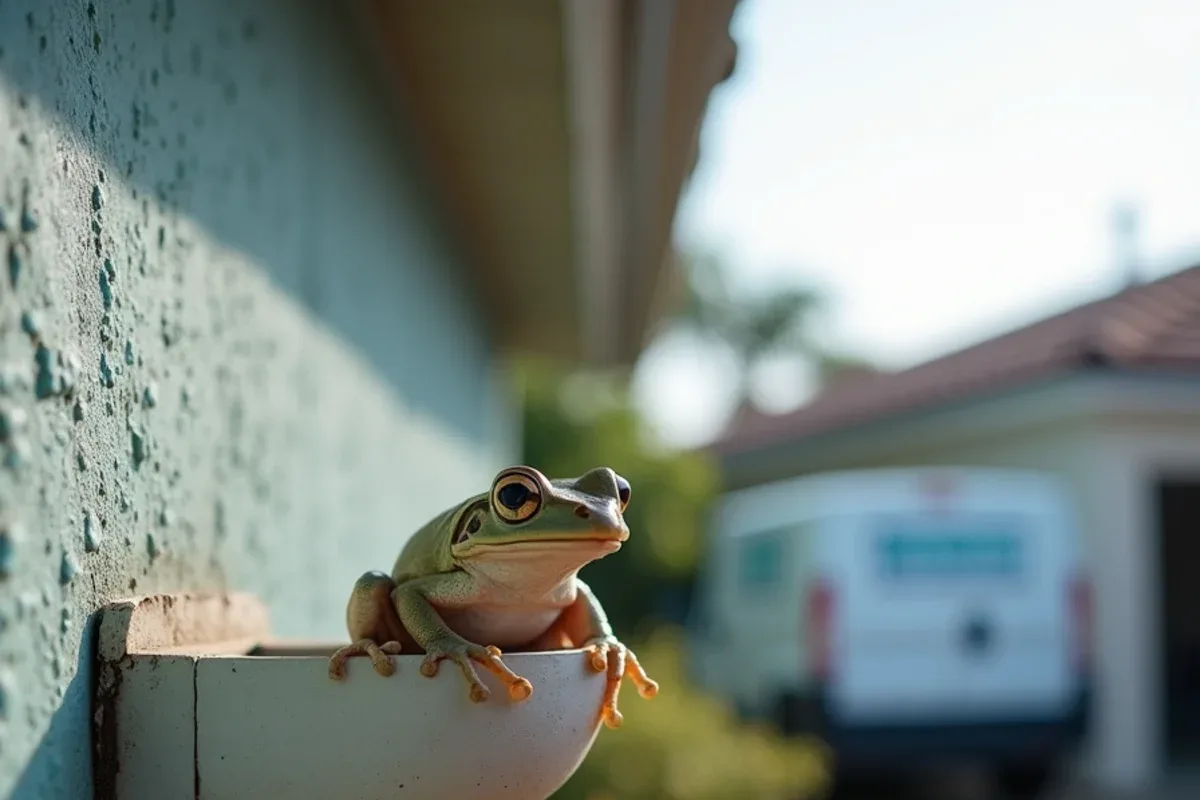
If your downspout croaks at night, you probably have Cuban tree frogs. These invasive frogs hide by day in cool, damp, enclosed spaces, and a downspout is perfect. They can pack into elbows in surprising numbers, and their bodies combined with debris can slow or stop the flow.
A frog-filled downspout is often a symptom. Frogs settle where moisture lingers, which usually means the pipe is already holding wet debris. Clearing the gutter and flushing the downspout removes their hideout. Our downspout cleaning clears the elbows and confirms full flow to the outlet.
Handle with care
Cuban tree frogs secrete a skin mucus that can irritate eyes and skin. Wear gloves if you handle one and keep your hands away from your face until you have washed them.
Wasp nests along the gutter and eaves
Paper wasps build open, umbrella-shaped nests in sheltered spots: the underside of the gutter lip, the corner where gutter meets fascia, the soffit just behind. Nests are easy to miss from the ground and easy to bump with a ladder, which is how many DIY cleanings end abruptly.
Our crews check for nests before setting ladders, and we will point out any we find. Small, early nests can often be removed safely once they are inactive. Large or active nests, and any bees, are a job for a pest control professional. Africanized honey bees are present in Florida, so give any bee swarm in a soffit or downspout a wide berth and call a beekeeper or pest pro.
Rats in gutters and the route to your attic
Roof rats are agile climbers. They use overhanging branches, palm trunks and power lines to reach the roof, then follow gutters along the eave looking for an opening into the soffit or attic. A gutter full of seeds, fruit and insects is also a food source.
Signs include droppings in the gutter, gnawed gutter guard edges, and chewing or holes at soffit corners near the gutter line. Damaged soffits and fascia should be repaired promptly, and a professional should handle any rodents already inside.
The single most useful step is cutting the bridge. Keep tree limbs and palm fronds trimmed well back from the roof so rats cannot drop onto it, and ask whoever cleans your gutters to mention any fresh gnawing or soffit gaps they spot along the way. Catching an opening early is far cheaper than repairing insulation and wiring later.
Gutter pest prevention: a quick reference
| Pest | What draws it | Signs | Gutter-side prevention |
|---|---|---|---|
| Green iguana | Warm basking spots near water and plants | Droppings in gutter, sagging lip | Clean trough, sturdy hangers, trim access branches |
| Cuban tree frog | Damp, dark, enclosed spaces | Croaking from downspout, slow drain | Flush downspouts, keep pipes dry |
| Paper wasp | Sheltered eaves and corners | Gray papery nests under lip | Inspect each visit; pros remove active nests |
| Roof rat | Food in debris, access to roof | Droppings, gnawed guards, soffit holes | Trim branches, repair soffits, guards |
| Birds | Nesting material and cover | Twigs and grass in gutter | Guards, regular cleaning |
Physical barriers work best alongside cleaning. Well-fitted gutter guards keep debris and nesting material out of the trough, and downspout strainers stop larger animals from climbing inside. Guards still need periodic cleaning, but they take away a lot of what attracts pests in the first place.
Pest pressure varies across our service area. Lakeside homes in Weston see plenty of iguanas on docks, pool decks and roofs, while larger lots and dense landscaping in Davie put roof rats and frogs high on the list. Wherever you are, the same rule holds: a clean, dry, well-sealed gutter is the least appealing home on the block.
How our crew works around pests on a gutter visit
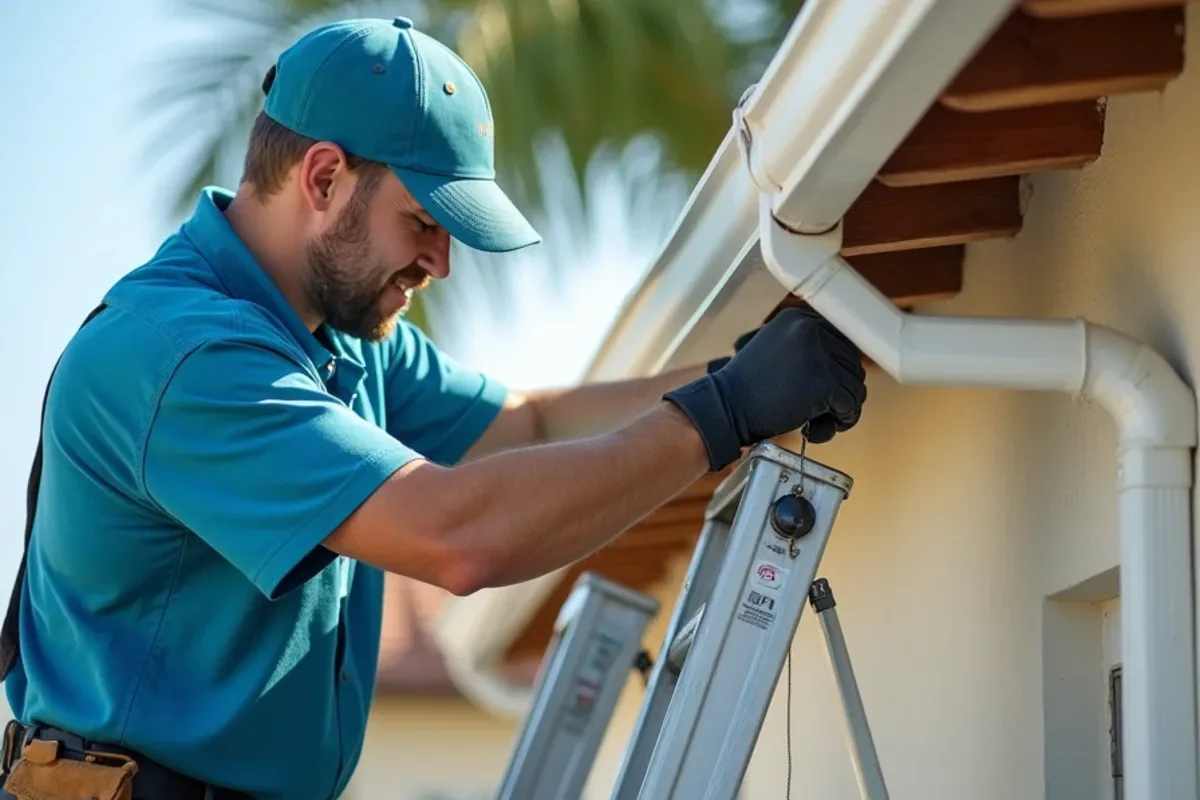
Pests change the order of a cleaning more than the cleaning itself. A wasp nest under the lip decides where the first ladder goes, a downspout full of frogs changes how we flush it, and iguana droppings change what we wear. This is the routine our crews follow on South Florida roofs:
- Walk the eaves from the ground with the sun behind us and look under the gutter lip and corners for paper wasp nests before any ladder touches the wall.
- Tap each downspout and give it a minute; frogs usually move toward the open end on their own before water goes in.
- Wear gloves for every run, and bag iguana droppings with the debris instead of rinsing them onto the patio or pool deck.
- Flush the downspouts from the top so anything left in the elbow washes out at ground level, away from the crew on the ladder.
- Photograph gnawed guard edges, soffit gaps and droppings trails so you can pass them on to a pest professional.
There are honest trade-offs in the fixes. Guards keep nesting material out of the trough, but an iguana will bask on a guard just as happily as on a bare gutter lip. Downspout strainers stop frogs and rats from climbing in, yet a strainer that nobody clears turns into a leaf plug at the outlet. Neither replaces a clean, dry system, and both need a look at every visit.
We clean, flush and repair. We do not trap, relocate or remove animals, and we will tell you when what we see on the roofline calls for a wildlife trapper or pest control company instead of a gutter crew.
Make the roofline the least inviting spot on the block
Every pest on this list is after shelter, water or food, and a neglected gutter supplies all three. Keep the troughs and downspouts clear and dry, cut back the branches that serve as bridges, fit guards and strainers where they help, and fix soffit gaps before something moves in.
Southern Gutters FL can handle the gutter side of the job, from cleaning and flushing to guards and soffit repair. Call for a free estimate and we will point out every sign of pest activity we find along the way.
Questions about pests in gutters
Do I need a wildlife professional for iguanas on my roof?
For occasional visitors, keeping gutters clean and trimming branches that give them access is usually enough. For persistent problems, burrowing or damage, a licensed wildlife trapper is the right call. We clean up after them, but we do not trap or remove animals.
Are Cuban tree frogs in my downspout harmful to the house?
The frogs themselves do not damage the downspout, but crowded elbows plus debris can block drainage and send water back up into the gutter. Clearing and flushing the downspout fixes the immediate problem, and keeping it free of wet debris makes it less inviting.
Can I legally remove iguanas from my property in Florida?
Generally, yes. The Florida Fish and Wildlife Conservation Commission treats green iguanas as an invasive species that is not protected except by anti-cruelty laws, so homeowners may remove them from their own property. FWC advises calling a professional if you cannot do it safely and humanely, which is the right move for iguanas on a roof or ladder-height gutter.
Will gutter guards keep frogs out of my downspouts?
They help but do not seal the system. Guards keep wet debris out of the trough, which makes the downspout less damp and less attractive, but Cuban tree frogs can still enter from the bottom elbow or through gaps at the outlet. A strainer at the outlet plus regular flushing does more to keep frogs out than a guard alone.
Services mentioned in this guide
Downspout Cleaning & Flushing
Clogged downspouts flushed, snaked and flow-tested, including buried lines and frog-packed elbows.
Learn moreGutter Guards
Guards matched to the palm, black olive and oak debris over your roof, fitted to new or existing gutters.
Learn moreServing Weston, Davie and the rest of South Florida.