
By Chance, owner of Southern Gutters FL · Published · Last updated
Key takeaways
- Size each roof face separately; one house can need 5-inch gutters on the garage and 6-inch on the main roof.
- A 6-inch K-style gutter carries substantially more water per foot than a 5-inch and is a common upgrade in South Florida.
- Seven-inch gutters suit very large roof faces, steep tile roofs and valleys that concentrate water.
- A 3x4 downspout has about twice the opening of a 2x3, and undersized outlets cause more overflow than undersized gutters.
- Online sizing calculators are a fair starting point, but they cannot see valleys, overhangs or tree debris.
Many South Florida homes are best served by 6-inch K-style gutters on the main roof with 3x4 downspouts, while small one-story roof faces can stay at 5-inch. Seven-inch gutters earn their place under very large roof faces, steep tile and valleys. The right answer comes from sizing each run by roof area, pitch and peak rainfall.
“What size gutters do I need?” sounds like a one-number answer, but the honest reply is “it depends on the roof.” A gutter that works perfectly on a small porch can overflow within minutes on a big two-story roof face in the same storm. The three things that decide it are how much roof drains into each run, how steep that roof is, and how hard the rain falls.
That third factor is where South Florida stands apart. Our summer storms routinely drop rain at rates that would count as a rare event in much of the country, and the gutter has to keep up during the worst ten minutes, not the average hour. Here is how we think through sizing on a real house, including the downspouts, which get overlooked more than the gutter itself.
Start with three questions about your roof
1. How much roof drains into this run?
Every gutter run collects from one roof face, or sometimes two faces meeting in a valley. The larger that catchment, the more water arrives at the trough. A long, deep rear roof on a two-story house sends far more water to its gutter than a short front porch, even though both are on the same home.
2. How steep is it?
Steeper roofs move water faster and catch more wind-driven rain on their faces, so the gutter below gets a quicker, heavier surge. A low-slope roof spreads the same storm out over a few extra seconds. Pitch does not change the footprint of the house, but it changes how hard the water hits the eave.
3. How hard does it rain here?
Gutter design is based on peak rainfall intensity, meaning the heaviest short burst a storm delivers. South Florida sits near the top of the scale for the continental United States, which is why a size that is standard elsewhere can be marginal here.
| Roof scenario | Gutter size we usually look at | Downspout |
|---|---|---|
| Small one-story shingle roof, short runs | 5-inch K-style | 2x3 can work; 3x4 preferred under trees |
| Average one-story home, longer eaves | 5-inch or 6-inch | 3x4 |
| Two-story home or large rear roof face | 6-inch K-style | 3x4, more outlets on long runs |
| Steep barrel or flat tile roof | 6-inch, sometimes 7-inch | 3x4 |
| Very large roof face or valley dumping into one run | 7-inch | 3x4 or larger, extra outlets |
6 inch vs 5 inch gutters: what does the extra inch buy?
The 5-inch K-style gutter is the most common residential size in the country and it is perfectly adequate for many smaller roofs. The trouble is that its capacity does not stretch. Once the roof face gets large or steep, a 5-inch trough fills to the brim during a cloudburst and spills over the front lip.
Going to 6 inches makes the trough both wider and deeper, so it holds and moves considerably more water per foot. It also has a wider opening, which matters when water sheets off a roof edge with some speed and would otherwise shoot past a narrow gutter. On many South Florida homes we size the main roof at 6 inches and keep 5-inch only where the roof above is small.
Bigger is not automatically better
A 6-inch gutter on a tiny roof face just adds weight and cost. We size run by run, and it is normal for a quote to show two different sizes on one house.
When are 7 inch gutters worth it?
Seven-inch gutters are the heavy-duty end of the residential range and show up more often on commercial buildings. On homes they make sense where a very large roof face drains to a single eave, where two planes meet in a valley that pours into one corner, or on steep tile roofs that send water off fast and far.
Larger estate homes in Parkland and in the equestrian communities of western Palm Beach County are typical candidates, with long rooflines and big roof planes. Our oversized 6-inch and 7-inch gutter installation uses heavier hangers spaced to carry the extra weight of water and debris.
Gutter size for tile roof homes
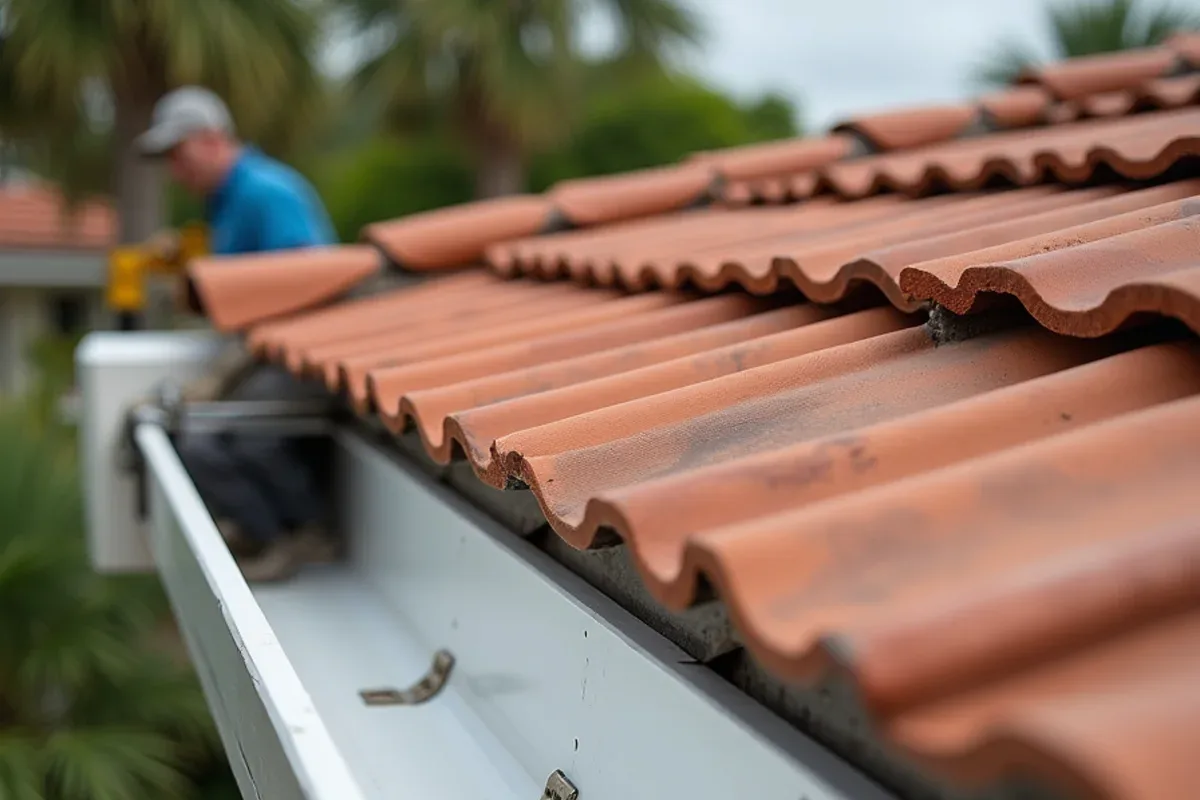
Barrel and flat concrete tile cover a large share of South Florida roofs, and tile changes the sizing picture in two ways. First, tile is slick and often steep, so water arrives at the eave quickly. Second, tile usually overhangs the roof edge, and the gutter has to sit where that water actually falls rather than where it would fall from a shingle edge.
That is why a 6-inch profile is our usual starting point under tile, with 7-inch where a valley lands. The wider opening gives more room to catch water leaving the tile lip. We also check that the gutter is not so tight under the tile that debris jams between them, a common problem with black olive leaves.
Downspout size: 2x3 or 3x4?
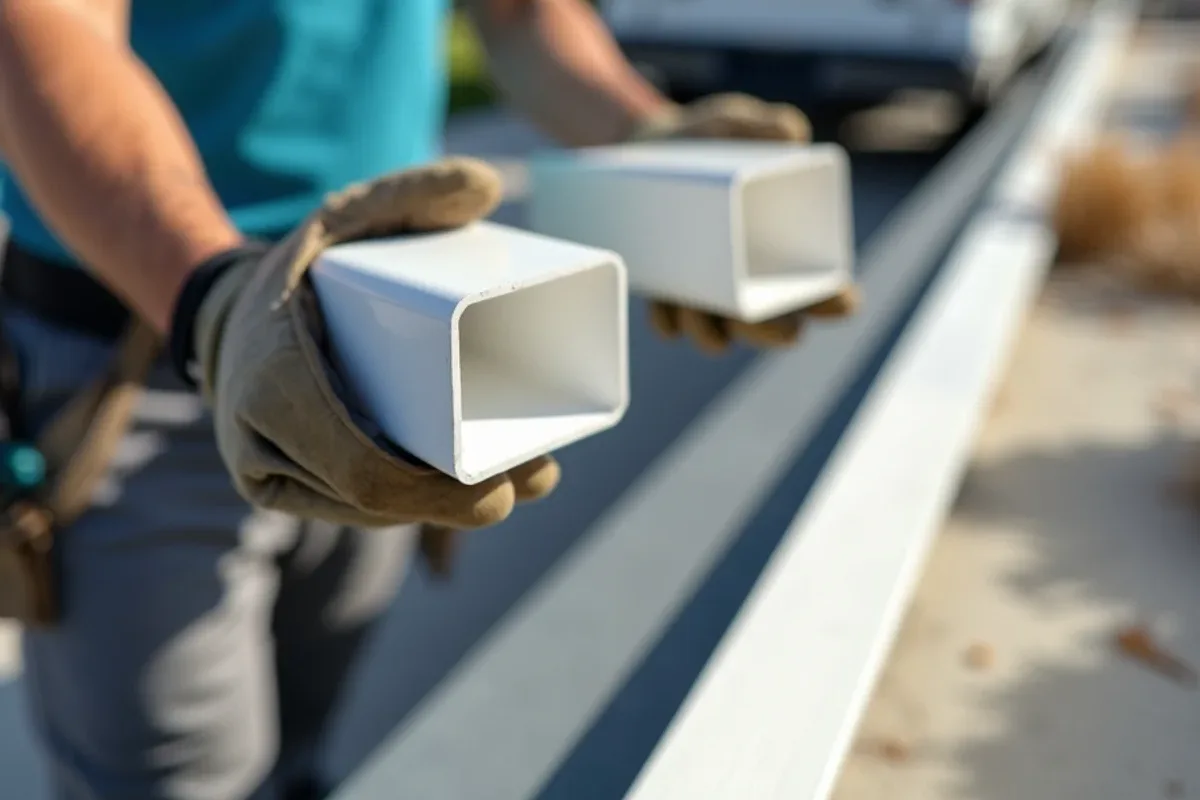
The gutter holds water; the downspout gets rid of it. A standard 2x3 downspout has an opening of roughly 6 square inches, while a 3x4 has about 12, so the larger size can move about twice as much water and is far harder to clog with seed pods and leaf clumps. On most installs we specify 3x4 as the default.
Downspout count matters as much as size. A long run that drains through a single outlet at one end forces water to travel the whole length, and it overflows at the far end before it ever reaches the spout. Adding a second outlet near the middle or the opposite end often solves more overflow than upsizing the gutter would. Our guide on why clean gutters still overflow covers that problem in more detail.
How we size a run on a real South Florida estimate
The old gutters are our best sizing data. Before we measure anything, we ask where the water spills during the worst storms. Overflow at the far end of a run, away from the outlet, usually means too few downspouts. Water topping the whole front lip during the hardest minutes means the trough is too small. A sheet shooting past one corner points to a valley.
- Measure each roof face and note which eave it drains to.
- Record the pitch and the roof material: shingle, barrel tile, flat tile or metal.
- Mark every valley and the corner where it lands.
- Count the outlets and find the longest distance water travels to reach one; a common rule of thumb is a downspout every 30 to 40 feet of gutter, closer under steep or tile roofs.
- Look at the trees over each run, since seed pods and fronds shrink the working size of any outlet.
- Choose the profile and downspout plan run by run, and write both on the quote.
Upsizing has trade-offs we explain on the spot. A wider trough full of water is heavier, so soft or split fascia has to be repaired before a 6- or 7-inch gutter goes up. A 7-inch profile needs a tall enough fascia board and closer hanger spacing, and on a small ranch house it can look oversized from the street. Often the better fix is adding outlets or converting to 3x4, which our downspout installation and repair crew handles without touching the gutter.
Can a gutter sizing calculator answer it for you?
Online calculators ask for roof area, pitch and a rainfall figure, then suggest a gutter size. They are useful for a rough idea, and the logic behind them is the same three questions above. What they cannot see is the house itself.
- Valleys that dump two roof faces into one corner.
- Tile overhangs that change where water lands.
- Trees that will load the gutter and the outlets with debris.
- Where downspouts can physically go, and where their water can drain without flooding a walkway or a neighbor's yard.
On a free estimate we measure each roof face, note the pitch and roof material, look at valleys and trees, and then write a quote that lists the gutter size and downspout plan run by run. If your existing 5-inch system is coping, we will tell you to keep it.
Getting the size right the first time
Gutter size is a run-by-run decision, not a whole-house label. Small roof faces can stay at 5-inch, most main roofs here do better at 6-inch, and 7-inch belongs where a valley or a very large plane concentrates the water. Downspout size and count deserve as much attention as the trough.
If your gutters overflow in summer cloudbursts even after a cleaning, call Southern Gutters FL for a free estimate. We will measure each roof face, show you where the system falls short and write the size and outlet plan for every run into the quote.
Questions about what size gutters do i need
Do 6-inch gutters fit on my existing fascia?
Usually, yes. Most fascia boards on South Florida homes are tall enough for a 6-inch K-style gutter. We check the board for rot and confirm the drip edge or tile overhang lines up with the wider opening before quoting the larger size.
Will bigger gutters stop overflow on their own?
Not always. If the real problem is a single downspout on a long run, a clogged outlet or a gutter pitched the wrong way, a bigger trough just holds more water before it spills. We check outlets and slope first, then size up where the roof truly calls for it.
How many downspouts do I need?
Enough that no stretch of gutter has to carry water too far to an outlet. A widely used rule of thumb is one downspout for every 30 to 40 feet of gutter, with more on steep tile roofs, under valleys and beneath heavy trees. On long eaves we often place one at each end or add one near the middle so water can split both ways.
Are 6-inch gutters worth it over 5-inch?
On large or steep roof faces, usually yes. The 6-inch trough is wider and deeper, so it holds more water in a cloudburst and catches water that sheets off tile with some speed. On a small porch or garage roof a 5-inch gutter is often enough, and paying for the larger profile there adds weight without solving anything. We size each run separately on the quote.
Services mentioned in this guide
6" & 7" Oversized Gutters
Wider 6- and 7-inch seamless troughs with 3x4 downspouts that keep up with cloudbursts and big tile roof valleys.
Learn moreDownspout Installation & Repair
Crushed, loose or undersized downspouts replaced, extra outlets added and straps reset tight to the wall.
Learn moreServing Parkland, Palm Beach County and the rest of South Florida.