

By Chance, owner of Southern Gutters FL · Published · Last updated
Key takeaways
- First rule out a hidden plug in a downspout elbow or underground line; a clean trough can still have a blocked exit.
- Five-inch gutters are often too small for the large roof planes and intense cloudbursts common in South Florida.
- Too few downspouts, or 2x3 downspouts on long runs, is the single most common design cause of clean-gutter overflow.
- A gutter pitched flat or backward pools water and spills at the low point.
- Roof valleys can shoot water clean over the gutter; a splash guard at that spot is a simple fix.
Gutters overflow even when clean because the system cannot move water as fast as the roof sends it. The usual causes are gutters too small for the roof plane, too few or undersized downspouts, a pitch that has gone flat, valley water jumping the lip, or a hidden plug below the outlet.
You paid for a cleaning, the troughs are bare metal, and the next thunderstorm still sends a curtain of water over the front of the house. It is one of the most frustrating calls we get, and it has a logical explanation. When gutters overflow even when clean, the system is being asked to carry more water than its size, slope or outlets allow.
South Florida rain makes this worse than almost anywhere in the country. Our summer storms dump a lot of water in a short burst, so a gutter that would cope with a slow northern drizzle gets overwhelmed in minutes here. Below are the five causes we check, in the order we check them, and what actually fixes each one.
Are your gutters too small for Florida cloudbursts?
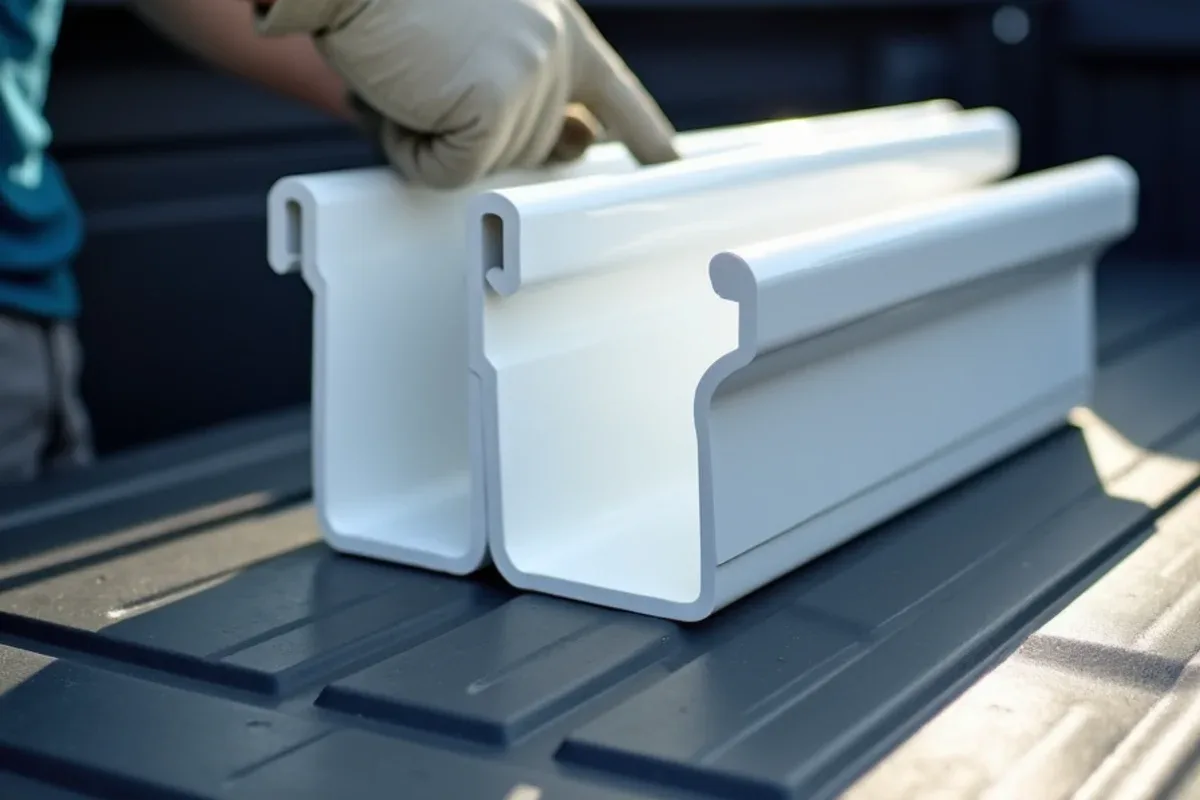
Many homes built in the region carry standard 5-inch K-style gutters. That size handles a modest roof well, but capacity drops fast as the roof plane gets larger or steeper. A steep, wide roof face collects rain from a bigger area and delivers it to the gutter faster, and during a hard South Florida storm that flow can exceed what a 5-inch profile holds.
The fix is a larger profile. Moving to 6-inch or 7-inch oversized gutters increases the volume each foot of gutter can carry and pairs naturally with larger downspouts. We size by measuring each roof plane, noting its pitch and checking how many outlets the run can take, not by picking one size for the whole house. Our deeper gutter size guide for Florida rain walks through those measurements.
Do you need more downspouts, or bigger ones?
A gutter is only as fast as its exits. If a 40-foot run drains through a single downspout at one end, water from the far end has to travel the full length, and in a heavy storm it piles up and spills long before it gets there. This is the most common reason we find for clean-gutter overflow.
There are two ways to add capacity. One is adding a second outlet so the run drains toward both ends or toward the middle. The other is upsizing from 2x3 to 3x4 downspouts, which roughly doubles the opening and also makes the pipe much harder to clog with palm seeds and black olive leaves. Our downspout installation and repair crews often do both on the same visit, placing new outlets where the water can be carried away from the foundation.
Quick check from the yard
Count the downspouts on each side of the house and pace off the gutter length. Long runs with one outlet, especially on the side facing a big roof plane, are the first suspects.
Gutter pitch problems: water that pools instead of flowing
Gutters should fall gently toward each outlet. A common guideline is about a quarter inch of drop for every ten feet of run, enough to keep water moving without looking crooked from the street. Over time, though, hangers loosen, fascia boards shift and sections settle.
When pitch goes flat or reverses, water collects at a low spot away from the outlet and spills there during storms. You can often see it after rain as a puddle line or a band of grime in the trough. The fix is re-hanging the gutter on new hidden hangers at the correct slope, which also stops the standing water that attracts mosquitoes.

Valley water overshooting the gutter (and the splash guard fix)
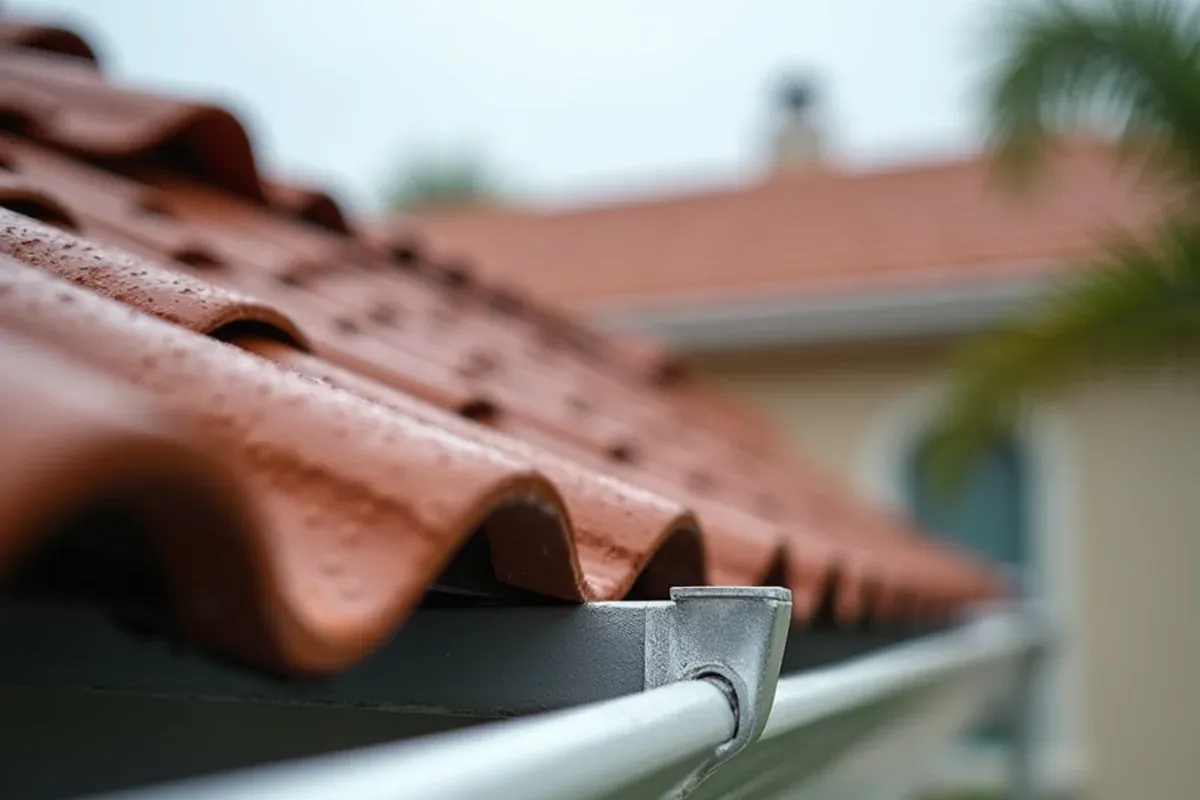
Where two roof planes meet, they form a valley that funnels a concentrated stream of water down to the eave. On steep roofs, and especially on barrel tile, that stream picks up so much speed that it jumps right over the outer lip of the gutter. The gutter is clean and correctly sized, yet one corner floods the walkway every storm.
The usual cure is a gutter splash guard: a short, angled aluminum baffle fastened to the outer lip at the valley so the water hits it and drops into the trough. On some homes we also add a downspout right below the valley, so the fast-moving water exits immediately instead of traveling down the run.
Matching the overflow pattern to its cause
| Where the water spills | Likely cause | Typical fix |
|---|---|---|
| All along the run, only in heavy storms | Gutter too small for the roof plane | Upgrade to a 6- or 7-inch profile |
| Far end of a long run, away from the outlet | Too few downspouts | Add an outlet or upsize to 3x4 |
| One low spot mid-run | Pitch has gone flat or sagged | Re-hang at correct slope |
| Only at an inside corner below a valley | Valley water overshooting | Splash guard, extra outlet |
| Right at the downspout | Blocked outlet, elbow or buried pipe | Flush and clear the line |
We see the sizing and valley problems most on newer two-story homes with complex rooflines, the kind common in Pembroke Pines subdivisions, where several roof planes empty into one short gutter over the garage. In Weston, large tile roofs with deep valleys often need splash guards and added outlets more than a full replacement, and HOA color rules mean any new parts have to match.
Not every case calls for new gutters. Often a single added downspout or a re-pitched section solves the problem for a fraction of the disruption. We will tell you which fix fits before quoting anything bigger.
The less obvious causes our crew checks on clean-gutter calls
Once the five usual suspects are ruled out, we look at where the gutter sits relative to the roof edge. A gutter hung too low on the fascia lets fast water from a steep or metal roof fly past the outer lip. One hung too far back lets water slip between the roof edge and the gutter and run down the wall, which from the yard looks exactly like overflow. Re-roofing changes this more often than people expect: new drip edge, thicker underlayment or a different tile nose can move the point where water leaves the roof by an inch or two.
- Gutter height: the outer lip should sit low enough that an imaginary line off the roof slope clears it, but not so low that water lands outside it.
- Drip edge: missing or short drip edge lets water curl back under the roof edge and behind the trough.
- End caps and seams: a failed end cap or miter seal can drip in a way that reads as spill-over from the ground.
- Buried lines that back up: a downspout tied into silted underground pipe fills to the top and spills at the gutter even though the trough is empty.
The honest trade-off is scope. Upsizing every run on the house to 6-inch is sometimes the right answer, especially on large two-story roofs, but more often the problem lives on one or two runs. An added 3x4 downspout, a re-hung section or a splash guard at one valley fixes the spill without replacing gutters that are otherwise sound. We test the flow, show you which runs actually fail, and price only those.
Clean but still spilling? Fix the capacity, not the cleaning
Another cleaning will not stop a gutter that overflows because of its size, slope, outlets or position. Match the spill pattern to the table above, rule out a plug below the outlet, and you will usually know which of the five causes you are dealing with before anyone climbs a ladder.
When you want it confirmed, Southern Gutters FL will run water through each run, measure the roof planes that feed it and give you a free written estimate that names the fix, whether that is one more downspout or a larger seamless profile roll-formed on site.
Questions about gutters overflow even when clean
Will gutter guards stop clean gutters from overflowing?
No, and some guards make it worse. A guard keeps debris out but does nothing for undersized troughs, too few outlets or poor pitch. Certain guard styles can even shed water over the edge in very heavy rain. Fix the capacity problem first, then add guards if leaves are also an issue.
Can I just add a downspout without replacing the gutter?
Usually, yes. If the existing gutter is in good shape and properly sized, cutting in a new outlet and running a downspout to a good discharge spot is a common, modest repair. The gutter needs enough length and a spot where the water can drain away from the foundation.
How do I know if my gutters are too small?
Watch a heavy afternoon storm. If a clean gutter with open downspouts spills along its whole length, not just at one corner or one low spot, the profile is probably too small for the roof plane above it. Large or steep roof faces, long runs and valleys emptying into one section are the usual reasons a 5-inch gutter falls short here.
Can a new roof make my gutters overflow?
Yes. A re-roof can change how far the roofing extends past the fascia, add or alter the drip edge, and change the roof surface from shingle to tile or metal, which sheds water faster. Any of those can send water over or behind gutters that worked fine before. Re-setting the gutter height and pitch after the roof is done usually solves it.
Services mentioned in this guide
6" & 7" Oversized Gutters
Wider 6- and 7-inch seamless troughs with 3x4 downspouts that keep up with cloudbursts and big tile roof valleys.
Learn moreDownspout Installation & Repair
Crushed, loose or undersized downspouts replaced, extra outlets added and straps reset tight to the wall.
Learn moreServing Pembroke Pines, Weston and the rest of South Florida.