
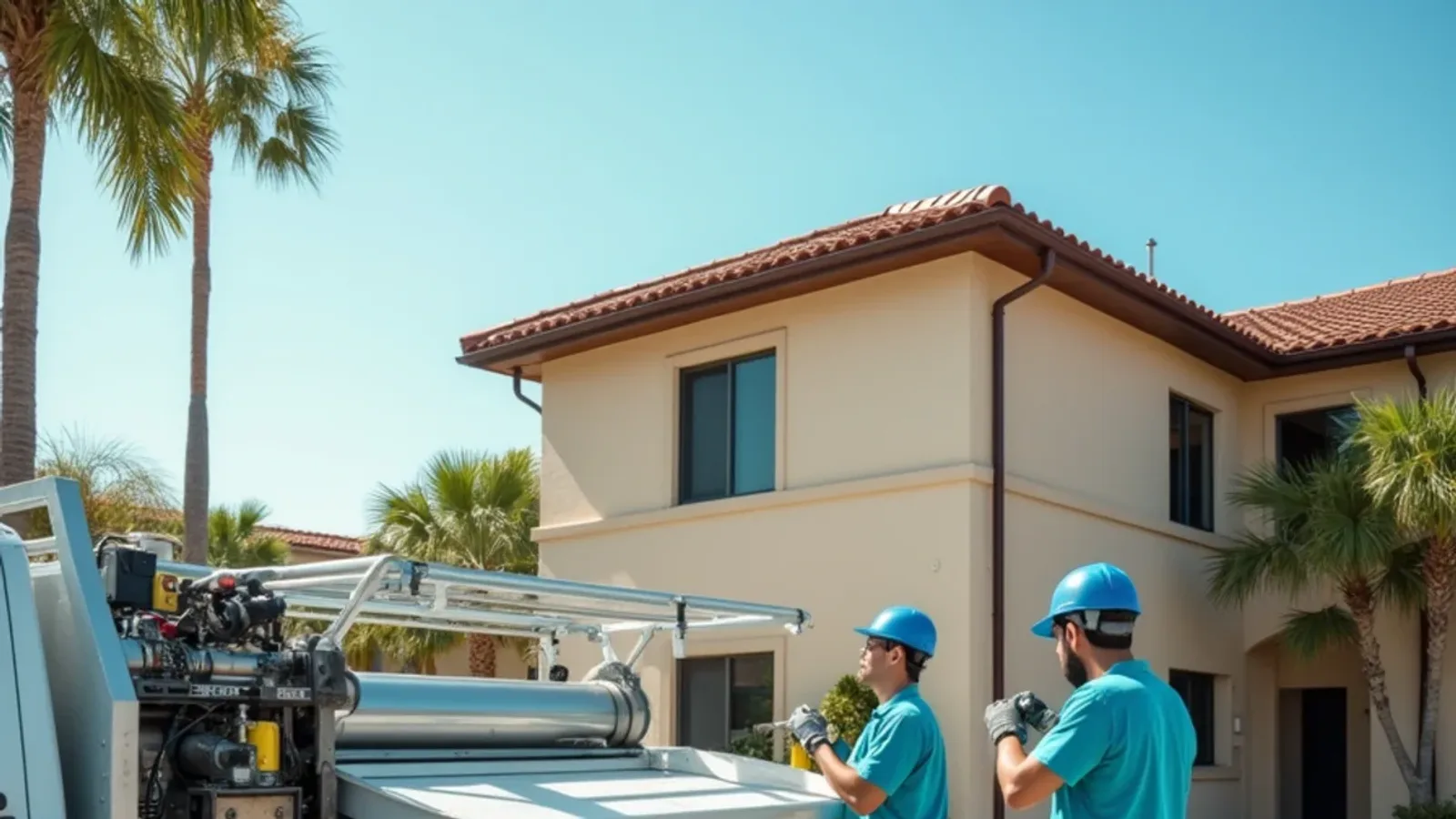
Commercial gutter installation starts with arithmetic most residential jobs never need. A plaza or apartment building can collect rain from many thousands of square feet of roof, and South Florida cloudbursts can drop inches in an hour. If the gutter profile, outlet count and downspout size do not match that load, the new system will overflow just like the old one.
Southern Gutters FL installs large-format seamless aluminum and box gutters on commercial and multifamily roofs across Broward, Palm Beach and Miami-Dade. Our seamless runs are roll-formed on site from high-grade aluminum, hung with stainless-steel hardware, and backed by a 3-year workmanship and 20-year materials warranty. This is the installation arm of our commercial gutter services.
Large commercial gutters: when the old system is done, and what a new one includes
Most owners call after the same pattern repeats: the gutters were cleaned last month and still overflowed in a July cloudburst. That usually means the system was sized for a smaller roof, or it has simply reached the end of its life.
- Overflow along a run that was cleaned recently, especially at the far end from the outlet.
- Painted steel box gutters with rust lines and drips at every lap joint.
- Downspouts that roar during a storm while water sheets over the front lip above them.
- Roof water landing across sidewalks, parking stalls or a loading dock.
- Pitted, chalky aluminum on coastal buildings where salt air has worked on fasteners and seams.
What a commercial installation includes
Our proposal covers the whole drainage path from the roof edge to the ground, so nothing is left for a second contractor to figure out:
- Measurement of each roof drainage area and a written outlet plan.
- Tear-off and haul-away of the old system, with fascia condition recorded.
- Seamless runs formed on site, or box sections built for parapets and flat-roof edges.
- Leader heads at scuppers and 4x5 or larger downspouts strapped to the wall.
- Discharge to grade, a splash block or an underground line, then a water test and photo record.
Commercial seamless gutters or box gutters: which profile fits?
Most low-rise commercial buildings with a sloped roof edge, such as apartment buildings, office parks and pitched-roof plazas, are best served by commercial seamless gutters in a K-style profile. They are roll-formed to length on site, so a long run has no joints except at corners and outlets, and that is where most leaks start.
Box gutter installation makes sense where the architecture calls for it: a wide square-section gutter behind a parapet, at a flat roof edge, or where a large valley dumps more water than any K-style profile can hold. Box gutters carry a lot of water, but every joint is a seam that needs proper sealing and expansion allowance.
| Profile | Best fit | Trade-off |
|---|---|---|
| 6" seamless K-style | Low-rise multifamily, small offices | Fewest joints; may need extra outlets on large roofs |
| 7" seamless K-style | Long runs, steeper roofs, heavy tree cover | More capacity; larger hangers and fascia attachment |
| 8" or box section | Very large roof areas, parapets, flat-roof edges | Highest capacity; more seams to seal and maintain |
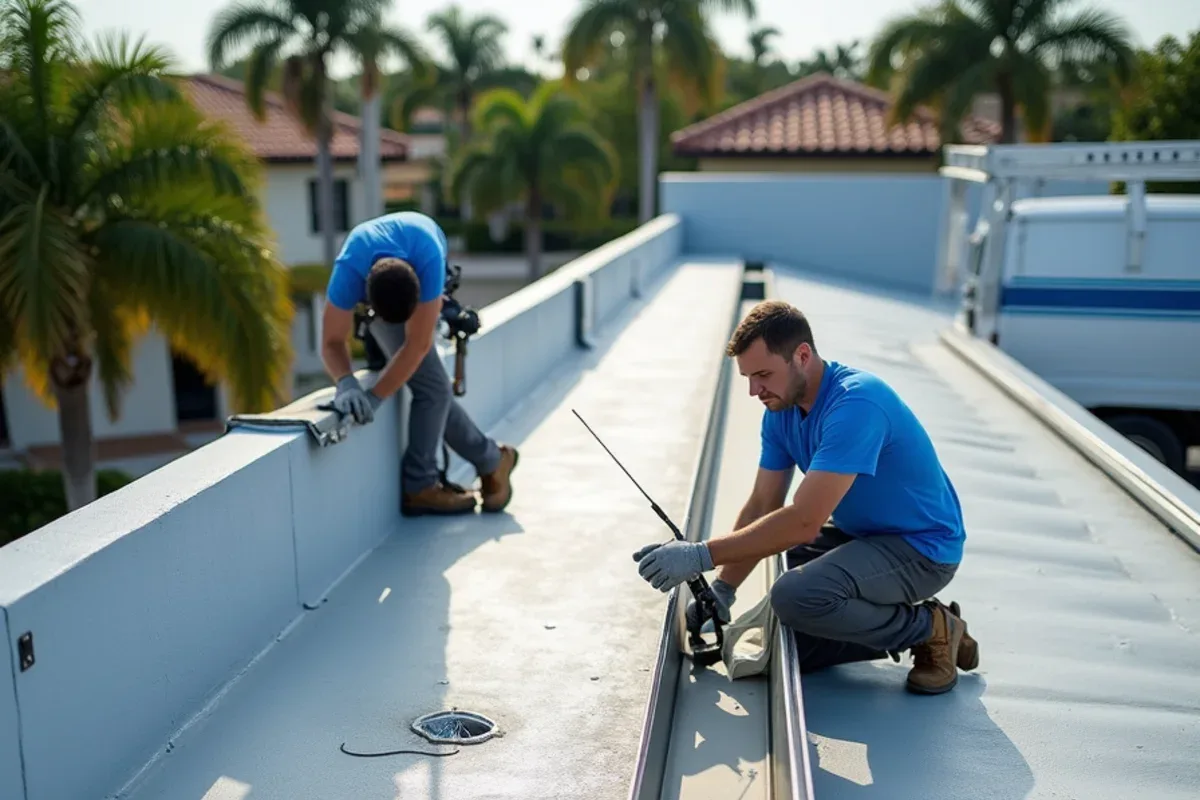
Sizing large commercial gutters: when do 8 inch gutters make sense?
We size from the roof, not the old gutter. For each elevation we measure the drainage area, note pitch and valleys, apply a design rainfall intensity, and check the resulting flow against gutter and downspout capacity, the method behind manufacturer tables and the SMACNA sheet-metal manual. Six- and seven-inch seamless profiles, the same ones on our oversized gutters page, handle most low-rise commercial roofs when they get enough downspouts.
Eight-inch gutters and custom box sections come in on very large roof planes, long runs with few possible outlet locations, and buildings where a valley concentrates water in one spot. On permitted projects, the design documents and the Florida Building Code govern sizing, and we build to the drawings. On unpermitted replacement work, our written proposal states the profile, outlet count and downspout size and explains why.
Codes, permits and product approvals
The Florida Building Code splits roof drainage between Building Chapters 15 and 16 and Plumbing Chapter 11, which requires secondary overflow drains or scuppers where a parapet would hold water if the primary outlets clogged. Broward and Miami-Dade fall in the code's High-Velocity Hurricane Zone, and Miami-Dade requires a Notice of Acceptance (NOA) for many roofing products. The city or county building department decides when a permit is required. Florida DBPR licensing and county competency rules can apply to installation, so ask any bidder, us included, for those details and a certificate of insurance.
Commercial downspouts: count, size and where the water ends up
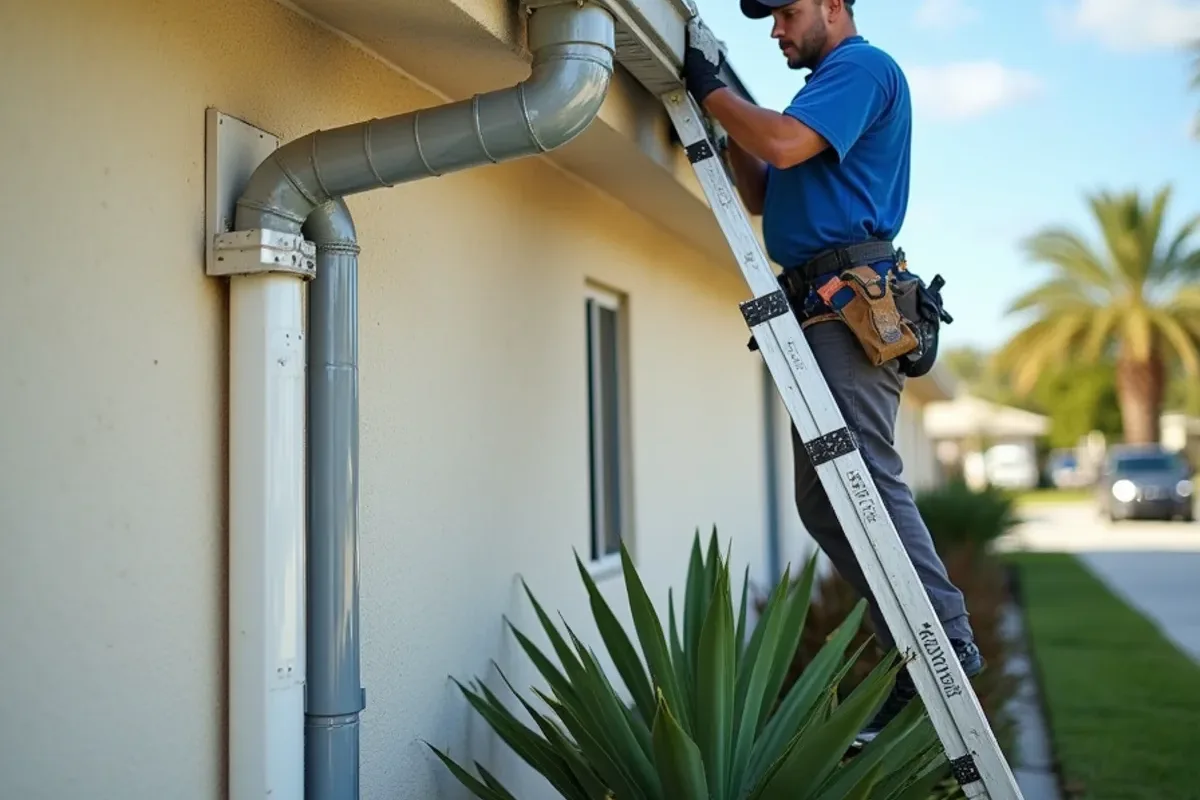
A big gutter with too few downspouts is a big trough that overflows at the ends. Commercial downspouts are typically 4x5 or larger rectangular sections, and adding one more outlet often does more than stepping up a gutter size. Where a flat roof drains through scuppers, we add leader heads that catch the flow and feed it down the wall.
Then the question is where the water lands. Discharging across a sidewalk invites slip complaints and algae; dumping it at a foundation corner invites settlement. We can tie downspouts into underground drainage lines or to an approved discharge point on the site.
Process and timeline: phasing an install around tenants
- Walk-through: measurements, photos, and notes on fascia condition and access.
- Proposal: written scope with profile, colors, outlet plan and phasing; certificate of insurance sent before scheduling.
- Tenant plan: we agree which elevations go first, where the forming machine and truck park, and which entrances stay open each day.
- Tear-off and prep: old gutters removed and hauled away; soft fascia flagged for repair before new gutters go up.
- Install: seamless runs formed on site, hung with stainless hardware at close spacing, cut edges painted, outlets and downspouts set.
- Close-out: water test where possible, final walk with your contact, and a photo record of every elevation.
A small plaza may be finished in a few days. Larger buildings are phased elevation by elevation so no tenant is without a usable entrance. If fascia is rotted behind the old system, it gets repaired first through our fascia board repair service, since new gutters are only as secure as what they are fastened to.
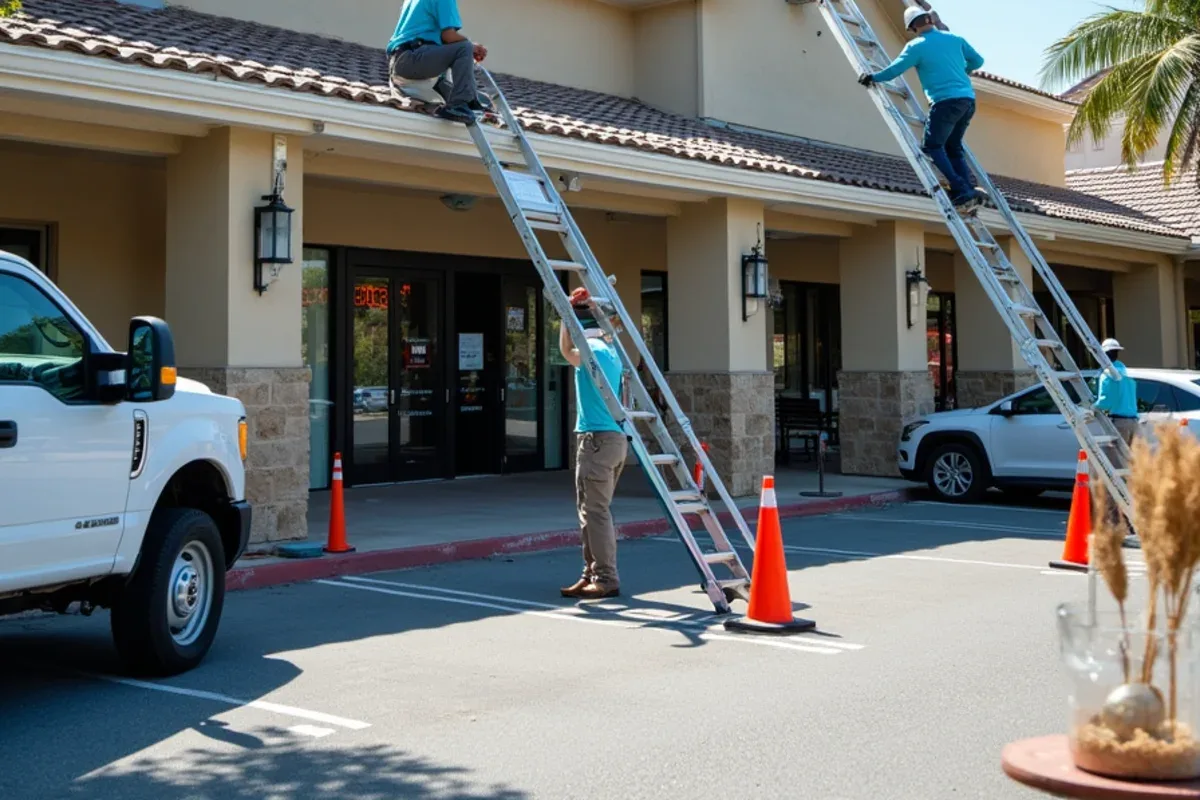
What shapes a commercial gutter installation quote in South Florida?
We do not publish prices because commercial jobs vary too much. The written quote is built from these factors, each listed so you can compare bids line by line.
- Linear feet of gutter and the profile chosen
- Number and size of downspouts and leader heads
- Building height and whether a lift is needed
- Tear-off and haul-away of the existing system
- Fascia or substrate repairs found during the walk-through
- Phasing, early-start or after-hours work
- Color choice and any guards specified
- Underground tie-ins or discharge changes
A few factors are particular to this region. Coastal buildings within reach of salt spray may warrant a heavier coil or a different finish, which changes material cost. Our close hanger spacing with stainless fasteners, plus any stricter attachment a permitted HVHZ design calls for, adds hardware per foot. Long runs need expansion joints at set intervals, and every joint is labor. Lift rental on three-story elevations, and phasing that splits one building across several mobilizations, also show up on the quote as their own lines.
Warranty, care and finished commercial runs
Every installation carries our 3-year workmanship and 20-year materials warranty. To keep a large system performing, schedule cleaning at least twice a year, and consider micro-mesh guards on elevations under trees. Box gutter seams should be looked at annually, since sun and heat work on sealant faster here than up north.
Associations often need a specific color for approval, and we stock a wide range of finishes to match stucco and trim.
Why owners hire Southern Gutters FL for commercial installs
Seamless installation is what we do most, and Chance has run the company since about 2020, from West Palm Beach to Oakland Park and now North Lauderdale. Reviewers tagged Quality 29 times and Value 28, and they mention cut edges painted and a two-day job finished in one. Every proposal comes in writing from SouthernGutters FL LLC with the profile, outlet plan and warranty spelled out, and we take removal-only work too when an owner just needs a failed system off the building.
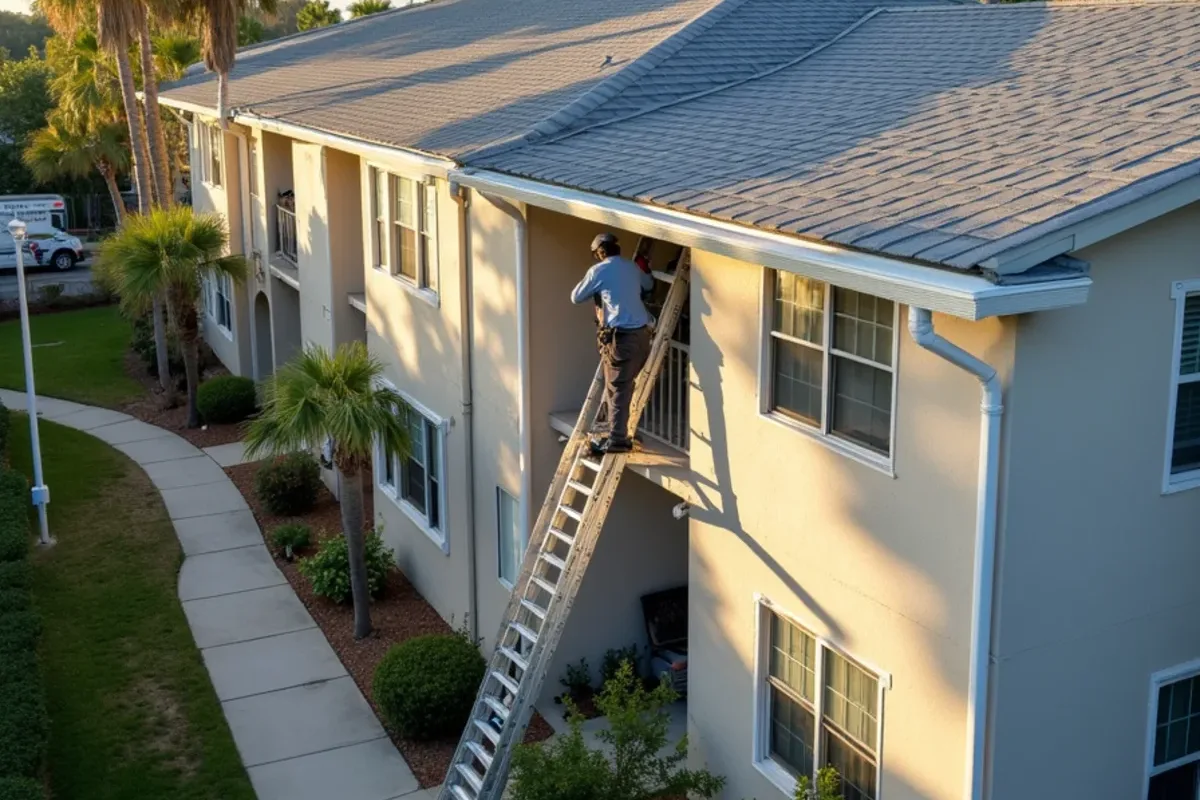
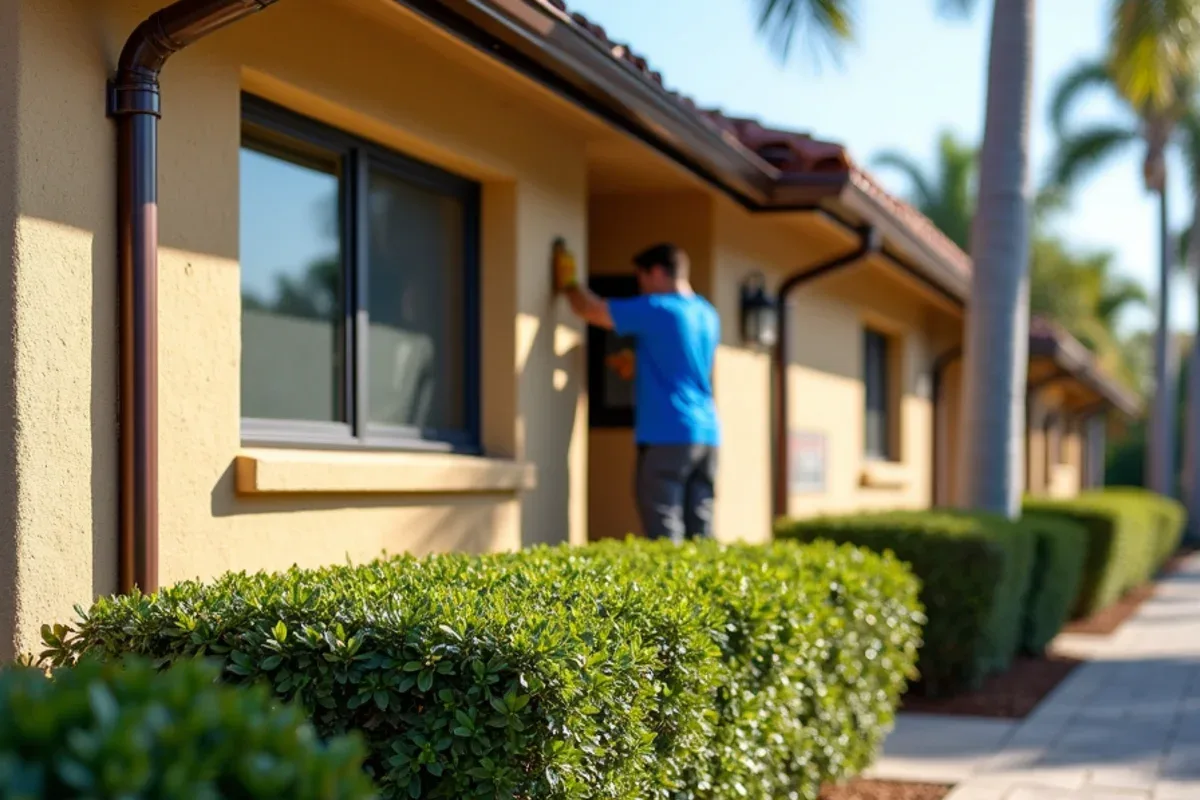
Commercial Gutter Installation: specialized services
What South Florida customers say
4.9 average from 54 Google reviews · Read all reviews
“I had a great experience with Southern Gutters FL. From the initial quote to the completion of the job, the entire process was smooth and professional. Chance and the entire team were knowledgeable, responsive, and arrived on time. They did an excellent job with my gutters and the quality of the work exceeded my expectations!! It's clear they take pride in their work and care about customer satisfaction. I highly recommend Southern Gutters FL to anyone looking for reliable, high-quality gutter services.”
“One of the best experiences of dealing with a contractor in south Florida. Chance was on time, extremely professional, and provided an excellent quote. I believe the work speaks for itself. I’m very pleased with the outcome!”
“Chance and Southern Gutters was amazing. Very reputable and very responsive company. They got the job done quickly, professionally, and for a very reasonable cost. I highly recommend them if you need your gutters cleaned. Couldn't ask for a better outcome.”
Commercial Gutter Installation questions, answered
What gutter size do commercial roofs need?
It depends on the roof area draining to each run, the pitch, valleys and how many outlets are possible. Many low-rise commercial and multifamily roofs are well served by 6- or 7-inch seamless gutters with enough downspouts. Very large roof planes or parapet edges may need 8-inch or box sections. On permitted work, the design documents set the size.
Do you install box gutters?
Yes, where the building calls for them, such as behind parapets or at flat roof edges. Box gutters carry a lot of water but have more seams, so we pay close attention to joint sealing, expansion allowance and outlet placement. Where a K-style seamless profile would work, we will tell you, since it usually means fewer joints to maintain.
Can installation be phased around tenants?
Yes. We plan the order of elevations with you, keep entrances usable, and park the forming machine and truck where they block the least. Busy storefront sides can be done early in the morning or on slower days. The phasing plan is written into the proposal so tenants can be notified ahead of time.
Do you provide certificates of insurance before work starts?
Yes. Our crews are insured, and we send a certificate of insurance naming your company or association before the job is scheduled. Ask us, or any contractor, for county competency or license details for the specific scope as well, and we will provide what your county requires.
How long does a commercial gutter installation take?
It depends on footage, height and phasing. A small one-story plaza is often finished in a few working days. Larger or multi-story buildings are done elevation by elevation, sometimes over several mobilizations, so entrances stay open. Fascia repairs found at tear-off and lift availability can stretch the schedule, and the proposal states the planned sequence before work starts.
Related services
6" & 7" Oversized Gutters
Wider 6- and 7-inch seamless troughs with 3x4 downspouts that keep up with cloudbursts and big tile roof valleys.
Learn moreColor-Matched & HOA-Approved Gutters
Baked-enamel gutters matched to your fascia, trim or stucco, with the HOA architectural packet prepared for you.
Learn moreFascia Board Repair & Replacement
Rotted fascia cut back to sound wood, new boards primed and finished, and gutters re-hung tight in one visit.
Learn moreHelpful guides
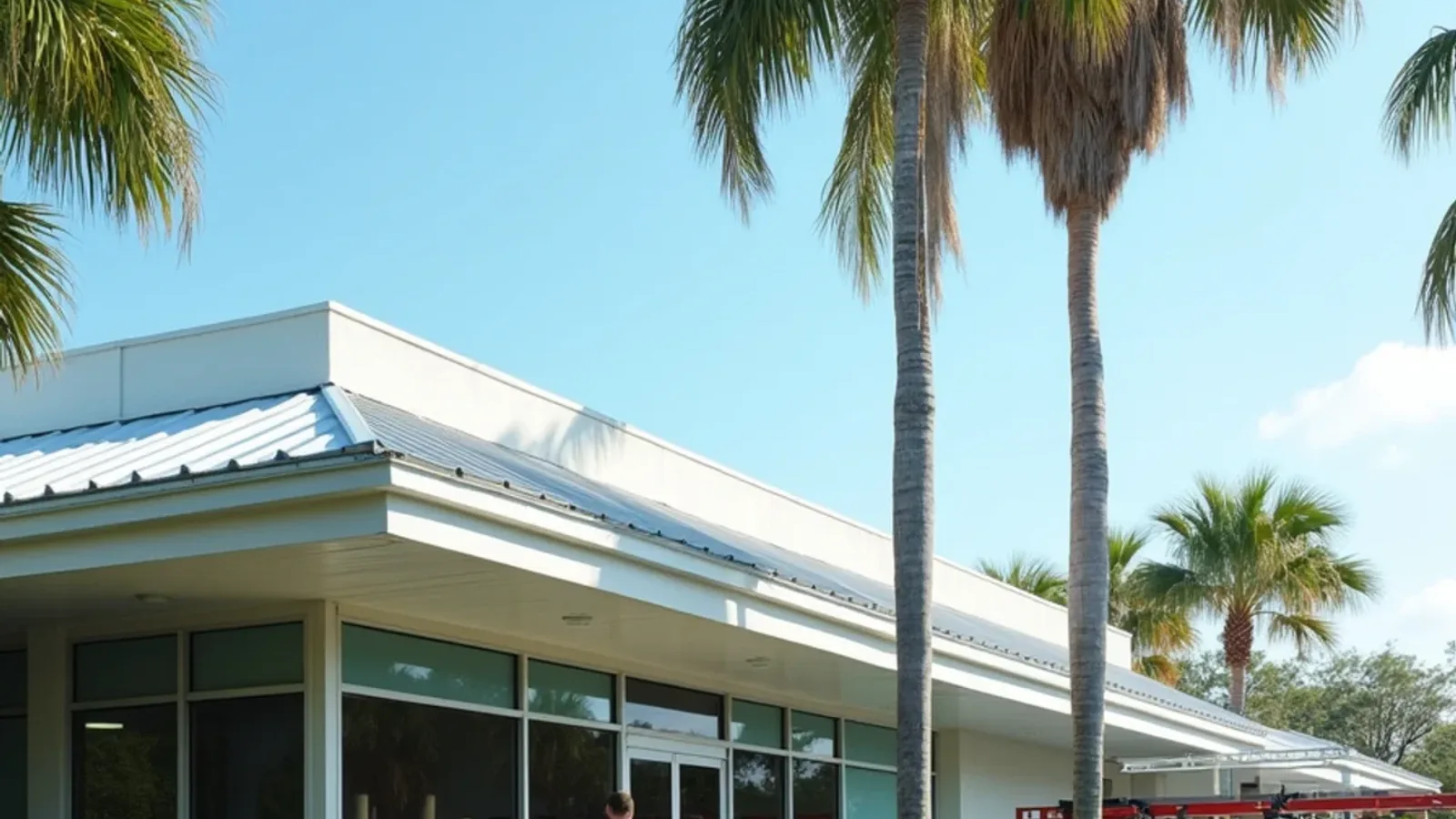
Box vs. K-Style: Choosing a Commercial Gutter System
Box or K-style, 6 inch or 8 inch, how many downspouts and what material: a practical guide to commercial gutter systems for South Florida roofs and rainfall.
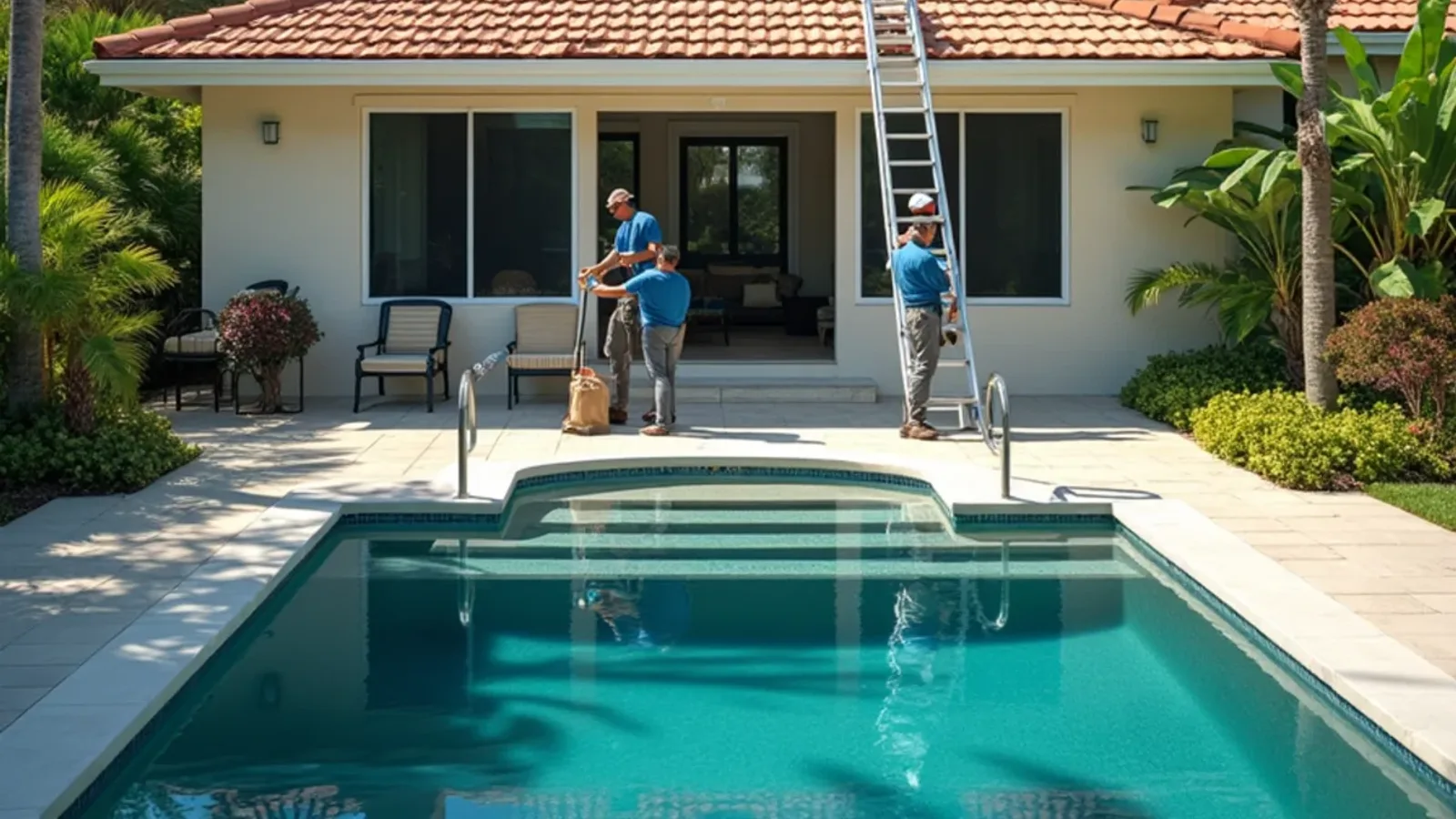
5", 6" or 7" Gutters? Sizing for Florida Rain
Roof area, pitch and rainfall intensity decide gutter size, and downspouts matter just as much. When 5-inch is enough and when 6- or 7-inch gutters earn their place.
Where we provide commercial gutter installation
- Commercial Gutter Installation in Fort Lauderdale
Beachside and Intracoastal properties where salt air shortens the life of fasteners and steel box gutters.
- Commercial Gutter Installation in Sunrise
Office and retail buildings with flat roofs that need leader heads under every scupper.
- Commercial Gutter Installation in Coral Springs
Multifamily communities replacing original 5-inch gutters with larger seamless profiles.
- Commercial Gutter Installation in Pompano Beach
Industrial and flex buildings whose long eaves need expansion joints and oversized downspouts.
- Commercial Gutter Installation in Oakland Park
Warehouses along Dixie Highway, near where our shop was based in 2024.
- Commercial Gutter Installation in Lauderdale-by-the-Sea
Low-rise condo buildings close to the ocean where finish choice matters for corrosion.
- Commercial Gutter Installation in Hallandale Beach
Older apartment buildings in the High-Velocity Hurricane Zone where permitted work follows HVHZ rules.
- Commercial Gutter Installation in Deerfield Beach
Plazas whose downspouts empty across parking stalls and need new discharge points.
- Commercial Gutter Installation in Miramar
Newer business parks where tilt-wall buildings take large-format box and K-style gutters.